Brownfields Environmental Remediation Job Training Program Graduates Newest Cohort
The Saint Louis University Center for Environmental Education & Training’s (CEET) Brownfields Environmental Remediation Job Training Program recently graduated its newest cohort of 12 students with the industry-recognized certifications needed to pursue high-growth careers in environmental cleanup, hazardous-waste operations, and worker safety.
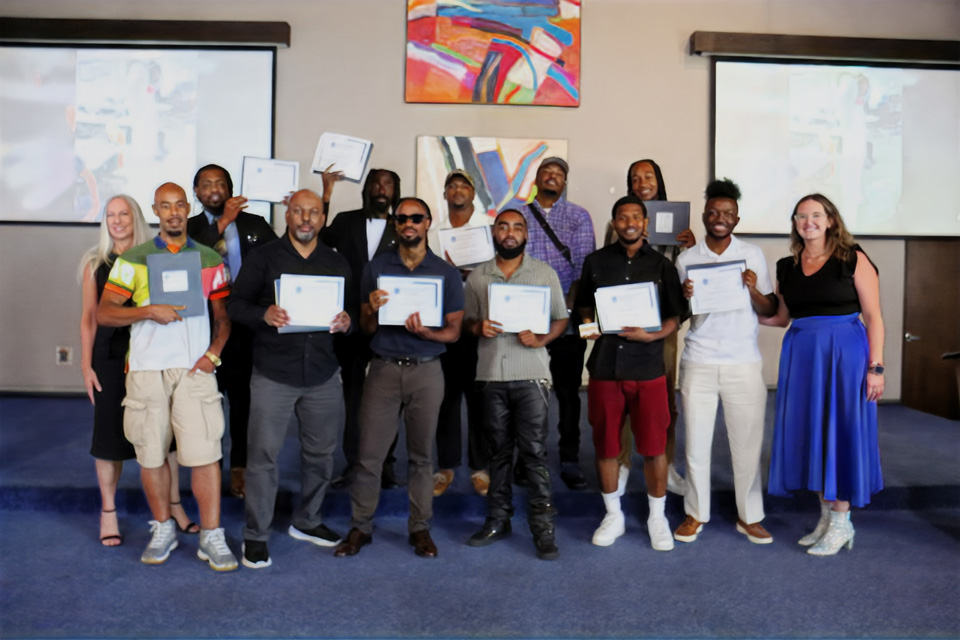
“The EPA Brownfields Job Training Program creates pathways to meaningful careers while helping address environmental challenges in our region. The graduates are entering a profession that restores contaminated properties, which supports economic revitalization, and improves quality of life in communities that have often been overlooked,” said CEET director Rene Dulle. “Their success is an example of how workforce development can drive community transformation. Their accomplishments reflect SLU’s commitment to serving the region through education, workforce development, and social responsibility.”
Supported by the U.S. Environmental Protection Agency (EPA), the grant-funded program prepares community members for jobs such as hazmat technician, asbestos/lead abatement specialist, environmental field technician, ecosystem restoration worker, radiation safety worker, and more.
The graduates celebrated their completion of a six-week training period that included 15 classes with a myriad of topics covered. Students completed courses titled:
- 40-Hour HAZWOPER Certification (Hazardous Waste Operations & Emergency Response)
- OSHA Construction Safety Training (OSHA 10-hour)
- Lead Worker and lead-safety modules
- Asbestos worker
- Confined-space and fall-protection awareness
- Chemical safety and PPE use
- Environmental sampling basics (soil, water and air)
The EPA’s Brownfields Job Training Program ensures that local residents benefit directly from cleanup efforts by receiving the certifications required for environmental remediation careers. Brownfields are properties where environmental contamination may complicate redevelopment, such as former industrial sites, rail yards, gas stations or vacant commercial properties. Cleaning and restoring these sites opens the door for new housing, parks, businesses and economic revitalization.
This free program is designed for people seeking employment, career change, or a new start in a field where trained workers are in demand. Environmental cleanup and remediation work is essential across the St. Louis region, and companies need skilled, safety-trained workers now.
College for Public Health and Social Justice
The Saint Louis University College for Public Health and Social Justice is the only academic unit of its kind, studying social, environmental and physical influences that together determine the health and well-being of people and communities. It also is the only accredited school or college of public health among nearly 250 Catholic institutions of higher education in the United States. Guided by a mission of social justice and focus on finding innovative and collaborative solutions for complex health problems, the college offers nationally recognized programs in public health and health administration.