Discernment Lab: Master of Health Administration Case Series
The Saint Louis University Department of Health Management and Policy Health Management Case Series is designed to provide a series of educational frameworks to help instruct future generations of healthcare professionals as a new educational initiative that brings real-world health care management challenges into the classroom.
The cases, and accompanying SLU faculty resources, are available at no cost to verified educators through a learning management system with the goal of expanding access with the goal of expanding access to high-quality, and applied learning.
SLU’s Department of Health Management and Policy Announces New Health Management Case Series
The Discernment Lab: The Saint Louis University Master of Health Administration Case Series.
The Discernment Lab Cases
Authors: Kwamane Liddell, Marcea Walter, and Kimberly R. Enard
A shortage of paid caregivers leaves older adults and people with disabilities waiting for support to return home. Students consider how hospitals, health plans, public agencies, and community partners can expand caregiver capacity while addressing training, eligibility, payment and placement requirements.
Format: Extended case
Suggested use: One week
Topics: Caregiver workforce; care at home; community partnerships; care transitions
Availability: Coming soon
Authors: Monica VanderKraats, Emily Koudelka, Marcea Walter, and Kimberly R. Enard
A pediatric hospital must decide how much infusion space to include at a new outpatient specialty site before the design is finalized. Students weigh changing demand, family access, pediatric safety, payer uncertainty, costs, and competing uses of limited space.
Format: In-class case
Suggested use: 50–60 minutes for undergraduate courses; 70–90 minutes for graduate courses
Topics: Capacity planning; site of care; pediatric services; capital investment
Availability: Coming soon
Authors: Emily Koudelka, Monica VanderKraats, Marcea Walter, and Kimberly R. Enard
A pediatric academic hospital must determine how to sustain a specialty program as local demand softens, some families seek care outside the region, and specialized clinicians become harder to recruit and retain. Students recommend a five-year direction that balances mission, community need, quality, workforce, academic responsibilities, and regional partnerships.
Format: In-class and extended versions
Suggested use: 30–60 minutes for the in-class version; one week or two class meetings for the extended version
Topics: Strategy; regional partnerships; pediatric specialty care; workforce; mission
Availability: Coming soon
Authors: George Moll, Marcea Walter, and Kimberly Enard
A regional physician group is considering a value-based care agreement that would increase its financial responsibility for the cost and quality of care. Students assess the group’s financial, clinical, operational, and data readiness and recommend whether to participate and how much risk to accept.
Format: In-class case
Suggested use: 30–45 minutes
Topics: Value-based care; financial risk; organizational readiness; care management
Availability: Coming soon
Featured Case Authors

Kwamane Liddell, J.D., M.H.A., B.S.N.
CEO of ThriveLink
Kwamane Liddell, J.D., M.H.A., B.S.N. is a trauma nurse, healthcare lawyer, and healthcare visionary whose career began as a hospital janitor and has evolved into leadership roles across some of the largest health systems and insurers in the United States, including CommonSpirit Health and UnitedHealth Group, where he led operations at entities throughout California. Grounded in lived experience and frontline clinical practice, Kwamane founded ThriveLink to support older adults, people with disabilities, and individuals who face literacy and access barriers — helping them navigate complex healthcare and social systems to live healthier, more independent lives. Under his leadership, ThriveLink’s telephonic AI technology has helped families secure millions of dollars in critical resources while dramatically reducing administrative burden for healthcare organizations. His work has been recognized nationally, including being named the American Nurses Association National Innovator of the Year and winning the MIT Solve AI for Humanity Award. Through this work, Kwamane is reimagining healthcare access — ensuring people are not left behind simply because they cannot read, use the internet, or navigate complex bureaucratic systems on their own.

Monica VanderKraats, M.P.H.
Senior Clinical Program Manager, Hematology Oncology and Cellular Therapy, St. Louis Children’s Hospital
Monica is an experienced hospital administrator with a strong background in
strategic planning, finance, and operational support. She currently serves as the
senior clinical program manager for Hematology, Oncology, and Cellular Therapy. In
her role, she provides business and financial support to these areas and collaborates
with Washington University School of Medicine directors and physician leaders to plan
for and manage growth, capacity, financial performance, contracts, insurance authorizations,
single-patient agreements, clinical trial protocols, and high-cost cell and gene therapy
onboarding. She also leads a team of business managers supporting other key services,
and is one of the leaders for the transplant financial coordinator team. Monica graduated
from the University of Florida in 2008, earning a Bachelor of Science in Health Science
and a Master of Public Health in Administration and Policy. She started her career
as a planning analyst at UF Health Shands Hospital before relocating to St. Louis
in 2010 to join St. Louis Children's Hospital as a planning consultant. She was promoted
to senior planning consultant in 2013. In July 2015, she accepted a role as planning
and business development manager before transitioning into her current role in September
2019.
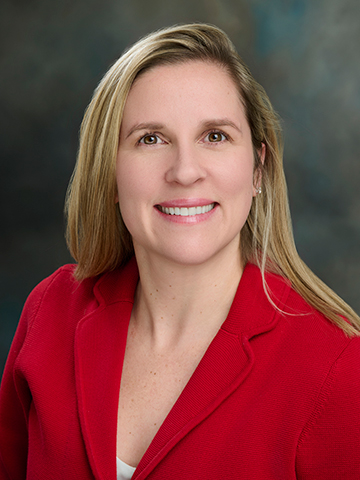
Emily Koudelka, DSc, M.H.A.
Director, Finance and Business Development, BJC
As director of finance and business development at BJC, Emily provides strategic leadership for service line financial performance, growth planning, and business development initiatives that advance organizational strategy and support long-term growth. Before joining BJC in 2015, she held finance, strategic planning, and business development positions at several nationally recognized academic healthcare institutions, including Barnes-Jewish Hospital; Johns Hopkins Sidney Kimmel Cancer Center at Sibley Memorial Hospital; Mays Cancer Center, home to UT Health San Antonio MD Anderson Cancer Center; and CHI St. Luke's Health. Emily earned a bachelor's degree in finance from the University of Illinois Urbana-Champaign, where she was a Chancellor's Scholar and varsity swimmer. She also holds a Master of Healthcare Administration from the University of North Carolina at Chapel Hill and a Doctor of Science in Health Administration from the University of Alabama at Birmingham. Her dissertation explored the relationship between cultural competency and patient experience. Emily has long supported Saint Louis University students through internship preceptorships and administrative fellowship rotations. She currently serves on the advisory board for the SLU Master of Health Administration program.