The WATER Institute
Located in the City of St. Louis and at the confluence of the Mississippi and Missouri Rivers, the Water Access, Technology, Environment and Resources (WATER) Institute at Saint Louis University is the first of its kind in the American Midwest. Inspired by the University’s Jesuit identity, the mission of the WATER Institute is to advance water innovation to serve humanity.
The Research
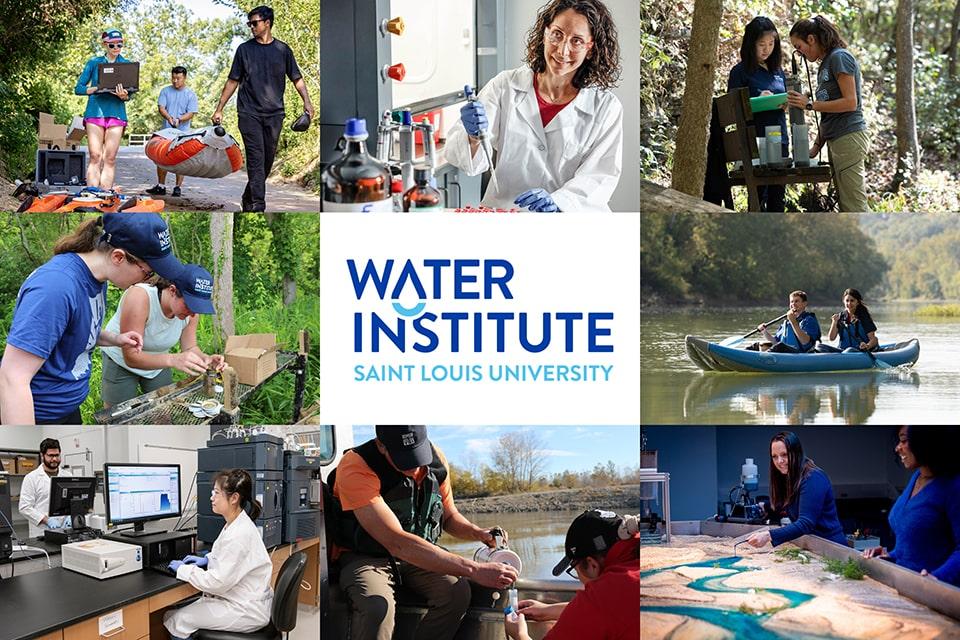
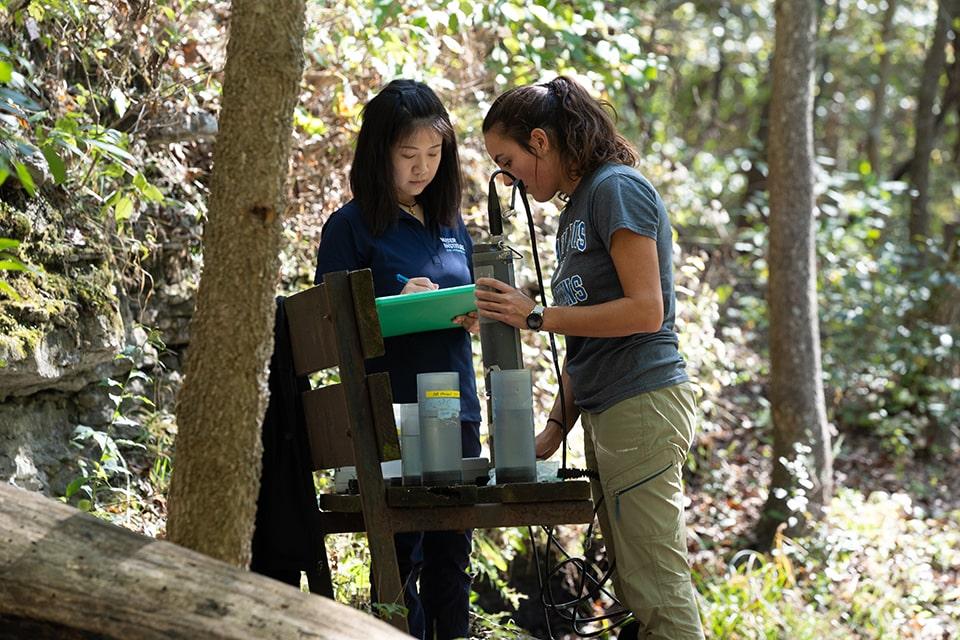
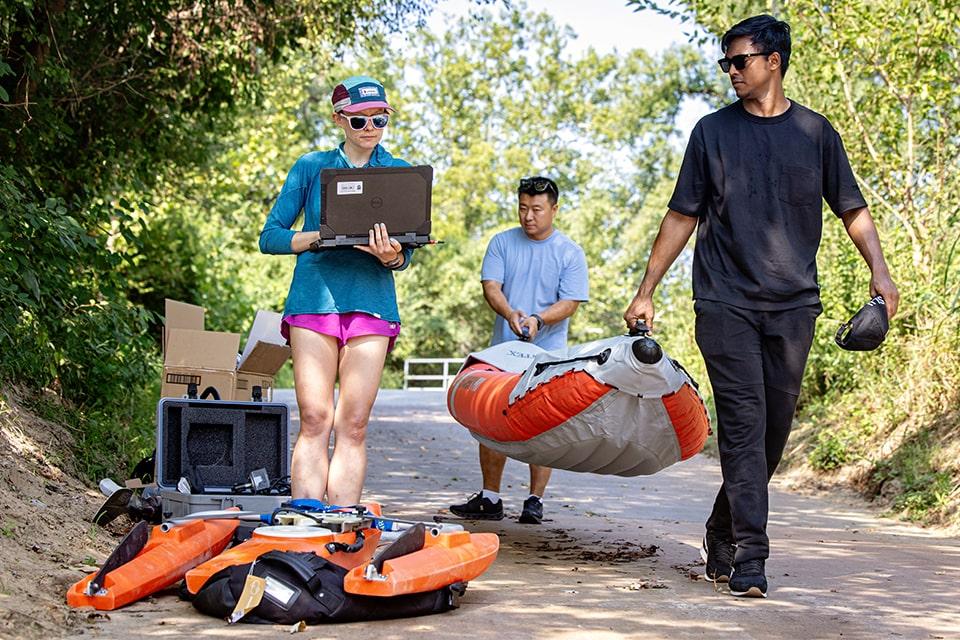
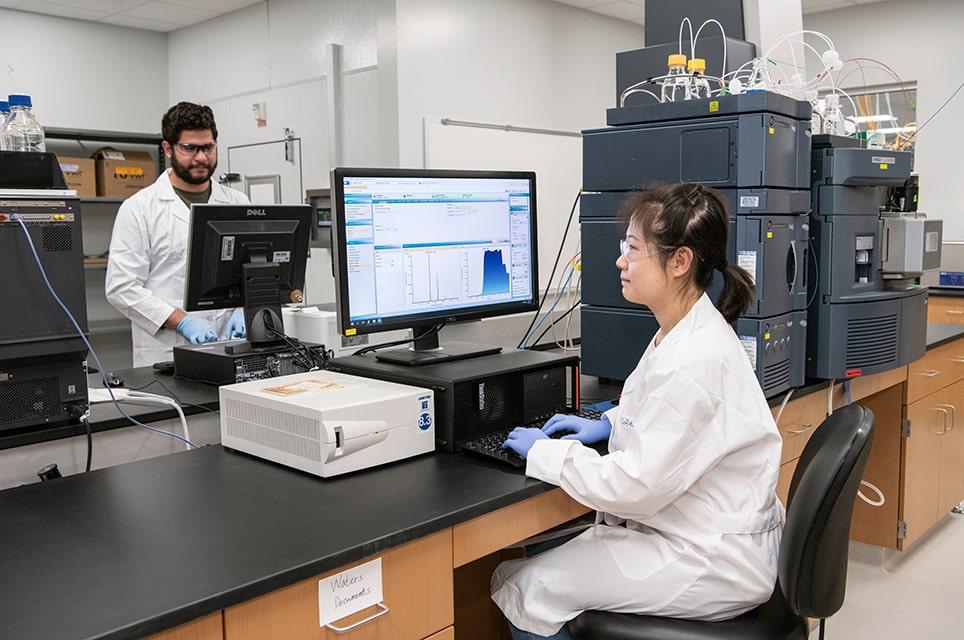
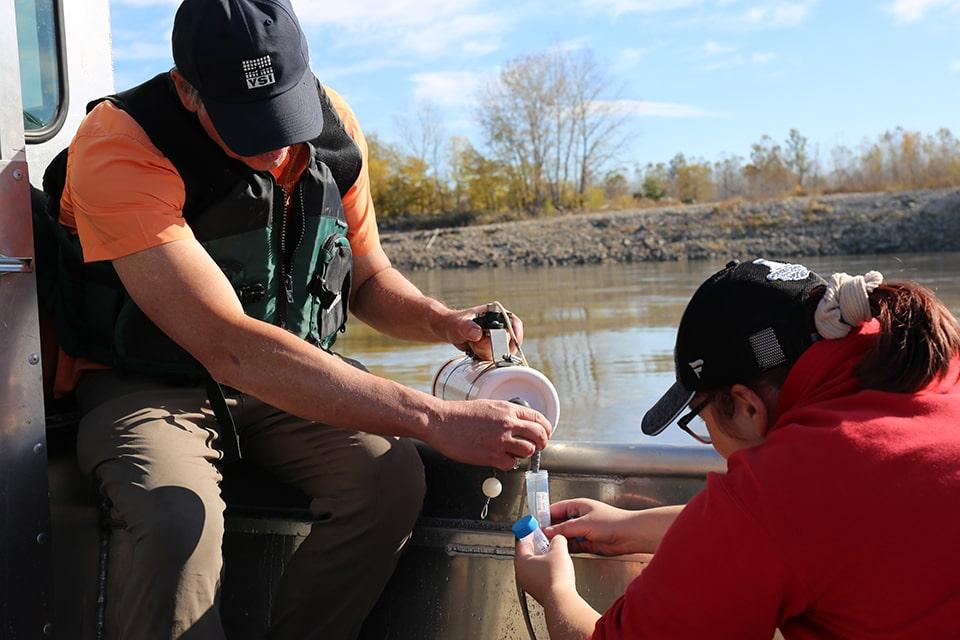
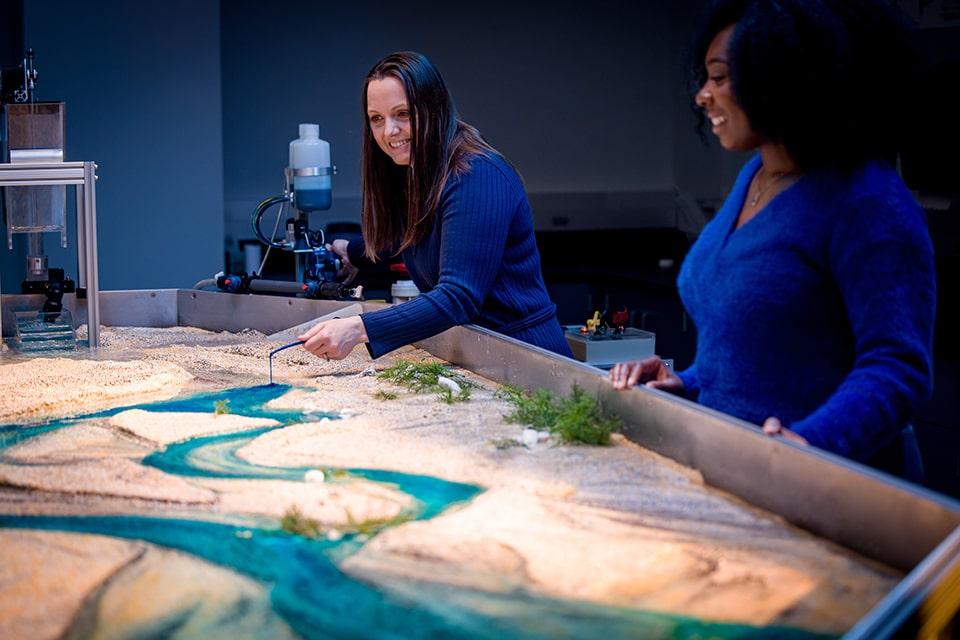
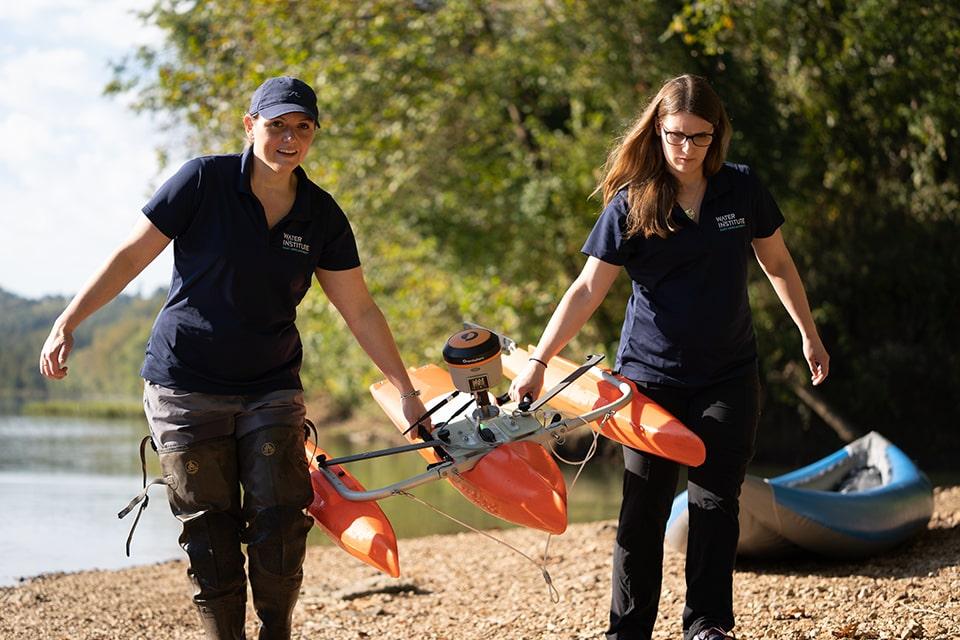
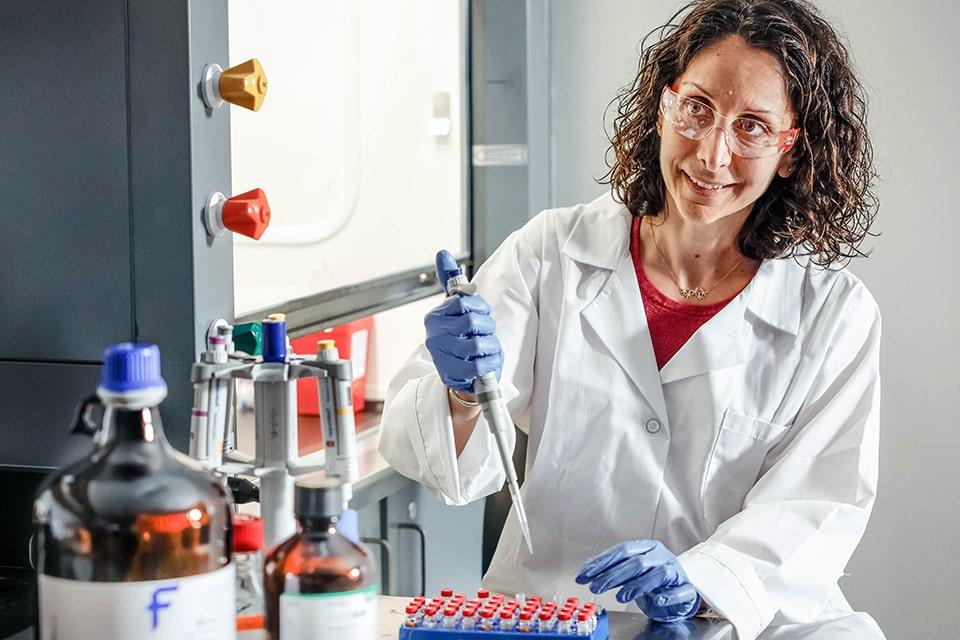
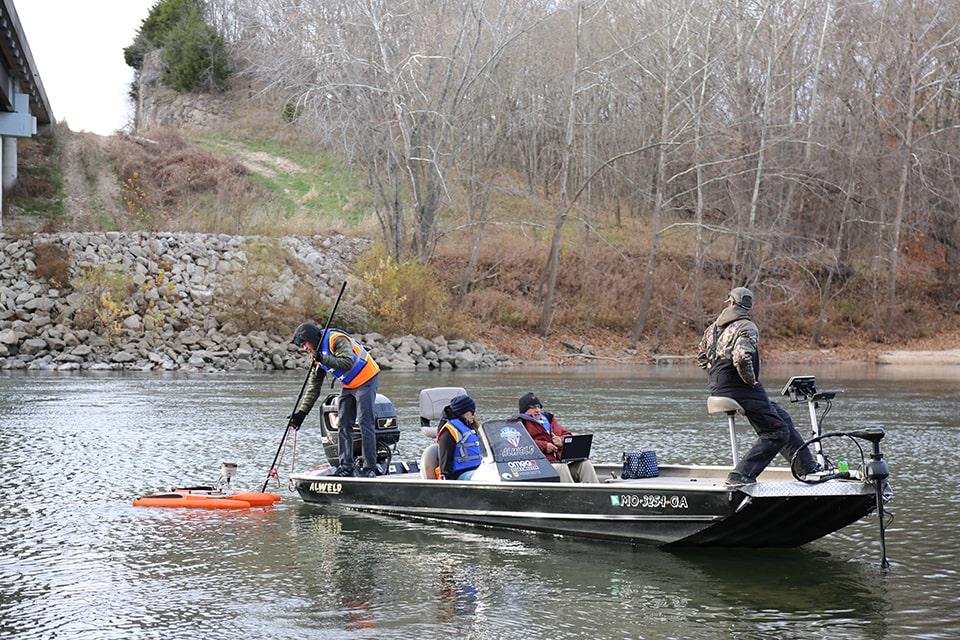
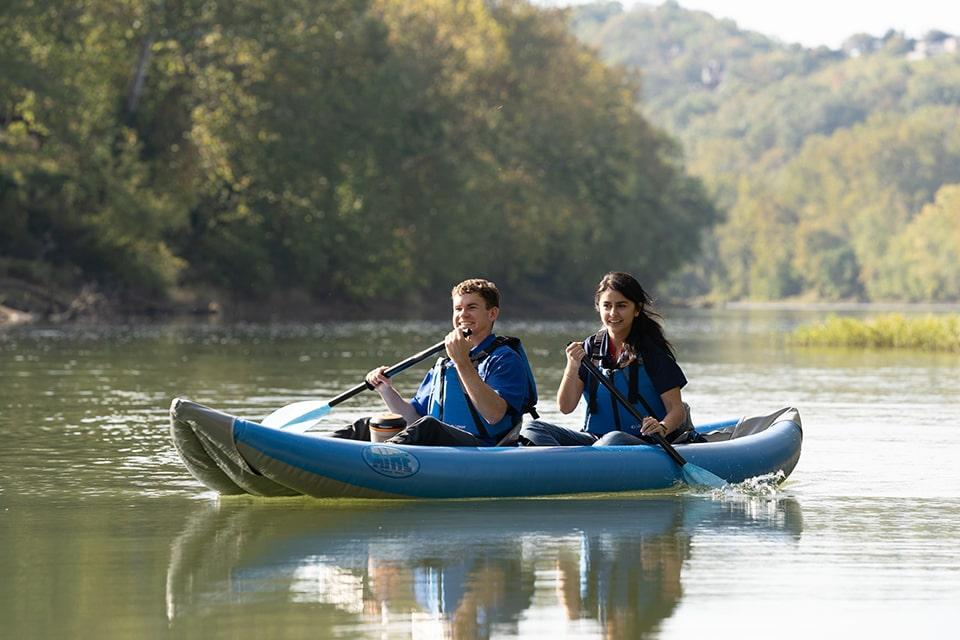
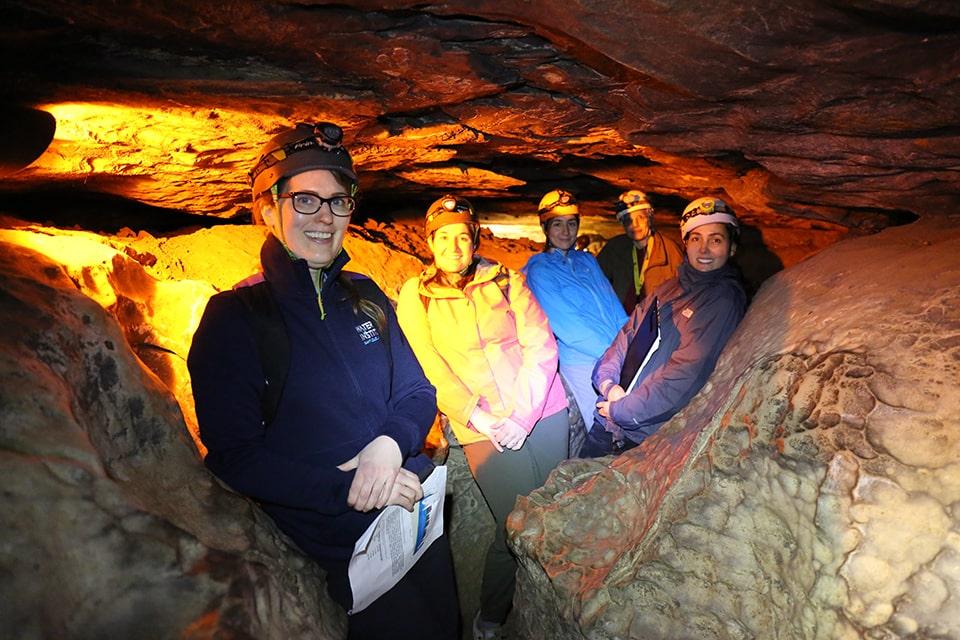
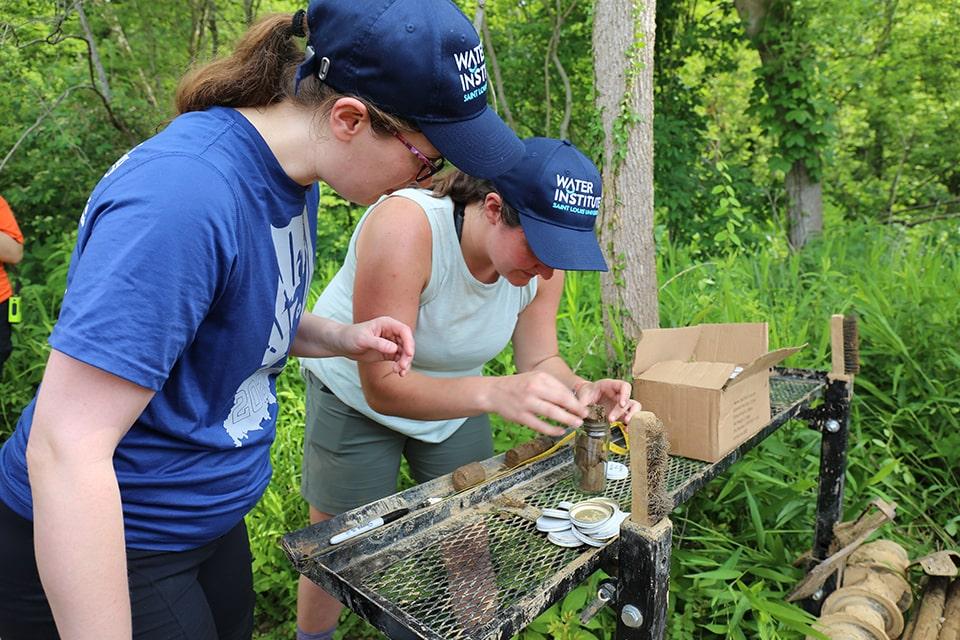
WATER Institute faculty investigators conduct interdisciplinary research that addresses critical water resource challenges while strengthening existing efforts across the University.
The research conducted at the WATER Institute focuses primarily on three critical areas:
- Addressing water-related social justice issues at home and around the world
- Protecting aquatic ecosystems
- Improving infrastructure to secure water supplies and address key societal needs
Saint Louis University’s location in the city of St. Louis at the confluence of the Mississippi and Missouri Rivers makes it an ideal setting for groundbreaking water research. The WATER Institute fills a significant need for urban water research in the United States, specifically, in the Midwest. The University’s Jesuit mission to serve humanity is also at the heart of the WATER Institute, whose findings will address public health issues and protect society from natural and human-made water-related disasters. The institute’s multifaceted, collaborative approach supports research with positive applications for local, national, and global communities – and their most vulnerable populations.
Examples of current projects led by researchers at the WATER Institute include:
- Testing water treatment technologies for use in developing nations to evaluate which are most effective for clean drinking water on the household level
- Determining the origin and amount of microplastic debris transported into river and groundwater systems
- Using machine learning to estimate the volume of water storage available in United States reservoirs
A Big Idea
The origins of Saint Louis University’s WATER Institute lie in an internal Big Ideas competition to define University-wide strategic research priorities.
SLU’s ability to invest in water-related research was greatly enhanced in 2018 when Dr. Jeanne and Rex Sinquefield made a historic $50 million gift that established the Saint Louis University Research Institute to accelerate research growth at the University.
The WATER Institute is the latest major initiative to earn support from the Research Institute. The Geospatial Institute (GeoSLU) launched in fall 2019, and the Advanced HEAlth Data (AHEAD) Research Institute launched in 2020.
Learn More About the Big Ideas Competition
What's New
Elizabeth Hasenmueller, Ph.D., Awarded Banpu Endowed Professorship for Teaching Excellence
9/3/2026 – WATER Institute Associate Director Elizabeth Hasenmueller, Ph.D., was awarded
the Banpu Endowed Professorship for Teaching Excellence in recognition of her commitment
to excellence and innovation in teaching at Saint Louis University.
Project BALEEN Hits the Road: From the Lab to Spanish Lake and to Jupiter’s Moon,
Europa
Fall 2026 – NewScience (pages 6-7), the Saint Louis Science Center’s member magazine,
highlights WATER Institute researcher Jean Potvin, Ph.D., and Project BALEEN’s efforts
to develop baleen whale-inspired systems for collecting microplastics in local waterways,
including field testing at Spanish Lake, as well as a NASA-supported concept for adapting
the technology to explore the subsurface ocean of Jupiter’s moon Europa.
Not Your Typical Water Filter
Summer 2026 – NewScience (pages 6-7), the Saint Louis Science Center’s member magazine,
highlights Project BALEEN, an interdisciplinary research effort led by Jean Potvin,
Ph.D., that draws inspiration from baleen whales to develop innovative filtration
systems for removing plastic debris from waterways.
Urbanization and Humidity Influence Airborne Microplastic Deposition
8/30/2026 – WATER Institute researcher Elizabeth Hasenmueller, Ph.D., Natalie Hernandez,
Ph.D., and collaborators examine how urbanization and humidity affect the atmospheric
deposition of human-made microparticles, including microplastics, providing new insight
into how these particles move through urban environments. (Atmospheric Environment).
Long-Term Records Reveal Challenges in Tracking Karst Spring Trends
7/10/2026 – WATER Institute researcher Elizabeth Hasenmueller, Ph.D., Teresa Baraza,
Ph.D., and collaborators evaluate long-term discharge records from karst springs in
the United States and Europe, identifying data limitations that can complicate efforts
to detect and interpret long-term hydrologic trends. (Groundwater).
Dr. Emily Hite Receives 2026 Beaumont Scholarship Research Award
6/2026 – WATER Institute researcher Emily Hite, Ph.D., received a $10,000 Beaumont
Scholarship Research Award for “Ethnography of Sociotechnical Futures: Assessing Proposed
Data Centers in Saint Louis,” a project examining the social and technological implications
of proposed data center development in the St. Louis region.
Dr. Ronaldo Luna Makes First Site Visit as Panama Canal Geotechnical Advisory Board
Member
7/6/2026 – WATER Institute Principal Investigator Ronaldo Luna, Ph.D., P.E., who was
appointed to the Panama Canal Authority’s Geotechnical Advisory Board (GAB) in 2025, participated in his first site visit to the Panama Canal on July 6,
2026. The GAB is an independent panel of internationally recognized experts that provides
guidance on complex geotechnical challenges affecting the Panama Canal, including
soil and rock mechanics, excavation, and landslide stability.
The Occurrence and Impacts of Microplastics on Freshwater Mussels
5/2026 – Ph.D. Dissertation by Alison Breakfield examining the occurrence of microplastics
in freshwater environments and their potential impacts on freshwater mussels.
Legislation system lacking scientific basis undermines ecological health of Yangtze
River
4/4/2026 – WATER Institute researcher Jason Knouft, Ph.D., and former WATER Institute
researcher Binbin Wang, Ph.D., examine how environmental legislation and court-ordered
remedies intended to address illegal fishing can inadvertently undermine the ecological
health of the Yangtze River when they lack a sufficient scientific basis. (Communications
Earth & Environment).
Tillage Changes Transport and Fate of Microplastics in the Agricultural Environment
4/1/2026 – WATER Institute researcher Jason Knouft, Ph.D., former WATER Institute
researcher Binbin Wang, Ph.D., and collaborators examine how agricultural tillage
practices influence the distribution and transport of microplastics, finding that
tillage increases airborne transport while no-till practices retain more microplastics
in surface soils. (Agriculture, Ecosystems & Environment).
Tracking Nutrient Fluxes in an Agricultural Reservoir
3/19/2026 – WATER Institute researcher Elizabeth Hasenmueller, Ph.D., Teresa Baraza,
Ph.D., and collaborators examine how nutrient fluxes vary across space and time within
an agricultural reservoir, providing insight into the movement and cycling of nutrients
in agricultural watersheds. (Journal of the American Water Resources Association).
Tracking 20 Years of Nitrogen Changes Across the Mississippi River Basin
2/16/2026 – WATER Institute researcher Alejandro Botero-Acosta, Ph.D., and collaborators
examine changes in nitrogen inputs and riverine nitrate yields across Mississippi
River Basin watersheds from 2000 to 2020, providing insight into long-term trends
in nutrient loading and their implications for water quality. (Ocean-Land-Atmosphere
Research).
Freshwater Clams as Biomonitors of Microplastic Pollution
11/19/2025 – WATER Institute researcher Elizabeth Hasenmueller, Ph.D., Natalie Hernandez,
Ph.D., and collaborators evaluate the freshwater clam Corbicula fluminea as a potential
biomonitor for microplastics and other human-made microparticles in an urban stream,
exploring its potential as a tool for assessing aquatic pollution. (Environmental
Pollution).
Hyperlink for the headline: https://doi.org/10.1016/j.envpol.2025.127381
From Minnesota to the Gulf: Paddling all 2,400 Miles of the Mississippi River is a
Grand Adventure
9/19/2025 - A group of five paddlers travelling under the banner of Drift South Expedition
are collecting microplastic samples along the Mississippi River in collaboration with
two WATER Institute postdoctoral researchers, Natalie Hernandez, Ph.D., and Teresa
Baraza, Ph.D.
A $7 Billion Plan Won’t Keep Sewer from St. Louis Rivers
9/14/2025 - Elizabeth Hasenmueller, Ph.D., was quoted in a St. Louis Post-Dispatch
article about water quality impairments in St. Louis area rivers due to sewage inputs.
Characterizing the Transport of Water and Pollutants Through Urban Critical Zones
5/17/2025 - Ph.D. Dissertation by Carly Finegan-Dronchi, Ph.D., advised by Elizabeth
Hasenmueller, Ph.D., from the Department of Earth, Environmental and Geospatial Science.
Microplastic debris transport in an urban watershed across multiple flow conditions
and environmental compartments
5/17/2025 - Ph.D. Dissertation by Natalie Hernandez, Ph.D., advised by Elizabeth Hasenmueller,
Ph.D., from the Department of Earth, Environmental and Geospatial Science.
Microplastic distributions in rural reservoir systems
5/17/2025 - M.S. Thesis by Luke Ungerer, advised by Elizabeth Hasenmueller, Ph.D.,
from the Department of Earth, Environmental and Geospatial Science.
Project BALEEN: Hands-on Engineering Research for SSE Undergraduates
4/30/2025 – Project BALEEN undergraduate researchers win top award for SLU’s 2024-25
Foundational Interdisciplinary Research Experience (FIRE) program. This effort, led
by Jean Potvin, Ph.D., develops baleen whale–inspired filtration systems to remove
plastic debris from waterways.
Nepal River Discharge and Water Surface Elevation Gradient Profile Measurements to
Validate NASA SWOT Satellite Estimates
1/14/2025 - Bo Wang, Ph.D., undertook a detailed field campaign in Southern Nepal
focused on collecting in-situ hydrologic data. This effort is part of a data-driven
initiative to improve understanding of river dynamics in Nepal's complex river systems
that can serve as a foundation for flood forecasting, water resource management, and
environmental planning.