Issues with Union Elections – Who Constitutes an Employee?
In a recent Labor Law class at Saint Louis University School of Law, students learned about the legal requirements that must be satisfied to form a union under the National Labor Relations Act (“NLRA”).
Professor Michael Duff, who taught the course, explained that when employees wish to create a union, the bargaining unit must either obtain voluntarily recognition by the employer or a secret-ballot election must be held. If an election is needed, employees must meet several requirements before voting can occur, and once the election is held, the results can be subject to challenge.
One of the most fundamental questions in union elections is: who is allowed to vote? To be entitled to vote, a person must: (1) qualify as an “employee”; (2) have worked in the unit during the eligibility period set by the Board; and (3) be employed in the unit on the date of the election.
A key question with respect to the first requirement is: what does it mean to be an “employee”? The NLRA provides that the term “employee” includes:
. . . any employee, and shall not be limited to the employees of a particular employer, unless the Act [this subchapter] explicitly states otherwise, and shall include any individual whose work has ceased as a consequence of, or in connection with, any current labor dispute or because of any unfair labor practice, and who has not obtained any other regular and substantially equivalent employment . . .
29 U.S.C. § 152(3). Importantly, though, the Act excludes certain individuals from the definition of “employee.” See id. For example, agricultural laborers, independent contractors, supervisors, and persons in managerial positions are all excluded. Id. In addition, the NLRB rules also account for the fact that employment in certain industries is often irregular. In such industries, voter eligibility is determined by formulas designed to permit all employees who have a substantial and continuing interest in their employment conditions to vote.
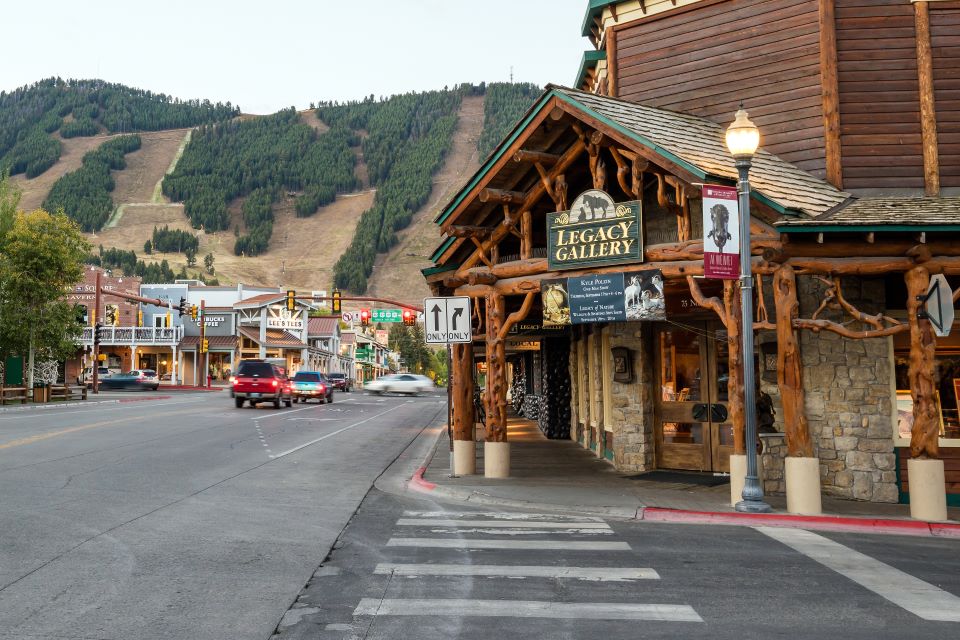
Clearly, questions about who qualifies as an “employee” can be very fact-sensitive, and they arise more often than one might imagine. Take the example of the recent representation election held by the Jackson Hole Mountain Resort Ski Patrol in Jackson Hole, Wyoming. There, a secret-ballot election was held to decide whether full- and part-time ski patrollers could form a union. The final vote tally was 42-32, but 16 votes were challenged on the basis that they were cast by supervisors or new employees who were not eligible to vote. These challenges must now be reviewed by the NLRB, which will evaluate whether the votes were properly cast.
The “Jackson Hole News and Guide” recently reached out to Professor Duff to obtain his thoughts about the election. You can read more about his perspective here: Resolving union vote for Jackson Hole Mountain Resort ski patrol could take weeks.