Summer in Madrid: Students from the 2026 Program Reflect on the Experience
The Saint Louis University School of Law Center for International and Comparative Law organizes the ABA-approved Summer Law Program at SLU-Madrid. Every summer, students from SLU LAW and other law schools head to SLU-Madrid for a six-week program taking international law and comparative law classes and exploring all Madrid has to offer.
In addition to their coursework, students learn about Madrid's cultural and legal institutions. Students participating in the program share their experiences with the different visits and experiences.
Student Reflections
Reflection by Gabrielle Haman (J.D. ’28)
A heat wave may plague the streets of Madrid, but the resilient law students from Saint Louis University brave the sweltering afternoon temperatures for an exclusive tour of the highest court in Spain: the Tribunal Supremo (Supreme Court). After studying Spanish court structure extensively in our summer course Introduction to Civil Law Systems, this opportunity coupled with our previous tour of the Constitutional Court gave us first-hand exposure to the innerworkings of the Spanish system.
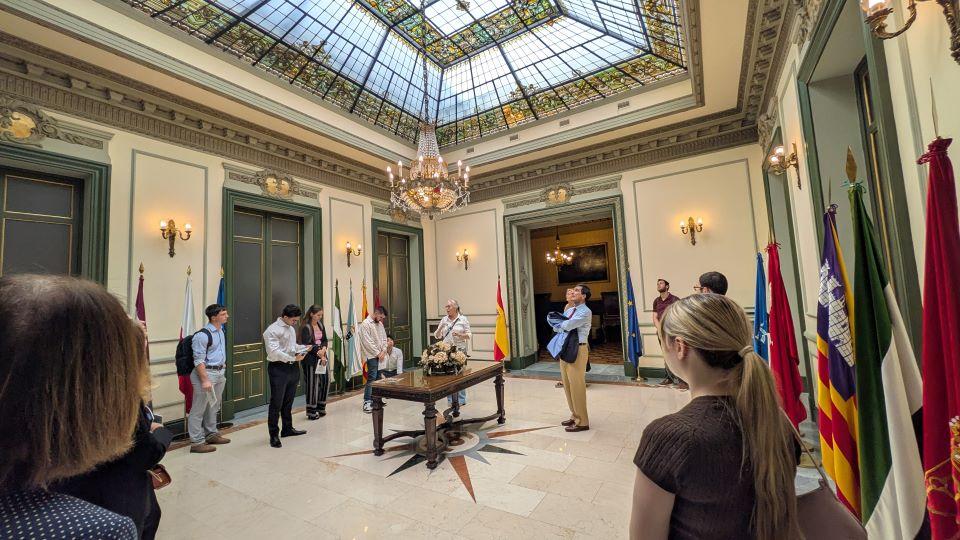
Comparatively, the Supreme Court of Spain is large. Its five chambers — Civil, Criminal, Administrative, Labour, and Military — comprise 83 judges as of June 2026. The building itself is an 18th-century architectural complex that was converted from a convent into the now-Palacio de las Salesas in 1870. Except for a brief relocation due to a fire, the palace has housed the official Supreme Court since 1875. The entire building, from its hallways to its chamber rooms, is adorned with frescos, stained glass, mosaics and religious artwork.
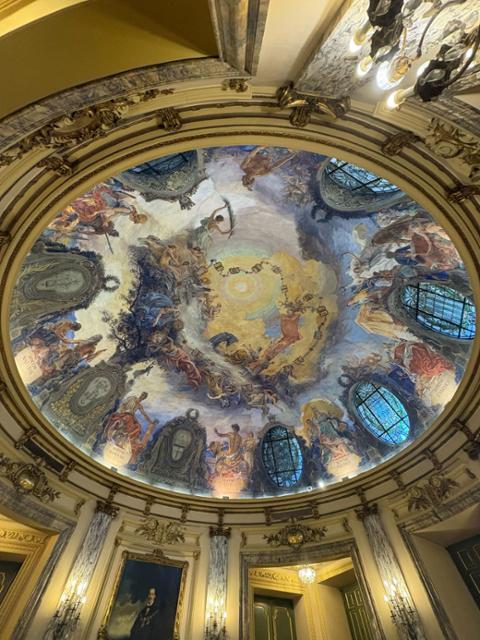
We began our tour in the Hall of the Lost Steps, a space that is reminiscent of the Palace of Versailles’s Hall of Mirrors with its vaulted roof and Ionic columns. In the Plenary Chamber, we admired Marceliano Santa María’s Justice Triumphing over Evil (La Ley triunfando sobre el mal) — a ceiling painting that depicts a goddess of justice reigning over evil and crime. Flanked in the flags of Spain’s 17 autonomous regions, the following room, the Flag Chamber, provided the perfect backdrop to discuss the court’s jurisdictional boundaries. Moving right along to the Rotunda, we savored the picturesque stained-glass windows and heavenly ceiling painting of the office of the sole president of the Supreme Court. In the corner sit three modest red, velvet chairs – furniture that appeared out of place in the otherwise pastel room. Legend has it that Queen Isabella II commissioned the chairs, refused to pay the carpenter, won the lawsuit he initiated against her, and subsequently gifted them to the Palacio de Justicia. Wrapping up our tour, we visited the Lower Plenary Room which hosts Governing Chamber meetings and is bordered with ornate portraits of 12 of the previous court presidents. The current president, Isabel Perelló, is the court’s first female president! Finally, we stopped at the grand Staircase of Honour. This marble staircase leads into the main hall and opens to the sprawling Plaza de la Villa de París.
No photograph or blog post can do justice (pun intended) to the splendor and grandiosity of the Supreme Court of Spain. It is beauty to behold and a must-see in Madrid!
Reflection by Alexis Johnson (J.D. ’28)
On June 16, students participating in the Madrid Summer Law Program visited Cuatrecasas law firm located in the heart of Madrid. This visit gave us a unique look into the practice of international arbitration and a chance to see how the practice of law is changing in the age of artificial intelligence. We were honored to be welcomed by José Ángel Sánchez, a senior associate who specializes in international arbitration. Señor Ángel Sánchez provided us with insight into the interworking of the legal field in Spain and around the world. This visit also allowed our students to hear a firsthand account about how artificial intelligence is currently changing the legal field and how it is working to shape the future of the profession.
We ended our time at Cuatrecasas with a Q&A session where students were invited to inquire about any remaining questions they might have. This session allowed the students to gather an understanding regarding a multitude of topics, ranging from the pathway to partnership at Cuatrecasas to the various diSerences between the United States legal system and the Spanish legal system. Thanks to our time at Cuatrecasas, our students were able to hear a firsthand account of the intricacies of international arbitration in an ever-changing world.