Learning Communities
The Saint Louis University School of Medicine learning community program fosters meaningful connections between faculty, students, and administration by facilitating longitudinal mentorship opportunities and collaboration.
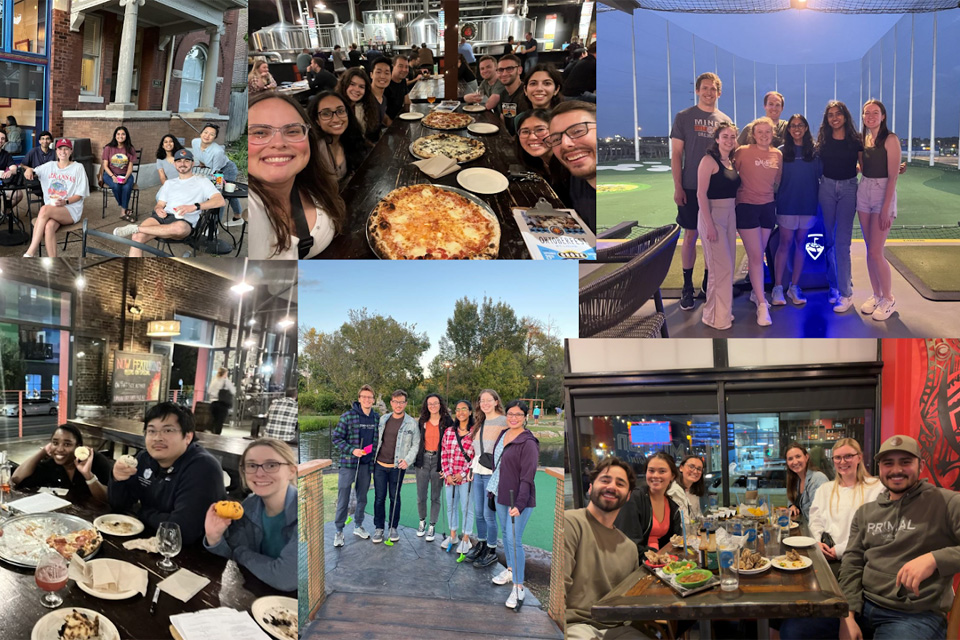
Designed to create a supportive and inclusive environment for medical students, the learning community program prides itself on the small-scale organization of regular social events with students and faculty that encourage personal and professional growth outside of the traditional classroom. These environments allow students to gain valuable insight into the medical field and life as medical students, providing opportunities to build lasting relationships and receive personalized guidance from faculty mentors.
Additionally, the learning community program is designed to create a sense of belonging and community among our medical student body, helping students navigate the challenges of medical school with a tailored selection of second-year student mentors for new first-year students. In addition, all first-year students are assigned to faculty-led “pods” made up of a handful of students from each year, allowing for interaction and mentorship from third- and fourth-year students.
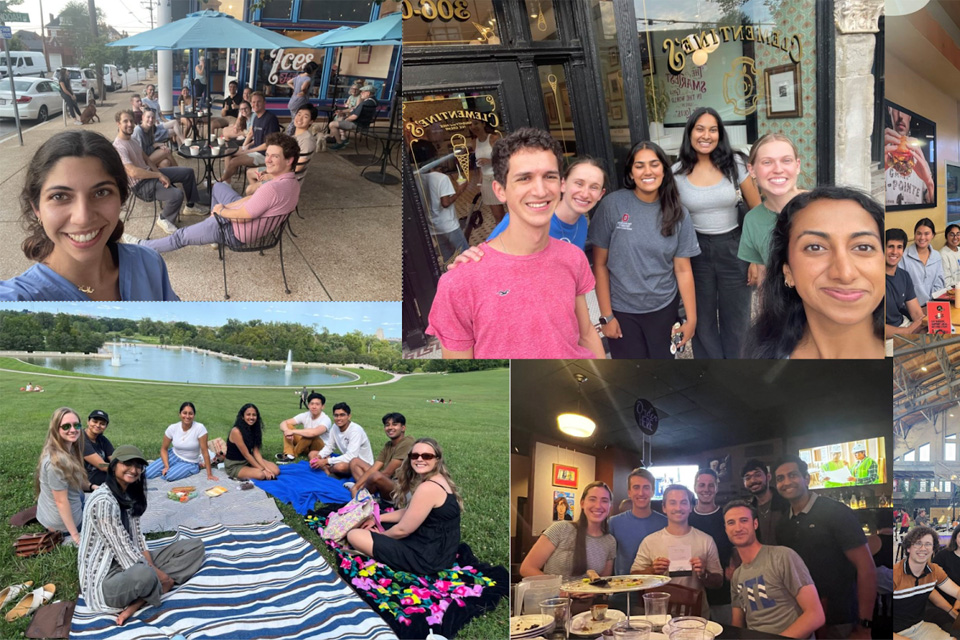
By creating bridges between the extracurricular and the academic, the learning community program enhances the educational experience, cultivates a strong support system, and prepares students for their professional lives.
The learning community program consists of six houses:
- Irene D. Long House
- Michael T. Railey House
- James Swierkosz House
- Cindy Fairchild House
- William Sly House
- Edward Doisy House
Each house consists of “pods” led by attending physicians or deans of the school of medicine, who serve as faculty mentors for their individual groups. Each “pod” consists of students from each medical school class and a third-year medical student serving as the student lead, coordinating social events three to four times per semester.
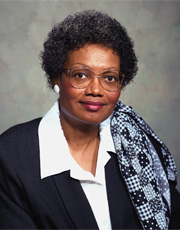
Irene D. Long, M.D., was the first African American female chief of the Occupational Medicine and Environmental Health Office at the National Aeronautics and Space Administration (NASA) and one of the highest-ranking professional women at the center. Long's career in aerospace medicine also included supporting the Johnson Space Center's collection of medical data on astronauts' conditions, such as the physiological effects of space and weightlessness.
Long attended Saint Louis University School of Medicine and completed a residency in general surgery at Ohio’s General Clinic and Mt. Sinai Hospital in Cleveland. She later earned a master’s degree in aerospace medicine from Wright State University School of Medicine. Joining NASA's Kennedy Space Center staff in Florida in 1982, Long became a member of the aerospace medical association and its Space Medicine Branch, as well as the Society of NASA Flight Surgeons. She was honored with the Society's Presidential Award in 1995 and elected as the second vice president in 1996, then served as the organization's president in 1998.
Faculty Mentors
- Heather Eschbach, D.O.
M3 Lead: Arnav Sankaranthi - Paul Kunnath, M.D.
M3 Leads: Sophia Andreatta and Jaladhija Chalichama - Josh Mayer, D.O.
M3 Lead: Michael Regan - Danier Ong, M.D.
M3 Leads: Katherine Bieber and Samuel Cunniff - Julie Sahrmann, M.D.
M3 Leads: Marissa Poole and Meghan Unes
Faculty Mentors
- Uchenna Agbim, M.D.
M3 Leads: Michael Del Mundo and Carter McCormick - Kish Bhalla, M.D.
M3 Lead: Noah Prudlo - Elizabeth Robin, M.D.
M3 Lead: Avi Bhavsar - Rachael Ryan, M.D.
M3 Lead: Peter Danis - Stephanie Shieh, M.D.
M3 Leads: Katherine Lagoni and Emily Patula - Anjani Urban, M.D.
M3 Lead: Sydney Bissland
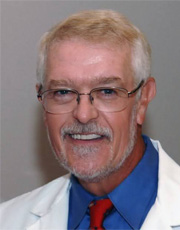
James Swierkosz, Ph.D., studied concert piano at Syracuse University before pursuing his science degree at the State University of New York at Binghamton. He received his Ph.D. in immunology from Wayne State University School of Medicine. At SLU he was the assistant dean of student affairs and course director for the immunology and microbiology module. He was instrumental in the institution of the white coat ceremony at SLU and established the Gold Humanism Honor Society Chapter.
He was remembered for his microbiology exams, where each test question included a student's name in the scenario. These personalized vignettes were rewritten annually. A member of the pediatrics faculty recalls her question about an infection from a rose prick linked to her last name. He was deeply cherished by everyone.
Faculty Mentors
- Lydia Archuleta, M.D.
M3 Leads: Victoria Barbero and Ananya Singh - James Duffy, M.D.
M3 Leads: Sonja Gurbani and Iqbal Khan - Marilyn Maxwell, M.D.
M3 Leads: Liliana D'Alesio and Ella Geise - Nora Porter, M.D.
M3 Lead: Priyanka Kaushal - Luke Stephens, M.D.
M3 Lead: Tracy Si - Anne Corinne Walentik, M.D.
M3 Lead: Dashiell Wuller
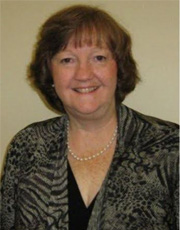
Faculty Mentors
- Amy Bilyeu, M.D.
M3 Lead: Caroline Barron - Cory Cheatham, M.D.
M3 Lead: Nikhila Paleti - Tina Chen, M.D.
M3 Lead: Luke Nelson - Dave Galli, M.D.
M3 Lead: Adam Chen - Mehr Majeed, M.D.
M3 Lead: Grace Johnson - Adam Merando, M.D.
M3 Leads: Tess Korte and Abigail Salanski
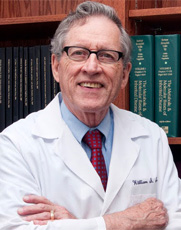
Faculty Mentors
- Jennifer Bickhaus, M.D.
M3 Lead: Megan Kearns - Cindy Bitter, M.D.
M3 Lead: Cameron Crews and Jatin Dhamrait - Lily Dolatshahi, M.D.
M3 Lead: Jasmine Lee - Jonathan Henke, M.D.
M3 Leads: Noor Alyasiry and Meghan Gibbons - Saida Kent, M.D.
M3 Lead: Spencer Schmid - Awais Raza, M.D.
M3 Lead: Charles Minerd
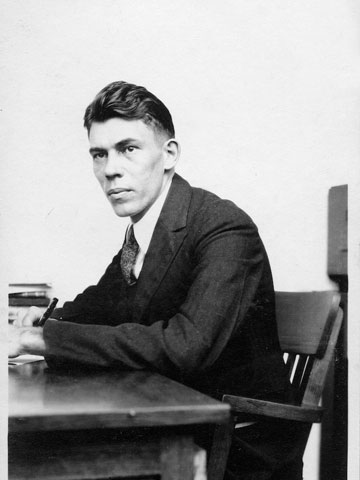
Faculty Mentors
- Austin Dalrymple, D.O.
M3 Leads: Titash Biswas and Maximilian Schmidt-Bailey - Rohini Krishnan, M.D.
M3 Lead: Shreya Bhansali - Chad Miller, M.D.
M3 Leads: Andrew Dugaesescu and McKenna Smith - Adam Streicher, D.O.
M3 Leads: Kellie Bushe and Amrit Subbarao - Luke Weaver, D.O.
M3 Leads: Benjamin Nelson and Joseph Castleman