Advancing the Fight Against MPS
When the world measures impact in millions, the few may be forgotten. But some Saint Louis University School of Medicine researchers refuse to let lives slip through the cracks. Instead, they take up the torch — searching diligently for cures for orphan diseases.
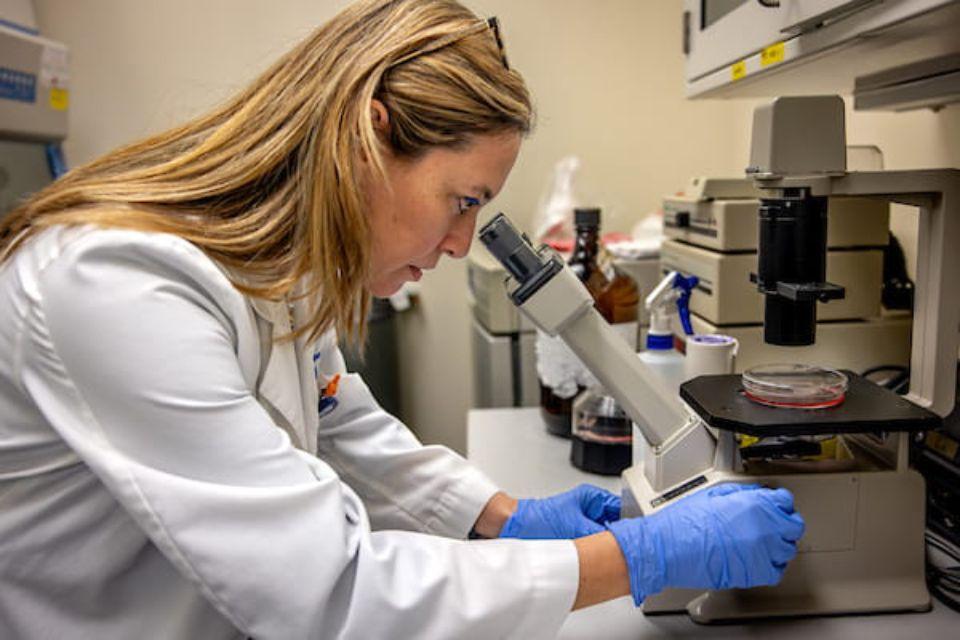
Adriana M. Montaño, Ph.D., professor of pediatrics and vice dean for research, has dedicated her career to researching mucopolysaccharidoses (MPS). This group of rare genetic disorders actively threatens the lives of children and young people worldwide.
These patients experience an imbalance of glycosaminoglycans (GAGs) and proteoglycans (PGs) in their blood vessels, which ultimately leads to cardiovascular diseases. Presently, no effective treatments are available — so Montaño was moved to find one.
“Even though there are only a few hundred patients worldwide, these patients represent a critical area of unmet medical need,” Montaño said. “They are important to their families and communities, and pursuing this research aligns with the Jesuit mission to care for the whole person, especially those facing complex or rare health challenges.”
In 2025, Montaño received over $4 million in NIH funding for a grant, “Cardiovascular Structure and Function in the Mucopolysaccharidoses." For the next five years, Montaño will serve as principal investigator on the project alongside Dr. Raymond Wang, from the Children's Hospital of Orange County. Together, they will lead a multidisciplinary team of experts from SLU, the Children's Hospital of Orange County and the University of Minnesota.
Nearly 120 patients diagnosed with either MPS I (Hurler syndrome) or MPS IVA (Morquio A syndrome) will participate in the study. Researchers aim to track cardiovascular changes, identify predictive blood markers and test the efficacy of treatments that block GAG production.
If treatment development goals are realized, the next decade may bring dramatic quality-of-life improvements for MPS patients. However, Montaño also indicated that the study may yield discoveries that influence broader therapeutic approaches.
“The mechanisms we uncover will be highly relevant to common cardiovascular conditions,” Montaño said. “Our work could inform new biomarkers and therapeutic targets for broader cardiovascular medicine — ultimately benefiting millions of patients.”
This story originally appeared in Grand Rounds magazine.
About Grand Rounds
Grand Rounds is the alumni magazine of Saint Louis University School of Medicine, distributed to alumni and supporters. The magazine includes medical school news, feature stories, alumni and student profiles, and ways to stay connected.