Reinforcing the Student Experience
Medical excellence stems from an ecosystem attuned to the student experience. Therefore, Saint Louis University School of Medicine has embraced a multidimensional approach to student development — cultivating robust support systems, meaningful opportunities and a collective commitment to connection and well-being.
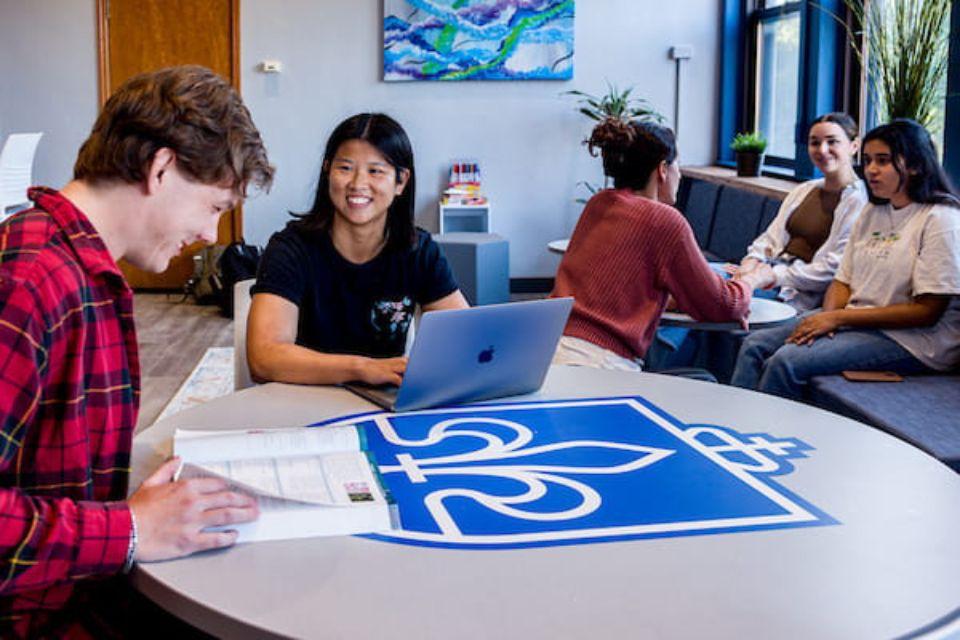
Support
Medical school opens a chapter of heightened expectations and constant adaptation. While many students navigate this transition with confidence, others find the sudden surge of intensity overwhelming.
The Office of Learning Services tracks academic performance and identifies individuals who may benefit from additional support. Previously, these students were invited to Merit — an invite-only program offering study sessions, supplemental instruction and individual tutoring. However, many were hesitant to participate.
“Seeking out support can be intimidating,” Adam Merando, M.D., associate dean of student affairs, said. “Students may be uncomfortable with the idea of their peers finding out.”
To address this, Merit recently evolved into the Peer Assisted Learning (PAL) program. Unlike its predecessor, PAL is open to students of all academic performance levels. The shift has helped to reduce stigma and move mindsets toward proactivity.
“Many of our students have started to engage in PAL voluntarily, which is definitely a change,” Merando said. “Historically, many didn't start engaging until they had experienced difficulties, which was too late.”
PAL is just one example of the steps the Office of Learning Services is taking to help students confront challenges and grow past them. The program’s evolution reinforces an institutional belief: When students feel supported, they thrive.
Opportunity
Continuous growth is a cornerstone of exceptional medical training. To promote sustained academic and professional development, SLU SOM intentionally creates opportunities for discovery that complement classroom learning.
Ashley Richard, student research and service-learning specialist, has spent the last year strengthening connections between medical students and research faculty mentors. The Office of Student Affairs has established a network of mentors throughout SLU SOM and SSM Health Saint Louis University Hospital. Now, when students express interest, Richard and her team quickly direct them to research opportunities.
“Having spaces for graduate students to connect is so important. We want them to be a part of the School of Medicine rather than just an individual program.”
Brittany Hollister, Ph.D.
Available projects span the spectrum of medicine, including basic science, clinical studies, scholarship and medical education. Richard believes that the critical thinking involved in research creates more well-rounded physicians.
“We want students to ask questions, discern responses and gain an understanding of how research informs clinical reasoning and practice,” Richard said. “Access to research opportunities will give them a greater appreciation of evidence-based medicine.”
Students may also pursue an academic distinction: an optional pathway of electives aligned with professional interests. Students choose from one of eight distinctions: global health, health care ethics, medical education, medical Spanish, research, community health, wellness or arts in medicine.
Neal Weber, assistant dean of program evaluation and assessment, shared that each distinction maintains a theme of deep, focused engagement.
“The distinctions are not simply extracurricular,” Weber said. “They are mission-aligned, developmental experiences that provide longitudinal value to both the student and the broader learning community.”
Connection
Medical advancements rely on relationships — many of which take root during a student’s time in school. Thus, cultivating a culture of connection that amplifies achievement has become a central priority for SLU SOM leadership.
This past June, the school welcomed Brittany Hollister, Ph.D., associate dean for graduate studies and postdoctoral affairs. Hollister immediately observed a sense of community within individual programs — but recognized the need to bridge them.
“Graduate students get siloed sometimes,” Hollister said. “We want to help them maintain focus but also ensure they feel like a part of our community.”
Hollister responded by creating the first Graduate Student Gathering — an event designed to push students out of their silos. Attendees engaged with peers across years and disciplines, with some initiating interdisciplinary collaborations.
“Having spaces for graduate students to connect is so important,” Hollister said. “We want them to be a part of the School of Medicine rather than just an individual program.”
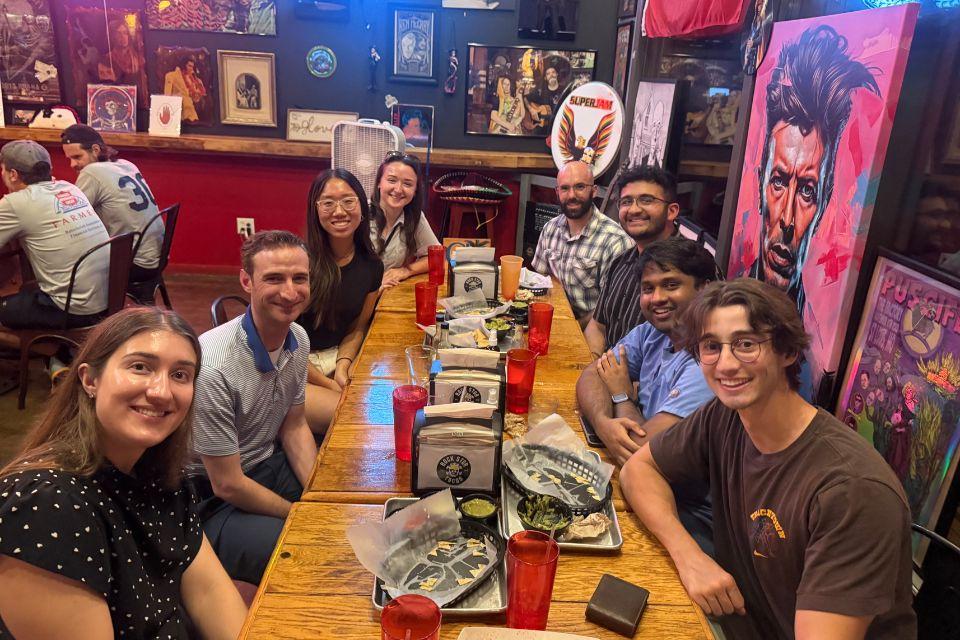
Between formal events, medical students also connect through the learning community program. The program facilitates small-scale social events with both students and faculty members. Luke Schwetschenau, a third-year medical student and student lead, shared that the support gained from the program has changed his outlook on the future.
“The learning community program has modeled the type of physician, colleague and man I aspire to be: one who prioritizes lifelong learning, interpersonal growth and teamwork,” Schwetschenau said.
Well-Being
To provide compassionate care for others, students must first care for themselves. Yet, amid a medical student’s demanding schedule, moments of rest may feel impossible to justify. Effective wellness resources must be built into the rhythm of campus life — and SLU SOM needed someone to lead the charge.
In April 2025, Monisha Hall joined the school as the director of student well-being. Since then, Hall has collaborated closely with the Offices of Admissions, Curricular Affairs, and Student Affairs to enhance wellness programming. Her goal is to build a more robust wellness architecture — one that supports not only mental health, but also physical, financial and spiritual well-being.
“Our lives are not compartmentalized — one thing affects the other,” Hall said. “We must look at the students, their different needs and how they interconnect.”
Notably, Hall prioritizes student voices in her endeavors. Each month, she connects with representatives from each medical school class, known as Wellness Champions, to identify stressors and brainstorm initiatives. These direct interactions have helped her step into the mindset of medical students.
“Each student is unique with their own set of cultural practices and philosophical perspectives,” Hall said. “You must take time to understand the individual in front of you to serve them well.”
Realizing Impact
Every aspect of the student experience combines to yield an environment where transformation comes naturally. At SLU SOM, curious students grow into compassionate physicians who are highly capable of serving their communities.
This story originally appeared in Grand Rounds magazine.
About Grand Rounds
Grand Rounds is the alumni magazine of Saint Louis University School of Medicine, distributed to alumni and supporters. The magazine includes medical school news, feature stories, alumni and student profiles, and ways to stay connected.