2026 Madrid Seminar Workshop Fellows
The Saint Louis University Center for Iberian Historical Studies, in partnership with the Center for Spain in America (CSA), is pleased to share the 2026 Madrid Seminar Workshop fellows and their projects.
2026 Cohort
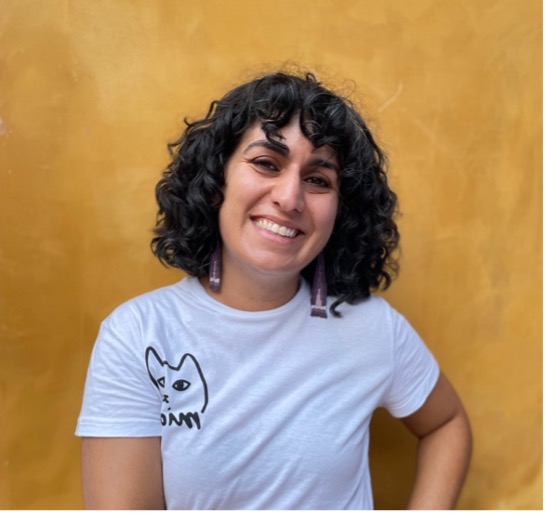
Susan Abraham
Project Title: Writing Diaspora: Moriscos, Spanish Culture and Islam
The century-long religious treatises that circulated among them. Written in Spanish by a religious and intellectual expulsion of Moriscos reached its final stage in 1609 when the Spanish Crown began deporting the remaining communities in the Iberian Peninsula through a series of edicts that lasted until 1614. Between these successive waves of migration, Moriscos formed literary networks across the Mediterranean that reflected a diversity of class, religious background, educational pedigrees, and language. Based on my dissertation research, this project focuses on the large Morisco community that settled in Tunisia during the seventeenth century and the Morisco elite, these didactic texts were intended to provide their exiled community with spiritual guidance on Islamic practices and belief.
With attention to the process of Morisco narrative creation, Writing Diaspora demonstrates how movement and displacement across spatial and cultural boundaries is captured and reflected in Morisco cultural production. It situates diasporic Morisco literature within a transregional milieu and explores how ideas travel from one shore of the Mediterranean to another, how they are adapted and transformed in the process, and what their impact is once they reach new domains. To do so, I examine Morisco didactic miscellanies, doctrinal treatises, and polemical poetry written in Arabic and Spanish that are archived in Spain and Tunisia. Further, I put these understudied texts into conversation with early modern Spanish literature and Arabic writings like qasida poetry, hagiographies, Qur’anic and exegetical (tafsīr) sources, and Islamic jurisprudence (fiqh). Emphasizing the figurative, creative, and literary strategies employed by Morisco authors to guide their readers through acts of reading and ritual practice, I argue that these discursive elements reveal how Moriscos creatively engaged with classical Arabic and North African Islamic traditions while strategically adapting literary forms and tropes rooted in Christian Europe, producing a literature that reflects their diasporic experience. This multilingual framework puts into relief how early modern Morisco writing in diaspora was shaped by experiences of connectivity and interaction in the Mediterranean, challenging scholarship that relegates this corpus to the margins of Spanish and Islamic studies and portrays its authors as passive recipients of a European literary canon. In doing so, “Narrating Faith” captures the richness of Morisco writing by challenging existing literary-historical categories that have long marginalized Morisco textual production within Spanish and Islamic studies.
Susan Abraham is an Assyrian-American scholar, whose research focuses on the history and culture of early modern Spain in connection with North Africa and the wider Mediterranean. In 2025, she completed her PhD in Spanish literature at the University of Virginia, where she also participated in the program in World Religions/World Literatures. Her work is dedicated to broadening the scope of early modern Spanish literature by underscoring the textual interventions and contributions of Moriscos— Iberian Muslims forcibly converted to Christianity—in sixteenth- to seventeenth-century Tunisia. Her dissertation, Narrating Faith Across the Straits: Morisco Manuals of Faith in Tunis and the Early Modern Mediterranean, analyzed seventeenth-century Morisco textual production with a focus on the creative and literary strategies that Morisco authors in Tunisia used to guide readers through acts of reading and ritual practice. Her research was awarded a Charlotte W. Newcombe Doctoral Dissertation Fellowship for ground-breaking work addressing questions of ethical and religious values in the humanities and social sciences, and in 2024, she was a Max Weber Stiftung Doctoral Fellow in Residence at the Orient Institut in Beirut (OIB). Her research has also been supported by the University of Virginia’s Dumas Malone Research Fellowship and the Institute of the Humanities & Global Cultures Clay Endowment for the Humanities. Susan holds a MA in Romance Languages and Literatures from the University of Michigan and a BA in Hispanic Studies from Illinois Wesleyan University. In the academic year 2025/26, she is a EUME Fellow at the Forum Transregionale Studien in Berlin.

Dackerie Bowes
Dackerie Bowes is a Ph.D. student at Saint Louis University concentrating on the history of early modern Iberia and colonial Latin America. Her research interests include the Inquisition, the intersection of visual and material histories, the tailoring of spaces and identities, processions and fashion. Her current projects include a material-based comparison of Corpus Christi processions in Spain and New Spain, as well as a piece on containers utilized for preservation, circulation, display, or containment. While in Spain, she hopes to map archives that contain sources on the boxes, cases, reliquaries and related artifacts that intersect with histories of visibility and invisibility, as well as form new networks of scholars interested in collaborative research, multidisciplinary projects, and future workshop opportunities. She is additionally excited to return to Madrid and grateful to continue her affiliation with the CIHS
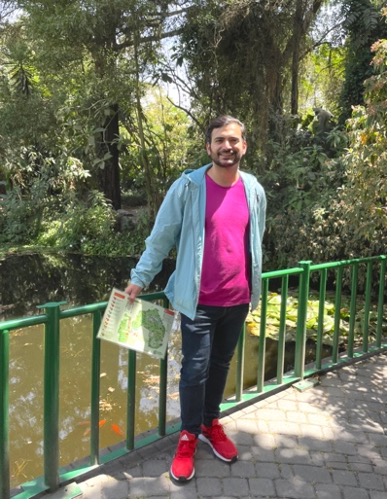
Próspero Carbonell
Project Description
“How many trees and plants, with great medicinal virtues, are there in our Indies,” wrote the Spanish physician Nicolás Monardes in 1565, “leaving no need for the spices from the Moluccas, or the medicines from Arabia and Persia.” With this claim, Monardes articulated a profound reordering of the early modern botanical world: the Americas emerged as a region whose vegetal abundance rivaled and potentially displaced the long-privileged East. This project examines how such claims about materia medica were translated, mediated, and stabilized within European natural history. Focusing on Monardes, Carolus Clusius, and Ole Worm, it traces how plants such as cacao, tobacco, Michoacán root, and agave were described, collected, and circulated across imperial and scholarly networks. Rather than treating early modern botany solely as a narrative of discovery, the study approaches it as a layered process of linguistic, visual, and material translation. Monardes relied on testimonies, correspondence, and imported specimens, transforming Indigenous knowledge, already rendered into Spanish from Indigenous languages, into printed descriptions for Iberian readers. Through Latin translation and adaptation by Clusius, who synthesized Monardes with other Iberian and colonial sources, and through later incorporation into collections and catalogues such as Worm’s Museum Wormianum in Copenhagen, information about American plants was filtered, reordered, and visually reinterpreted. By analyzing botanical treatises, engravings, inventories, and material collections, this project argues that the incorporation of American flora into European epistemologies depended on these cumulative acts of translation, which reshaped both language and visual form while embedding imperial ambitions within early modern natural knowledge.
Próspero Carbonell is a second-year PhD student in Art History at the University of Southern California. He holds an M.A. in Art History (2019) and an M.F.A. (2020) from the Universidad de los Andes, Bogotá, as well as a B.F.A. (2011) from the same institution. His research examines early modern visual and material cultures of the Spanish Americas, focusing on how botanical, zoological, and ethnographic knowledge from the Americas was translated, circulated, and stabilized within European archives, printed treatises, and collections, and how these processes intersected with the political functions of images in imperial contexts. His article “Echoes of Empire: New Granadan Identity in the Mural Paintings of the Casa del Fundador in Tunja” (2025), published in the Sixteenth Century Journal, analyzes how heraldry and moral emblems were reconfigured in colonial mural programs to articulate lineage, Christian virtue, and political legitimacy in claims to land rights by second-generation encomenderos.

Daniela Castro Ruiz
Project Description
To date, the study and interpretation of the illuminated manuscript Bestiario de Don Juan de Austria (c. 1570) has been hindered by its recurring, and to some extent inaccurate, classification as a bestiary, a categorisation that has privileged its better-known animal imagery at the expense of its wider visual and intellectual programme. This unique work, situated at the intersection of the elite tradition of sixteenth-century illuminated manuscripts and the rapidly expanding continental circulation of printed compendia on science, emblems, hunting, and other branches of knowledge, merits closer and more nuanced scrutiny. Recent scholarship has begun to reassess the manuscript, providing a valuable framework for a comprehensive analysis of the full range of its visual and textual components.
The originality of my research lies in its focus on the relationship between image and text, and on how this interaction engages with both the manuscript tradition and the emerging culture of printed books in fifteenth- and sixteenth-century Spain. My work is grounded in a close analysis of the manuscript’s imagery and symbolism, addressing questions of iconography while also incorporating palaeographical and codicological approaches. This combined methodology seeks to elucidate on the conditions of the manuscript’s production, compilation, and intended reception. The Bestiario constitutes an exemplary case study, as its symbolic strategies reveal the complexity of the transition from the late Middle Ages to the Early Modern period, articulating a political and moral discourse through the interplay of word and image. By examining its heraldic, mythological, and allegorical imagery, my research considers how these visual elements extend and reinforce the moral, political, and intellectual arguments addressed by the author-artist to the dedicatee, Juan de Austria.
Daniela Castro Ruiz is a Ph.D. candidate in Art History and Hispanic Studies at Durham University, currently a visiting scholar at CSIC (Madrid), fully funded by CONACyT. She holds an M.A. in History (Honours) from Universidad Iberoamericana, also supported by CONACyT funding. She earned a B.A. in History of Art from Universidad del Claustro de Sor Juana (Mexico City). She has been a language instructor at Durham University (UK), where she has also been a lecturer of the culture module ‘Conflict and Violence between Jews, Muslims and Christians in Late Medieval and Early Modern Iberia.’ Her teaching experience extends to Universidad del Claustro de Sor Juana, where she has delivered courses on the History of Art in the Middle Ages, Classical Aesthetics, and the Cultural History of the Middle Ages and the Renaissance. Additionally, she has taught Spanish at Middlebury College (USA). Daniela has been in charge of planning and coordinating the festival ‘Octavio Paz and the Post-Pachucos: A Migrant Cultural Encounter on Mexican Identity’ (Los Angeles, California) as part of the Institute for Mexicans Abroad. She has also participated in the children's program ‘El Arte de Acercarte al Arte’ and collaborated on the research and adaptation of the museum's collection within the Educational Services and Research Area of the Museo Nacional de San Carlos (Mexico City).
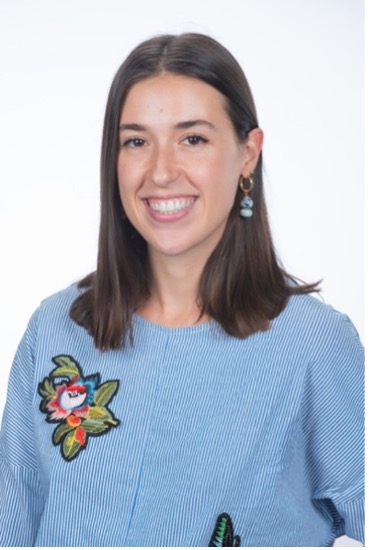
Marta García-Gasco
Research Interests
I am particularly interested in early modern texts authored by women in both the Iberian Peninsula and the Spanish American viceroyalties. Adopting a transatlantic perspective, I seek to examine women’s experiences of space as articulated through migration, travel, and movement. My research explores how these spatial dynamics intersect with other categories—such as race, spirituality, and social class—and how these intersections shape the ways women textualize and negotiate their identities.
Marta García-Gasco is from Madrid, Spain and holds a B.A. in Humanities and Education, a M.A. in Spanish Teaching as Second Language (University of Alcala), and a M.A. in Hispanic Studies (Auburn University). I was awarded a Fulbright scholarship that I enjoyed as FLTA during the years 2020-2021. I also have experience teaching Spanish at the Middle and Upper school level, as well as online tutoring for adults from all over the world. I am currently a first-year Ph.D. student in the Latin American, Iberian, and Luso-Afro-Brazilian Literatures and Cultures program at Rutgers University.
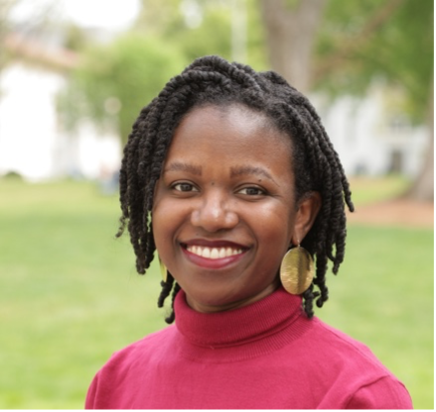
Jareema Hylton
Project Description
This project examines social practices and anxieties in contact zones of the seventeenth-century English and Spanish Caribbean. Interrogating travel as both a transoceanic and local phenomenon, it asks how marginalized individuals in the Americas, or the “New World,” found identity and community through mobility. Mobility was a prominent, recurring legal target of colonial administrators. And, this project proposes, the same is true of concurrent fictional representations of the English and Spanish empires respectively during the period. Thus, this project is interested in tracing the strategies, rhetorical and embodied, that enslaved and free persons in and around the Caribbean exercised to circumvent such restrictions in ways that might often be overlooked as articulations of mobility. It asks, what forms of mobility emerge from this inter-imperial context? And what role did social stigma play in these formulations? Considering a host of sources including English Renaissance drama, Spanish Baroque comedia nueva, travelogues, cedulas, and colonial correspondences, this study argues that we can gain a more intimate understanding of the lives on the so-called margins that shaped the Anglo-Spanish campaign for control of the seventeenth-century Caribbean by unraveling mobility’s meanings.
Jareema Hylton, Ph.D., is a long-term fellow at the Folger Shakespeare Library in Washington, D.C. Her research on travel discourse and the body in Early Modern English and Hispanic literature and culture considers the intersections of empire, nationalism, race, gender and space; this work has been generously supported by the Folger Shakespeare Library, the Newberry Library, the Institute for Citizens and Scholars, and the Mellon Mays Fellowship. Previously, her work has been published in Renaissance Quarterly.
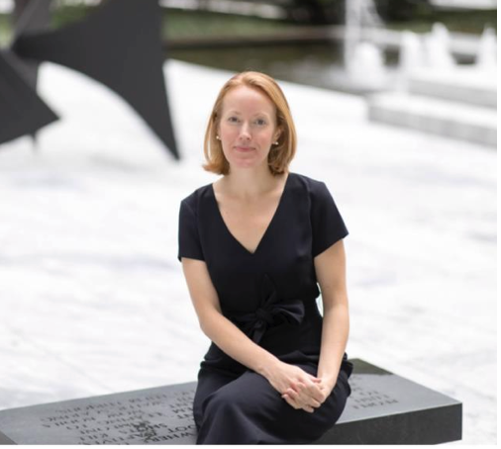
Annemarie Iker
Project Description
My current research project is a study of artmaking and specialization in modern Spain and the Spanish-speaking world. At its core are artists who grappled in the early twentieth century with professional, industrial, and technological specialization as a signifier of modernity. For some of these artists, being modern seemed to mean embracing the division of labor and knowledge that increasingly characterized modern education, employment, and everyday life. For others, conversely, it seemed to mean rejecting this division and instead pursuing more integrated approaches to artistic production that they and their interlocutors associated with medieval and early modern societies. At the moment, my research is focused on Pablo Picasso, Joaquín Torres-García, and Joan Miró, each of whom experimented with constricting and expanding their artistic practices in terms of materials, techniques, styles, and subject matter.
Annemarie Iker is a scholar of modern European art with a special interest in artists, artworks, and arts institutions in late 19th- and early 20th-century Spain. My doctoral dissertation, completed in 2023, examines the form and function of secrecy in Catalan modernisme. At present, I am adapting it into a book while also serving as a contributing writer at the Museum of Modern Art. My recent publications include Pablo Picasso: Boy Leading a Horse (New York: The Museum of Modern Art, 2025) and “Un ‘secret de polichinelle’: l’Els Quatre Gats et le modernisme Catalan (1897-1903),” Revue de l’Art (2024). I received my B.A. in European Studies from Amherst College (2012), M.A. in Art History from Williams College (2016), and Ph.D. in Art & Archaeology from Princeton University (2024). Since earning my Ph.D., I have taught writing-intensive seminars on the visual, material, and technological culture of friendship in the Princeton Writing Program.
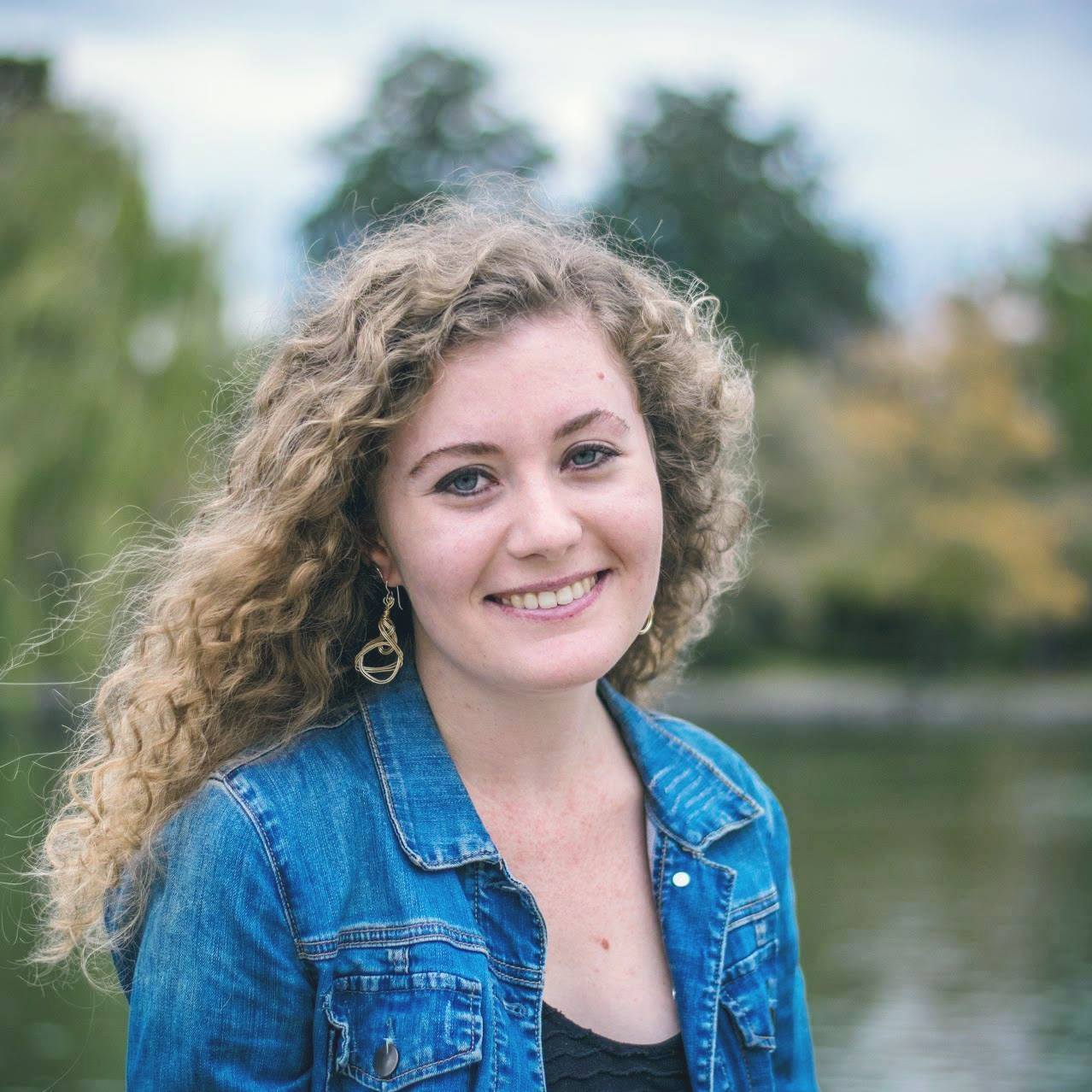
Claire Jones
Project Title: "Commercial Diplomacy, Informal Empire, and the Formation of an Anglo-Iberian Atlantic, 1660-1720."
Between 1660 and 1720, British subjects made significant commercial inroads into Spain, Portugal, and their Atlantic empires. They owed this foothold not only to extensive smuggling and piracy, but also to a set of unequal Anglo-Spanish and Anglo-Portuguese commercial treaties that granted British merchants generous privileges in the Iberian Atlantics. These treaties were secured by a new type of English commercial diplomacy that emerged after the Restoration in 1660, through which the English Crown assumed greater responsibility for protecting its subjects’ trade abroad and placed merchants at the heart of the making of commercial and foreign policy. Over the second half of the seventeenth century, English merchants and diplomats—as well as their Iberian counterparts—articulated the boundaries of a growing English informal empire taking shape both in the Iberian Peninsula and through semi-formal entanglements between the English and Iberian empires in Brazil and the Caribbean. This Anglo-Iberian project then became central to British politics after the turn of the eighteenth century, in which the outbreak of the War of the Spanish Succession and the making of the Peace of Utrecht touched off decades of simmering Anglo-Spanish hostilities. This project argues that legal inter-imperial trade is crucial to understanding the political and commercial dynamics of the early modern Atlantic world, and that the Iberian Atlantics were an under-appreciated frontier of early modern British imperial expansion. It pays particular attention to the role of mercantile politics and print culture at the nexus of diplomacy, law, political economy, and empire to chart the formation of an entangled and interdependent Anglo-Iberian Atlantic.
Claire Jones is a Ph.D. candidate at the University of Chicago writing a dissertation on inter-imperial trade, commercial diplomacy, and informal empire in the early modern Anglo-Iberian Atlantic. My research draws on archival work in the UK, Spain, Portugal, and the US, and deals with the intersection of mercantile history, the political economy of empire, diplomacy, and developing ideas of subjecthood and international law in early modern England, Spain and Portugal.
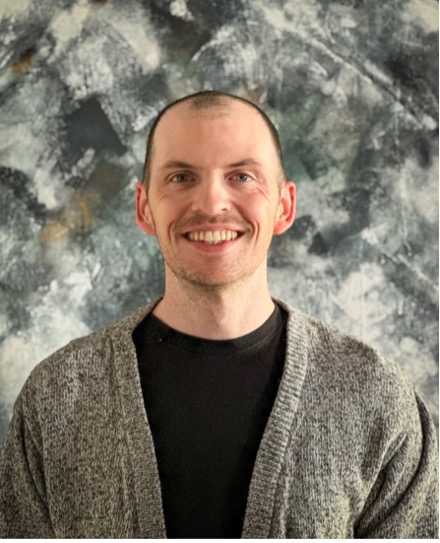
Matthew Jones
Project Description
My dissertation is a comparative study of the Yūshūkan Museum in Tokyo and the forthcoming Memorial de Cuelgamuros outside of Madrid, two institutions that interpret controversial religious sites dedicated to a country’s war dead. I intend to focus focus on discerning how curators of oppositional political beliefs define terms like religion, nationalism, and memory and how they believe such things might be regulated by exhibition design, programming, and architectural interventions.
Matthew Jones is a Ph.D. candidate in Cultural Studies and Museum Studies at Claremont Graduate University. He and his husband live in Los Angeles and, like everyone else there, enjoy its food, weather, and vibrant cultural scene.
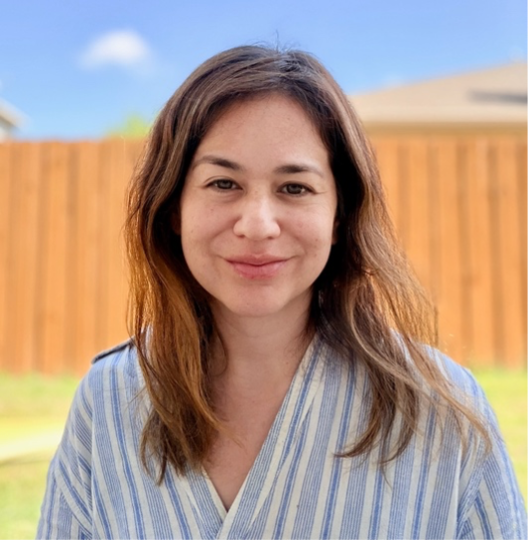
Constanza López Lamerain
Project Description
This project examines episcopal governance and institution-building in colonial Chile through the case of the Diocese of La Imperial/Concepción (16th–early 17th centuries). It asks how bishops sought to build and sustain diocesan authority in a frontier region shaped by distance, scarce resources, and sustained conflict. By tracing the practical workings of governance — visitation, clerical discipline, pastoral organization, and the application of post-Tridentine norms — the study highlights how ecclesiastical power was negotiated across overlapping jurisdictions, including royal patronage, metropolitan oversight, and the presence of religious orders. Based on archival research in Spain and Chile, the project contributes to broader debates on how Catholic reform was translated into local practice and how colonial institutions operated under conditions of instability.
Constanza López Lamerain is a Ph.D. candidate in History at the Universidad de Chile and a historian of colonial Latin America. Her research focuses on ecclesiastical institutions and episcopal governance in colonial Chile, with particular attention to how diocesan authority was constructed and exercised in frontier contexts. She examines the circulation and local implementation of post-Tridentine norms, the interactions between bishops, religious orders, and royal patronage, and the ways crisis and conflict reshaped institutional life. Her work is based on extensive archival research in Spain and Chile.
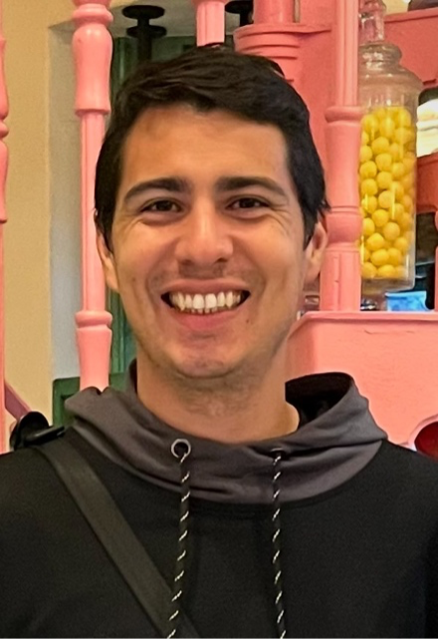
Oswin H. Orellana
Project Description
My current research project, chapter three of my dissertation, examines coins, medallions, medals, counters, and jetons produced under the Spanish Habsburgs in the 1570s and 1580s, in the wake of the victory at Lepanto, to show how these forms of material culture were used to project Spanish superiority over an Islamic “enemy.” Spain’s history was deeply marked by centuries of Islamic presence on the Peninsula, and even in the early modern period, these legacies continued, to some extent, to shape how Spain was perceived across Europe. This chapter functions as a counterpoint to the rest of the dissertation. Whereas earlier chapters analyze how English and Dutch commentators depicted the Spanish, this chapter explores how the Spanish themselves represented the Ottoman Turks.
Oswin H. Orellana is a Ph.D. candidate at the University of California, San Diego, specializing in the history of early modern Europe and the Spanish Empire. My research investigates the formation of Spanish identity in the early modern period, with particular attention to the interplay between self-representation and external portrayals. My current work explores how Spain’s territorial enemies — particularly England and the Low Countries — used a range of media to construct their own interpretations of Spanish identity while engaging in an ongoing dialogue with Spanish self-conceptions.
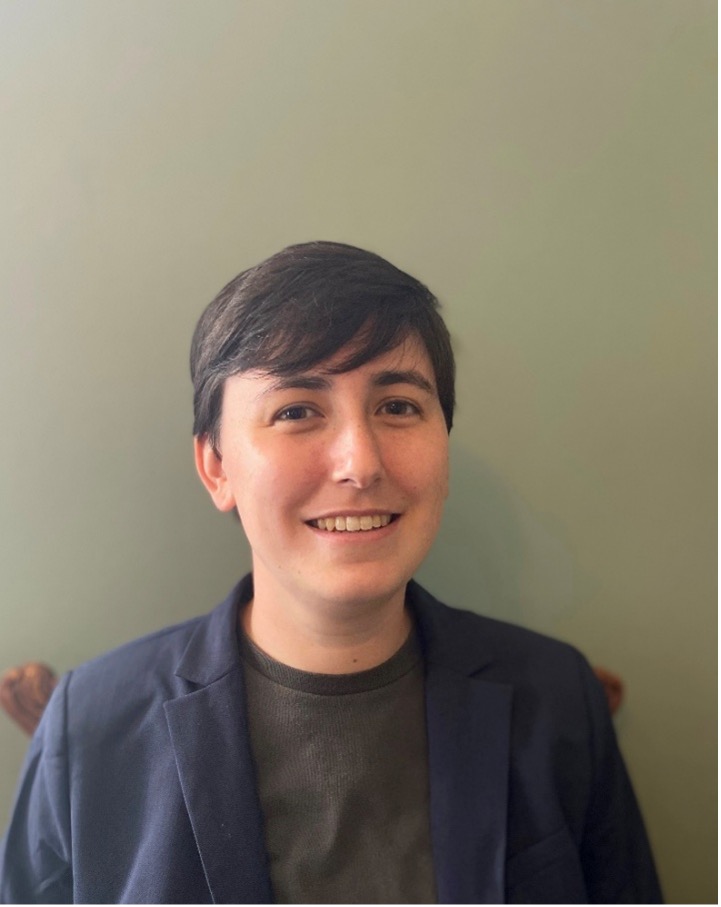
Kate Randazzo
Project Description
My dissertation, “As Muslim As Those in Barbary: The Morisco Expulsion and the Making of the Hispano-Maghribi Frontier, 1609-1641,” explores the aftermath of the expulsion of the Moriscos from Spain in 1609-14. Condemned as traitors and heretics on the basis of their Muslim lineage, the Moriscos were deported from their homes and dispersed across the Mediterranean, with most of the three hundred thousand refugees settling in the Maghrib. While much has been written about the causes and rhetoric of the expulsion, we know far less about how the deportation unfolded on the ground in North Africa and how Maghribis responded to the crisis. Existing scholarship tends to skew along linguistic lines: European scholars, reading Spanish sources, have emphasized that Moriscos struggled to assimilate in the Maghrib and longed to return to Spain, while North African scholars, reading in Arabic, have centered the efforts of Maghribi Muslims to welcome and support the refugees. My dissertation moves beyond this bifurcated historiography by analyzing how the logistics of the expulsion – and the varied fates of Morisco refugees – were shaped by the structural interdependence between Spain’s imperial holdings, or presidios, and the Moroccan and Algerian communities that fought, traded, and allied with them. Tracing the Morisco community in diaspora from their initial expulsion to their establishment of an autonomous republic on the Atlantic coast of Morocco, I show how Morisco mobility between Spain, the presidios, Morocco, and Algeria was mediated by longstanding institutions that enabled migration across the frontier, including military alliances, commercial treaties, and the norms of captive redemption. By analyzing the expelled Moriscos as frontier actors, I seek to revise a scholarly tradition which has long seen 1492 as the end of Spain’s imperial, diplomatic, and cultural engagement with the Islamic world, and instead reveal longer continuities in premodern Mediterranean history.
Kate Randazzo is a Ph.D. Candidate in History at the University of Chicago, where she studies conversion, migration, and diplomacy in the early modern Western Mediterranean. In particular, she is interested in reading across Spanish and Arabic sources in order to recover the shared histories of Iberia and North Africa in the 16th and 17th centuries. Her archival research in Spain and Morocco has been supported by the Center for International Social Science Research and the American Institute for Maghrib Studies.
Shelsea Rodriguez
Project Description
Studies of women in the civil courts of early modern Castile and León have tended towards widows, whose legal standing allowed them to sue or be sued over inheritance, but what happens when a court must decide what belongs to whom inside the marital estate? What kinds of civil disputes drew single women into litigation? Favoring a microhistorical approach, I examine how married women distinguished between their husbands' property and their own, how single women moved and worked with a degree of independence through local economies, and how the economic success of these women — or of their husbands — carried legal liabilities that wound them up in court at a moment when Castile was becoming a profoundly litigious society.
Shelsea Rodriguez is a historian of early modern Spain whose work examines how legal and economic life were negotiated within the household in 16th-century Castile. Her research draws on civil ejecutorias and pleitos to examine how women litigated ownership in the courts.
She is an M.A. candidate at the City College of New York and works with rare books and manuscripts at the Hispanic Society Museum and Library, where her archival and paleographic training intersects with her research on the legal and material cultures of the Spanish world.
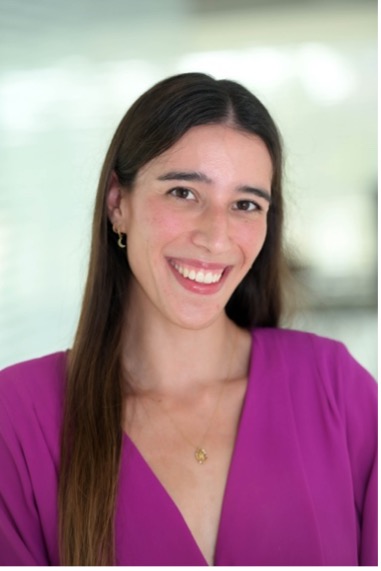
Maryluna Santos Giraldo
Maryluna Santos Giraldo is a doctoral candidate in Art History and Latin American Studies at Tulane University. My dissertation, advised by Professor Barbara Mundy, examines the architecture of the New Kingdom of Granada between the 16th and 19th centuries. My research repositions this territory as a center of production of new building practices and environmental adaptations shaped by the collective expertise of builders and architects. By focusing on the agents, materials, practices of making, and knowledge circulation, my work reconsiders the labels “Colonial” and “Mudéjar” often applied to early modern architecture in the Americas.
She holds an M.A. in Art History with Distinction from University College London, where my dissertation The Pan-optic Legacies of the Nation: An Approach to the National Museum of Colombia explored architecture and display as tools for shaping national narratives. She also earned an M.A. in Art History from Universidad de los Andes (Bogotá), with a thesis on the historiography of the Latin American Mudéjar, and a B.A. in History with a minor in Pedagogy from Universidad Católica Argentina (Buenos Aires). At Tulane, she has built an interdisciplinary trajectory that bridges art and architectural history, material science, and preservation studies. Alongside coursework in early modern architecture and Latin American visual culture, she has pursued classes in environmental sciences, and is currently completing a Graduate Certificate in Historic Preservation.
Matilda Sidel
Project Description
This Ph.D. project explores jurisdictional problems and politics that played out along the fault-lines between land and sea in the sixteenth-century Spanish Atlantic in the context of maritime expansion. While in the first century after 1492 the Iberian crowns claimed dominion over the seas in the abstract and by treaty, the question of how such dominion worked 'on the ground', or rather out at sea, remained ambiguous and largely unaddressed. The project will begin to fill in this picture by investigating how mariners, merchants and more marginalized figures at sea advocated for themselves through forms of ‘waterfront litigation’ – whether it unfolded on coastlines or addressed conflict at sea from a more comfortably ‘landed’ perspective – using the rulings emerging from these disputes to understand which authorities and norms came to matter in practice. To spotlight clashing and overlapping jurisdictions across imperial geographies, pleitos involving foreigners, captives and enslaved people will be of particular interest, as will be anomalous environments such as islands, archipelagos and military presidios.
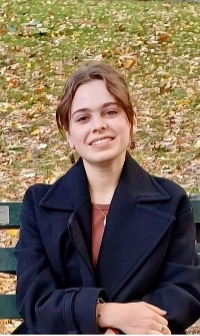
Matilda Sidel is a Ph.D. student in History at Yale University with a focus on the early modern Iberian empires, especially in the Atlantic and the Caribbean. Born and raised across the pond in London, she completed her BA in History at Clare College, Cambridge and her MSt in Early Modern History at Jesus College, Oxford, and spent a semester between the two learning Spanish at the University of Salamanca. She is interested in conflicts of jurisdiction in maritime and littoral contexts, and more broadly in mobility (free and unfree), exchange, and religious and cultural belonging. Having grown up bilingual with half-Swedish, half-American roots, she loves to learn languages and is currently working on her Portuguese.
Olivia Turner
Project Description
My research contributes to the growing scholarship on Luisa Roldán by offering a critical study of her work through the lens of motherhood. After arriving in Madrid in 1689 and being appointed court sculptor in 1692, Roldán spent the remainder of her career producing small-scale devotional sculptures in terracotta, many of which depict the Virgin and Child. I examine how Roldán’s biography, namely her experience as a mother, shaped her innovative artistic production, how her sculptural inventions informed devotional practices among Madrid’s elite, and how her work continues to resonate with viewers today. This project draws on interdisciplinary sources, including commission and provenance documentation, correspondence between artists and elite and royal patrons in Madrid, and close analysis of individual works through iconographic, interpretive, and psychological frameworks. As new sculptures attributed to Roldán continue to emerge, alongside exhibitions and installations of her work, the field remains dynamic and increasingly rich for further study.
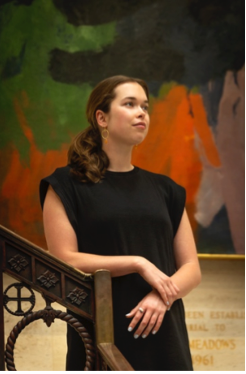
Olivia Turner is a first-year doctoral student and Legacy Fellow in Art History at Florida State University. Before coming to FSU, she spent four years as Curatorial Assistant at the Meadows Museum in Dallas, Texas. With one of the richest collections of Spanish art outside of Spain, the Meadows provided an ideal environment for Olivia to grow as a Hispanist, curator, and art historian. During her time there, she curated exhibitions; contributed to catalogues and the museum’s biannual journal; researched incoming acquisitions and authored object reports and wall labels; and presented extensively to diverse audiences through gallery talks, docent trainings, and educational programs. While in Dallas, she also completed a graduate certificate in Art Museum Education at the University of North Texas, further developing her skills in both curatorial practice and museum education. Over the past year, Olivia has presented at conferences including the Midwest Art History Society, the International Sculpture Center, the Renaissance Society of America, and the Association for Spanish and Portuguese Historical Studies. As a doctoral student, she is pursuing coursework in early modern Europe and New Spain and plans to pursue a dissertation on Luisa Roldán, Spain’s first professional female sculptor.
Nathan Van Aken
Project Description
My research centers around several small towns south of Zaragoza in the late 16th and early 17th centuries. These towns had a high population of moriscos, with one of the most prominent, Villafeliche, becoming the preeminent producer of gunpowder for the Spanish empire by the later 17th century. My research will focus on the material lives, labor, and interactions of moriscos in this region with the local nobility and the inquisition. I am pursuing these questions with an eye toward the type of jobs in which these moriscos were employed, how they were moving throughout the region, and if these factors led non-moriscos in the area to perceive them as a unified group with a coherent threat to the region’s stability and safety. While moriscos in Granada had risen in open rebellion during the War of the Alpujarras, I do not want to equate the two regions or their morisco population. Instead, I want to see if there were local factors that could have caused these moriscos to be perceived as a threat because of their occupations and connections in the region.
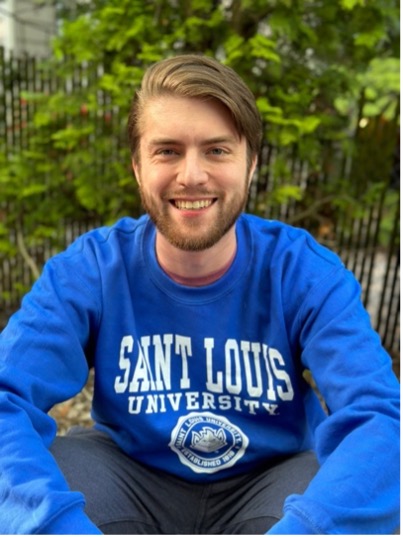
Nathan Van Aken is a third-year Ph.D. candidate at Saint Louis University. He received his master’s degree from Western Washington University where he wrote his thesis on the pseudo-clerical roles that moriscas took on in Spain in the 16th century. His current research focuses on the labor and production of moriscos in the Zaragoza region.
Glauber Wisniewski
Project Title (provisional): "Knights Templar and Jewish Communities in the Crown of Aragon (c. 1130-c. 1312)"
The goal of the project is to fill a gap in the fields of the history of military orders and interfaith relationships in the Crown of Aragon. Even though both fields have grown extensively in the last half-century, the connections between Jewish communities and the Knights Templar remain underexplored. Given the importance of Jewish settlers to the occupation of the recently conquered borderlands often administered by the order, understanding how Templar lordship intersected with Jewish communal life is essential to a fuller picture of medieval Aragonese society.
This work aims to identify and analyze documentation recording the different types of social interactions at play between these entities, including evidence of donations, vassalage bonds, physical protection, persecution, employment, provision of paid services, and moneylending. By doing so, it should help reveal how Jews across diverse social strata and legal statuses living under the jurisdiction of the Knights Templar were perceived by and engaged with the order in the Crown of Aragon, and how these dynamics evolved over time.
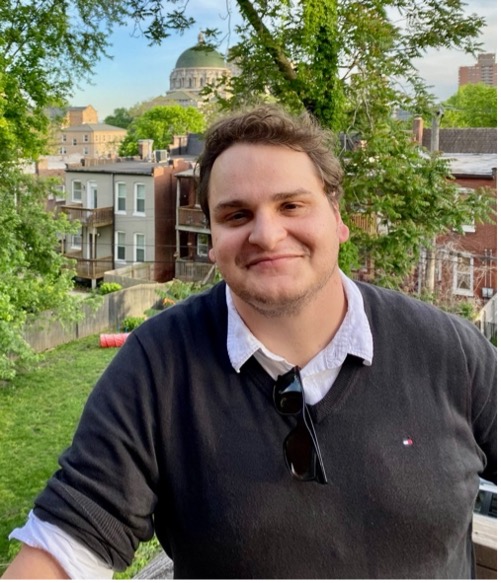
Glauber Wisniewski just completed his second year as a Ph.D. student in Saint Louis University’s History Department. Born in Brazil, he has lived in various regions of the country, as well as in Spain and Portugal, where he earned a Master’s degree in Medieval Studies from the University of Porto in 2024. At SLU, Glauber works under the supervision of Prof. Damian J. Smith; his research interests include inter-religious interactions (particularly those involving Christian institutions, such as the religious and military orders) and borderland societies in the medieval and early modern Iberian Peninsula. He is a proud affiliate of the CIHS, as well as of the Crusade Studies Forum and the Center for Medieval and Renaissance Studies. A music enthusiast, he plays a few musical instruments (though he is not particularly good at any of them) and collects vinyl records. He is also a self-described dog person and drinks more coffee than he should.