Disability Curricula in Undergraduate Medical Education
Approximately one in four adults in the United States lives with a disability, representing a substantial patient population. Individuals with disabilities experience higher rates of chronic conditions, such as diabetes, asthma and cardiovascular disease, as well as increased rates of early mortality and comorbidity.
They also report lower satisfaction with healthcare services, with contributing factors including misassumptions and biases in clinical decision-making. Professional organizations, including the American Medical Association, have recommended expanding disability-related education in undergraduate medical curricula to cultivate a physician workforce capable of improving health outcomes for patients with disabilities.
Disability-focused training can be less emphasized compared to other content areas assessed on medical licensing examinations. This can result in limited integration of disability-related learning objectives within undergraduate medical curricula. This gap has the potential to be reflected in learner-reported outcomes. One recent convenience survey of medical students indicated that nearly all respondents noted a need for additional training in disability-related care, and only about a third reported feeling prepared to provide comprehensive care for patients with disabilities. Similar findings have been reported among practicing physicians, with another survey including respondents from six specialties finding that only 37.7% of primary care providers were confident in their ability to provide equivalent care to patients with disabilities compared with those without.
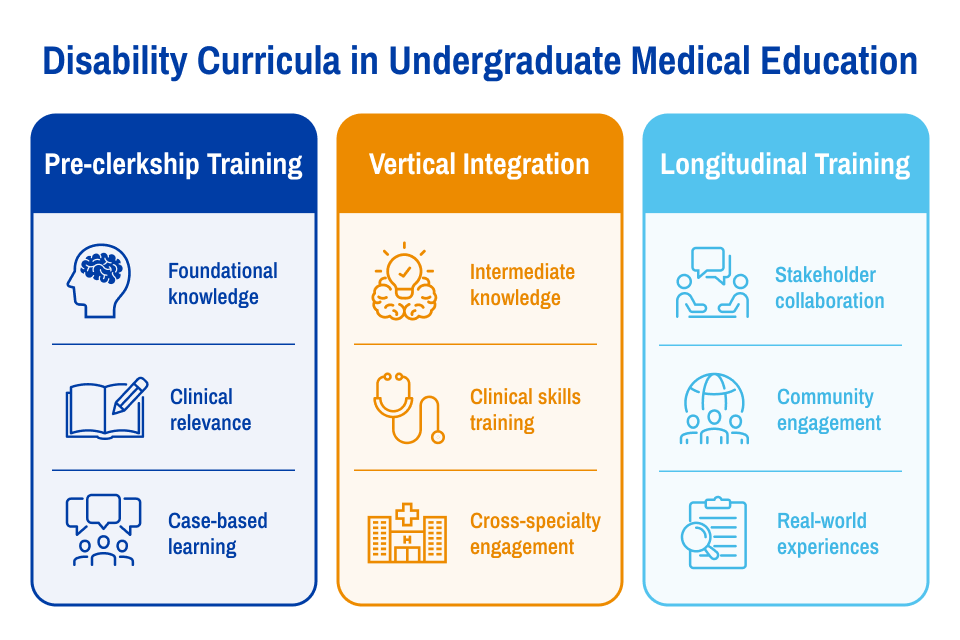
The pre-clerkship phase can offer an early opportunity to introduce core concepts, including the historical and present-day experiences of individuals with disabilities within the healthcare system. Foundational instruction may include the appropriate use of disability-related language as well as an overview of the medical and social models of disability, establishing a framework that recognizes the environmental, structural and attitudinal factors that shape disability-related experiences. Educational strategies such as case-based learning and community engagement can allow students to apply these frameworks while developing relevant clinical skills. Additionally, exposure to sessions about community resources for individuals with disabilities is associated with increased self-reported preparedness to care for patients with disabilities.
Medical schools can help support the transition from pre-clerkship to clinical training through vertical integration, in which foundational concepts are reinforced through progressive clinical application. This approach involves decreasing reliance on classroom instruction while increasing exposure to clinical skills training, including structured communication and adapted physical examination techniques for patients with disabilities. These experiences remain limited in many curricula, with only a third of medical students reporting exposure to adapted exam strategies and standardized patients with disabilities, despite evidence that these opportunities increase perceived preparedness for future practice. Reinforcing these skills across specialties can further emphasize that patients with disabilities receive care in a wide range of settings for both disability-related and common chronic conditions.
Some institutions have developed structured disability-focused curricula within undergraduate medical education through collaborative efforts involving students, faculty, administrators and members of the disability community. One institution implemented a mandatory introductory session for first-year students focused on foundational concepts in disability care alongside a longitudinal elective including community engagement and partnerships with individuals with disabilities. Another initiative integrated disability-related content longitudinally across the curriculum, emphasizing disability identity and culture, advocacy, communication skills and clinical preparedness for caring for patients with disabilities.
Overall, gaps in disability-related training in undergraduate medical education likely persist. While some reported institutional models offer approaches to advancing disability-related competencies, variability in implementation and limited exposure to hands-on experiences remain challenges. As the physician workforce should continue to adapt to the needs of an increasingly varied patient population, disability competency should be a core priority spanning pre-clerkship instruction and clinical skills development. The integration of disability-related education into undergraduate medical education supports the development of future physicians who can provide high-quality care to all their future patients.

Kailee Sowers is a fourth-year medical student (Class of 2027) at the Saint Louis University School of Medicine. Sowers' areas of professional interest include child neurology, medical education and belonging. Sowers can be contacted via email.