Cultivating Emotional Intelligence in Medical Education Through Ignatian Pedagogy
Medical education has long emphasized rigorous academic standards as the foundation for producing competent physicians. Yet this approach has important limitations. Today's medical students experience high rates of burnout, anxiety and depression. Many students struggle not only with the volume of information they must master, but also with the emotional toll of training — sleep deprivation, high-stakes exams, first patient deaths and mistakes that linger long after a shift ends. What if we recognized that supporting students' emotional well-being is not separate from medical education, but an essential component of it?
Emotional intelligence --- the capacity to recognize, understand and manage emotions in ourselves and others --- offers a framework for addressing these needs while simultaneously preparing students for clinical practice. Emotional intelligence is commonly understood as reaching across four domains: self-awareness, self-management, social awareness and relationship management. Within each domain are learnable capacities that can help students navigate stress, uncertainty and interpersonal complexity. When medical students develop these skills, they are better equipped to recognize early signs of burnout, regulate emotional responses in difficult situations and seek support when needed.
Higher emotional intelligence, particularly the well-being dimension, was associated with significantly lower burnout levels among healthcare professionals. Well-being functioned as a protective factor against occupational stress, underscoring that emotional intelligence is not merely a "soft skill," but a critical component of professional sustainability. By fostering these capacities early in medical education, institutions can help future physicians build resilience that supports both learners’ well-being and the quality of care they provide.
The Clinical Case for Emotional Intelligence
When medical students develop emotional intelligence, they strengthen capacities that directly influence their effectiveness as future physicians. Cultivating self-awareness helps them recognize how emotions shape clinical judgment, which can serve as a foundation for safer practice as they learn to pause, reflect and adjust their reasoning in difficult encounters. Through self-management training, students learn to regulate anxiety, maintain composure and support effective teamwork in high-pressure situations. These skills may contribute to enhanced decision-making, reduce medical error and protect against burnout as they progress into residency and professional practice.
When students strengthen their social awareness, particularly empathy, they are preparing for the core work of patient care. The student who practices empathetic listening during clinical rotations may learn to gather more complete histories, arrive at more accurate diagnoses, and tailor treatment plans to patients' lived realities. Empathetic care is associated with reduced patient anxiety, improved pain management and even accelerated recovery, and these outcomes can define future therapeutic relationships.
Relationship management training can equip students for the collaborative realities of modern medicine. Medical students who develop these skills during team-based learning exercises and interprofessional rotations may carry them into residency, where healthy team dynamics correlate with fewer adverse events and improved patient outcomes. The investment of emotional intelligence during medical school can pay dividends throughout a physician's entire career. Cultivating relationship management skills such as resolving conflict, communicating clearly and building trust strengthens collaboration and leads to improved patient outcomes.
Physicians encounter patients from various cultural, linguistic and socioeconomic backgrounds. Developing emotional intelligence can help future doctors navigate these differences with empathy and respect. Through social awareness, medical students learn to recognize their own biases, interpret emotional and cultural cues, and appraise how factors such as language barriers or social determinants of health shape patients’ experiences. This awareness fosters curiosity rather than judgment, transforming clinical encounters into genuine human connections. Emotionally intelligent physicians can foster cultural humility — acknowledging the limits of their perspectives and remaining open to learning from patients’ lived realities — which can build trust and promote more equitable, compassionate care.
Reflection as the Pathway
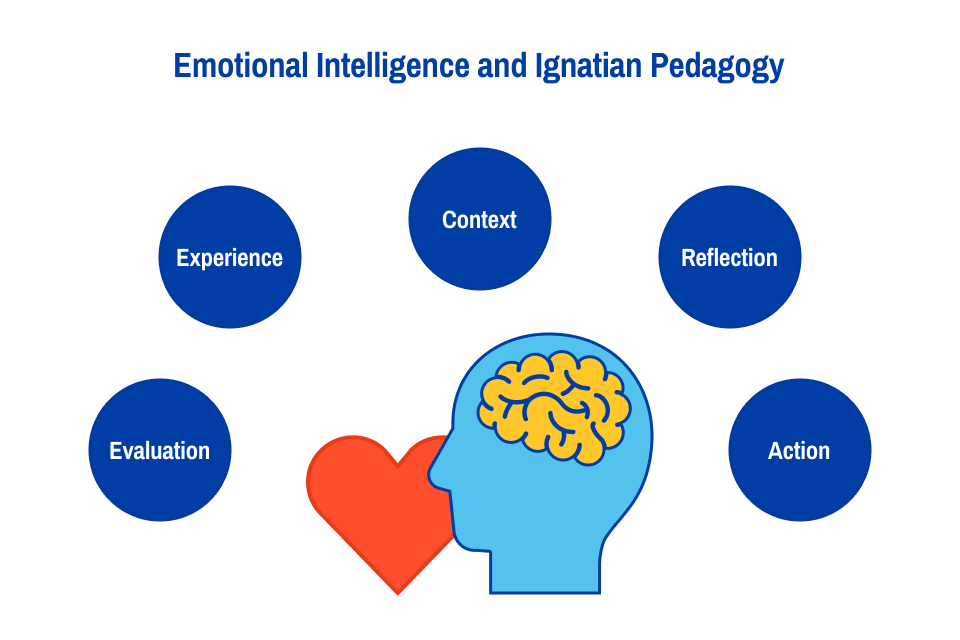
If emotional intelligence is essential and leadership modeling matters, medical education should intentionally cultivate these capacities. One effective approach lies in structured reflection through the Ignatian Pedagogical Paradigm, a Jesuit framework grounded in cura personalis, or care for the whole person. This model unfolds through five interconnected elements: context, which considers the learner’s environment and lived reality; experience, which engages both intellect and emotion through direct or simulated encounters; reflection, which transforms experience into insight; action, which applies that insight in ethical and professional practice; and evaluation, which assesses learning and personal growth. Together, these stages foster intellectual depth, emotional awareness, social responsibility and moral formation — qualities essential for compassionate and resilient physicians. At the center of this paradigm is reflection, the disciplined practice of examining experiences, emotions and responses to derive meaning and guide future action. Structured self-reflection journals can support the development of increased emotional intelligence. Evidence suggests a positive correlation between reflective capacity and emotional intelligence, indicating a reinforcing cycle in which reflection strengthens emotional intelligence, and emotional intelligence deepens reflection.
Medical educators need not overhaul curricula to integrate reflective practice. Small, consistent interventions can make a meaningful difference. These may include brief written reflections after challenging clinical encounters, facilitated small group discussions following emotionally charged events, and mentoring relationships in which faculty explicitly model emotional awareness.
Conclusion
Emotional intelligence is associated with reduced medical student anxiety and burnout, better clinical outcomes and more compassionate, patient-centered care. Cultivating these capacities requires more than formal curricula — it depends on educators who model emotional awareness, empathy and healthy boundaries. Through structured reflection and Ignatian pedagogy, medical education can develop physicians who are not only technically skilled but also emotionally intelligent and deeply compassionate.

Valerie Lovelock is the executive assistant in the Saint Louis University School of Medicine Office of Ignatian Mission in Medicine. She holds a Bachelor of Science in Christian Ministry and Biblical Studies. Lovelock’s areas of professional interest include leadership development, wellness and emotional intelligence. Lovelock can be found on LinkedIn or contacted via email.