Evidence-Based Strategies for Student Success During OSCEs
The Objective Structured Clinical Examination (OSCE) is a cornerstone of medical education. It serves as an evaluation tool, which assesses clinical skills, attitudes, problem-solving abilities and application of knowledge. The OSCE is widely used across the United States, with the majority of M.D.-granting medical schools incorporating OSCEs into their curriculum and many requiring successful completion for graduation.
OSCEs are perceived as beneficial for clinical skills development by the majority of medical students. Despite this, OSCEs represent a shift from the traditional written examinations that students are used to. This unfamiliar format can increase stress and uncertainty, highlighting the need for structured, evidence-based preparation strategies.
Imagine you are a second year medical student nearing the end of your cardiovascular course. You learned about the physiology and pathophysiology of the heart and blood vessels, and have prepared diligently to examine patients with common cardiac complaints. You arrive to your OSCE to learn that your first standardized patient is presenting with chest pain. You know from reviewing the guidelines provided beforehand that you will have 15 minutes to obtain a focused history, perform a targeted physical exam, communicate differential diagnoses and counsel the patient on next steps. Other stations may further assess procedural skills, communication techniques or clinical reasoning. You know that faculty will evaluate you based on a structured checklist. Below, we will discuss some known OSCE preparation methods.
Educational Methods to Influence Better OSCE Outcomes
One of the most effective strategies for improving OSCE performance is deliberate practice through simulated clinical encounters. Because OSCEs utilize standardized patients rather than real patients, they can provide a low-stakes environment in which mistakes can serve as valuable learning opportunities without compromising patient safety. Whether participating in structured formative OSCEs or arranging sessions with peers, practice OSCEs provide a low-stakes environment in which students can refine their skills. Prior to entering the room, carefully reading the instructions can help ensure clarity regarding required tasks and avoid preventable errors. Communication remains a critical component throughout the encounter. Students should avoid medical jargon, actively listen and allow patients adequate time to respond to each question.
Students can gain exposure to the environment, format and expectations. Practicing physical examination techniques can be particularly valuable, as it can reinforce both accuracy and efficiency under time constraints. The most effective sessions incorporate timed stations and checklists to mimic real exam conditions. Students who participate in practice OSCEs can receive higher grades, experience reduced anxiety levels and report increased confidence. Equally important is the role of formative feedback following these sessions, which enables learners to identify knowledge gaps and refine both technical and communication skills. Whether facilitated by faculty or organized among peers, practice OSCEs represent a high-yield, evidence-based approach to preparation.
Success during the OSCE session can also depend on approaching each patient encounter in a structured and organized manner. Understanding that standardized patients rely on structured checklists can help students approach each encounter in a systematic and organized manner. Reviewing example checklists in advance can allow learners to develop a consistent, reproducible approach to patient interactions. For the initial portion of the encounter, a simple framework can be used, such as the mnemonic WIRES (wash hands, introduce yourself, patient identifiers, explain purpose, right side approach, stethoscope cleaned). Similarly, history-taking can be structured using the mnemonic FARCOLDER (frequency, associated symptoms, radiation, character, onset, location, duration, exacerbating, relieving).
Personal Wellness to Strengthen Readiness for OSCEs
Wellness is important when preparing for OSCE exams. Sleep, in particular, plays a significant role in performance and well-being. Disturbed sleep in weeks leading up to the OSCE is associated with reduced well-being on test day, whereas improved sleep quality the night before the exam correlates with improved well-being and higher OSCE scores. In addition, relaxation and breathing strategies can be beneficial. The use of Human Performance Optimization Techniques, which incorporate guided relaxation, mindfulness and breathing exercises, can reduce stress when done 30 minutes before the OSCE. Mindfulness practices increase perceived performance by students. Regular physical activity in the weeks leading up to the exam has also been linked to reduced stress and increased self-confidence. Finally, coping mechanisms contribute to performance, with avoidance being associated with worse performance and positive thinking promoting test day psychological well-being. Emphasis on actively thinking about and preparing for the OSCE rather than avoiding it may prevent negative outcomes and help students feel their best during the exam.
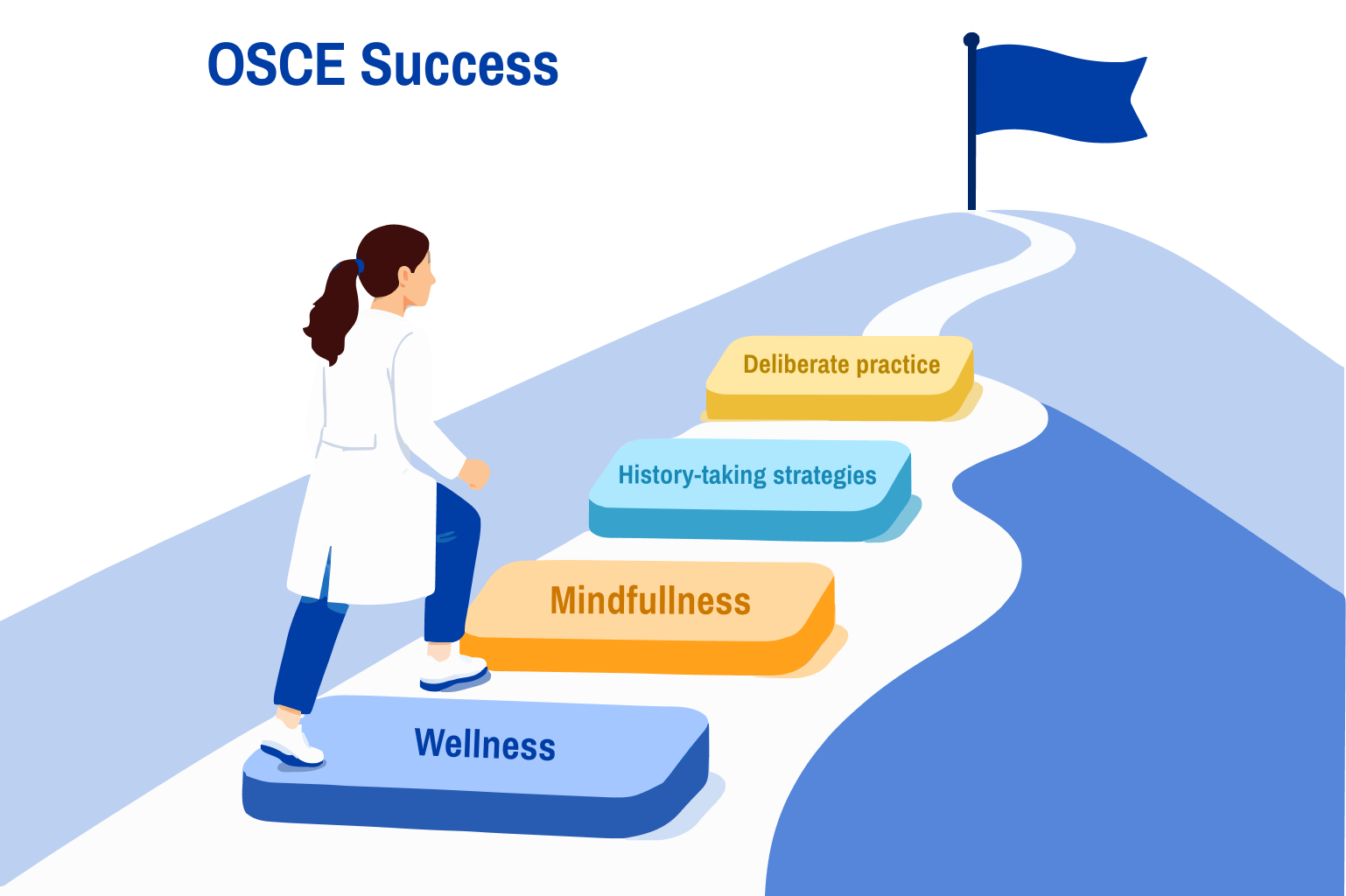
The OSCE is an important and widely utilized component of medical education, requiring students to demonstrate knowledge, clinical reasoning, communication and professionalism. Students must approach OSCE preparation with intentional evidence-based strategies. Focusing on wellness, engaging in deliberate practice through mock OSCEs and using structured strategies during the OSCE can improve both confidence and performance.
Katherine Milloshewski is a medical student (class of 2027) at Saint Louis University School of Medicine. Katherine’s areas of professional interest include family and community medicine, women’s health, and public health. Milloshewski can be contacted via email.