Faculty Research Awards
Meet the CHI Faculty Fellows and Research Awardees whose work advances innovative scholarship across the humanities. Spanning diverse disciplines, regions, and historical periods, their projects address questions of culture, justice, identity, religion, science, and human experience.
CHI Faculty Fellows
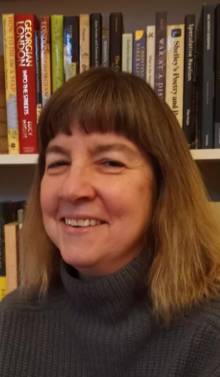
Toby R. Benis, Ph.D.
Project Title: "Jane Austen's Neighborhood: Space, Gender, Community"
My book project, Jane Austen’s Neighborhood, explores the novelist’s representations of neighborhoods as a category of both space and sociability. Reading Austen through the prism of archival documents – ranging from local maps to diagrams of dancing figures – throws into relief how debates about neighborly social practices often were arguments about space. This was true literally as well as metaphorically. Hovering at the nexus of the private home and the world beyond, neighborly rituals in Austen’s novels embed changing conceptions of gender roles, privacy, selfhood, and rank in the ordering of spaces in a globalizing society on the brink of modernity.
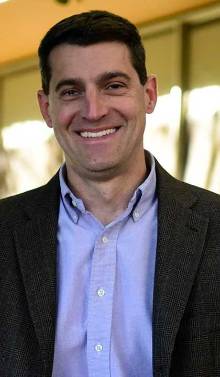
Mark Ruff, Ph.D.
Project Title: "The German Churches and Guilt Accusations, 1918-1989"
My research compares the response of the German churches to allegations of guilt in the aftermath of both world wars. It explores the effects of a potent and under-researched emotion – humiliation. Frequently put in the same category with shame and guilt, humiliation is a powerful motivator behind extremist political movements. Religion, in turn, can stoke the fires of vengeance but can also promote forgiveness and turn swords into plowshares. I would use this funding to complete archival research for four commissioned articles and lay the groundwork for a scholarly monograph on the history of Catholicism after 1945 in Germany.
2026 CHI Faculty Scholarship Research Awardees

Pablo Seward Delaporte, Ph.D.
Project Title: "At Risk of Protection: Counter-Mapping Environmental Risk in Northern Chile's Migrant Settlements"
This project examines how environmental risk becomes a contested form of knowledge, ethics, and governance in informal migrant settlements in Chile. While these settlements are exposed to mudslides, fires, flooding, and infrastructural hazards, state agencies mobilize probabilistic models and zoning classifications to frame such exposure as evidence of inherent danger, legitimizing demolition and resettlement. Drawing on ethnography, archival research, and participatory mapping with Black and Indigenous migrant women leaders, the project analyzes how residents interpret, contest, and repurpose official risk claims. It advances a humanistic account of risk as a spatial narrative through which protection justifies displacement.

Emily Dumler-Winckler, Ph.D.
Project Title: "Abolition Christianities: The Imitation of Christ in Radical Antebellum Politics"
How might antebellum Christian anti-slavery struggles inform and inspire abolitionist movements amid the afterlives of slavery today? My book examines the role of two intertwined radical traditions—abolitionist Christianities and the imitation of Christ—in multi-racial and multi-gendered antebellum abolitionist movements in the U.S. global context as a resource for the church, academy, and abolitionist movements today. Struggles for racial justice have been internal to North American Christianities from the beginning: conversely bolstering slavery and its “afterlives” and fueling abolitionist movements. While past harms demand ongoing reparation, antebellum abolitionist Christianities may inspire and inform creative participation in abolitionist struggles today.
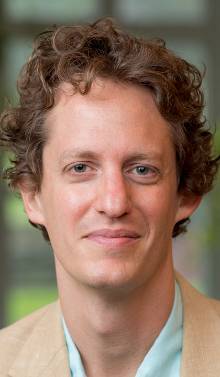
James Redfield, Ph.D.
Project Title: "The Culture of Medieval Provençal Jewry as Reflected in a Newly Discovered Talmudic Manuscript"
This project builds on my discovery of an unpublished and previously unstudied fourteenth-century commentary on a celebrated collection of Talmudic narratives, preserved within a medieval manuscript of Jewish scholarly writings. The study seeks to contextualize this substantial work and its enigmatic author, Moshe ha-Kohen, by examining the intellectual, religious, and institutional world of Jewish Provence, a vibrant crossroads connecting the scholarly traditions of Ashkenaz, Spain, and the broader Mediterranean. By investigating how this commentary reflects and contributes to the distinctive culture of medieval Provençal Judaism, the project will illuminate both the interpretation of important Talmudic texts and the broader networks of learning, philosophy, and cultural exchange that shaped Jewish intellectual life in high medieval Europe.
Past Awardees
As co-editor of the University of Arizona Press’s Modern American West series, I am helping launch The Material World in the Modern West, an edited collection that uses material culture to explore the modern American West through innovative, interdisciplinary scholarship. Featuring essays on objects ranging from lowrider bicycles and cookbooks to firefighting tools, Indigenous art, and migrant material culture, the volume brings together leading scholars to examine how everyday objects reveal histories of identity, environment, migration, and culture. Through a 2025 Western History Association roundtable and a contributor workshop, the project will develop a collaborative model for new scholarship while addressing a significant gap in studies of the modern West.

This project supports the completion of The Influence of Property on the Construction of Racial Identity in U.S. Law and Literature since 1954, a book that examines how legal and cultural ideas rooted in slavery-era concepts of property continue to shape understandings of race, identity, and agency in contemporary America. Through an interdisciplinary analysis of Supreme Court decisions alongside works by writers including James Baldwin, Rita Dove, Yusef Komunyakaa, Don DeLillo, Jorie Graham, and Rosmarie Waldrop, the study argues that property-based notions of subjecthood and ownership often distort legal and social understandings of racial identity, marginalizing minority claims and reinforcing exclusionary conceptions of selfhood. By bringing legal and literary analysis into conversation, the project offers new ways to understand race, agency, and belonging while highlighting how literature can help imagine more inclusive and mutually responsible forms of social life.

This research explores the cultural and environmental significance of the Upper Mississippi River, focusing on human-water relationships along the Great River Road, from Saint Louis, Missouri, to Dubuque, Iowa, with plans to extend further north to Minnesota. Through interviews, museum visits, and site explorations, the project investigates local perspectives on the river, particularly in relation to climate challenges such as flooding and drought. The study will document how communities along the river perceive and interact with the waterway, examining both contemporary and historical views. The project will culminate in a creative nonfiction manuscript that weaves together these ethnographic findings, personal narratives, and cultural insights to create a comprehensive story of the river’s role in shaping local identities and its ongoing environmental impact. The research will also contribute to broader discussions of water governance, climate change adaptation, and environmental sustainability, while offering a new interdisciplinary perspective on the relationship between people and the river. As the projectmoves forward, it will also inform educational initiatives, including an ethnographic field school, offering students the opportunity to engage directly with the river and its communities.
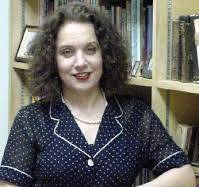
This project supports a book-length study, Transatlantic Constitution-making: Struggles over Democracy, the Rule of Law, and Human Rights, 1820-1870, which examines how reformers, revolutionaries, and political leaders across Europe and the Americas reimagined constitutional government during a period of rapid social, political, and economic change. Focusing on the transatlantic exchange of ideas about democracy, rights, citizenship, and the rule of law, the project traces how constitutional debates shaped modern understandings of human dignity and political authority, regardless of whether particular constitutions succeeded or failed. By comparing movements and constitutional experiments across national boundaries, the book offers the first comprehensive study of these interconnected struggles and contributes to broader scholarship on constitutionalism, revolutions, and human rights in the nineteenth-century Atlantic world.
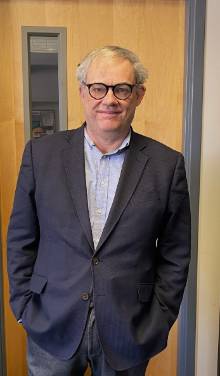
The Descent to War: Franco and the Crown of Aragon in the Thirteenth Century examines why the long-standing diplomatic relationship between France and Aragon deteriorated into the War of the Sicilian Vespers (1282) and a broader centuries-long struggle for power in the western Mediterranean. Drawing on extensive archival research in Barcelona, Zaragoza, Madrid, and eventually Sicily, the study investigates the political, dynastic, commercial, religious, and personal factors that led negotiations and treaties to fail, ultimately making war appear preferable to peace. By analyzing a rich but underutilized body of medieval records, the project seeks to explain not only how this conflict emerged but also what it reveals about the broader and enduring question of why societies choose war over cooperation, contributing to scholarship on medieval history, diplomacy, conflict, and peace-making.
-
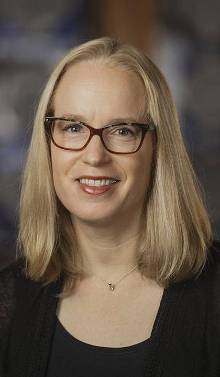
This project examines the cultural afterlife of the vortex atom, a nineteenth-century scientific theory proposed by Lord Kelvin that described atoms as vortices in the ether and was once considered a serious alternative to modern atomic theory. Although the theory was abandoned by physicists around 1900, it found new life in Spiritualist, Theosophical, and literary circles, where it was reinterpreted as evidence for religious and metaphysical ideas. By tracing the vortex atom's journey from mainstream science into occult thought and popular fiction, the project explores how discarded scientific theories can continue to shape culture long after their scientific relevance has faded. More broadly, it sheds light on the complex relationship between science, religion, and literature in the Victorian era and offers insight into how scientific ideas are adapted, misunderstood, and repurposed by broader audiences.