Drug Discovery Research
Tomorrow's medical breakthroughs are being explored today through drug discovery research in Saint Louis University's School of Science and Engineering.
There is an atmosphere of serving others at SLU. Making potential new drugs for those whose lives are significantly impacted by disease is putting that mission into action.
Marvin Meyers, Ph.D., Professor of Chemistry
From deadly infections to chronic pain and more, SLU faculty members and students are exploring innovative treatments that have the power to change lives.
Research Projects
Advancing Treatment for "Crypto" Infections
Cryptosporidiosis, a diarrheal disease caused by the parasite Cryptosporidium, or “Crypto," kills over 100,000 children annually, most of which are young children in the developing world. The only approved drug for the infection, which can also be transmitted in public swimming pools or places like daycares, is only partially effective in infants and is not effective in immunocompromised patients.
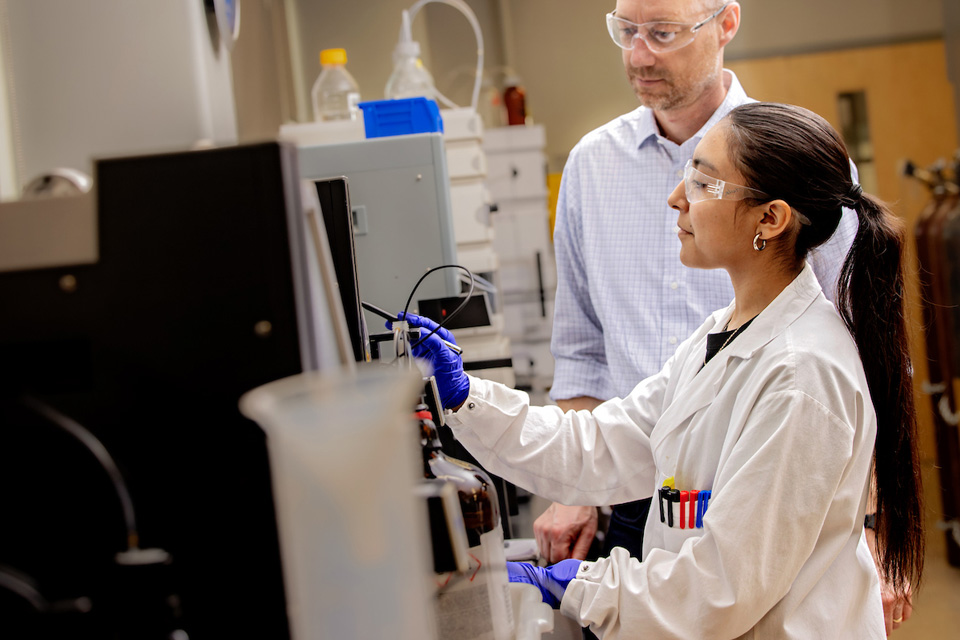
In the Meyers Lab, led by chemistry professor Marvin Meyers, Ph.D., researchers are looking to identify an effective drug molecule that will kill the parasite while being safe enough to be taken by infants and inexpensive enough to be distributed to those who need it the most. Supported by funding from the National Institutes for Health, the lab has already identified two particularly promising lead molecular series and is actively working on their optimization.
Learn More About the Meyers Lab
Developing New Treatments for Chronic Nerve Pain
In the Arnatt Lab, led by associate professor of chemistry Chris Arnatt, Ph.D., researchers are working to develop new, non-opioid treatments for chronic nerve pain caused by conditions such as chemotherapy, diabetes and nerve injuries. Chronic nerve pain can be extremely difficult to treat, and current medications often have significant limitations, including side effects and addiction risks.
This interdisciplinary research, conducted in collaboration with researchers in SLU's School of Medicine, focuses on proteins in the spinal cord called G protein-coupled receptors (GPCRs), which act as molecular switches in cells and play important roles in pain signaling. Researchers in the Arnatt Lab design and synthesize small molecules that can block specific receptors involved in chronic pain.
Supported by two NIH grants, the research combines computer-aided molecular modeling to design potential drugs, synthetic organic chemistry to create the compounds and analytical technologies to characterize them. Researchers then use cell-based assays to determine whether the compounds effectively block their intended targets and collaborate with pharmacologists to evaluate promising candidates in preclinical models of chronic pain. The ultimate goal is to develop safer, more effective pain treatments without the risks associated with opioids.
Learn More About the Arnatt Lab