


Billiken Pioneers: Student-Athletes in Women’s Sports When Title IX Became Law
In 1980, just eight years after Title IX of the Education Amendments of 1972 was signed into law, the Billiken volleyball team beat nationally ranked Florida State University and the University of Louisville, becoming the first athletic team to win a women’s championship title for Saint Louis University.
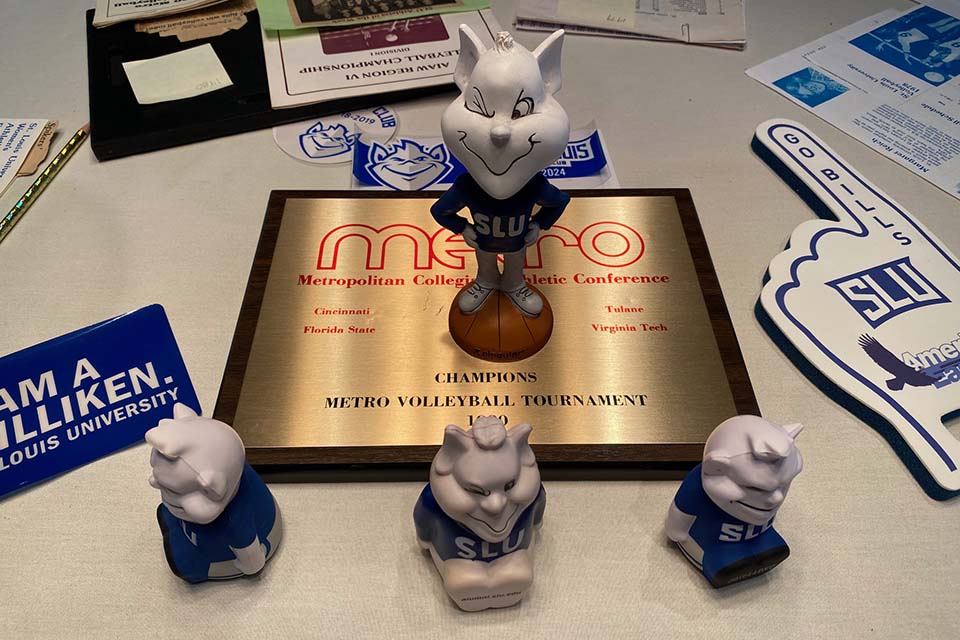
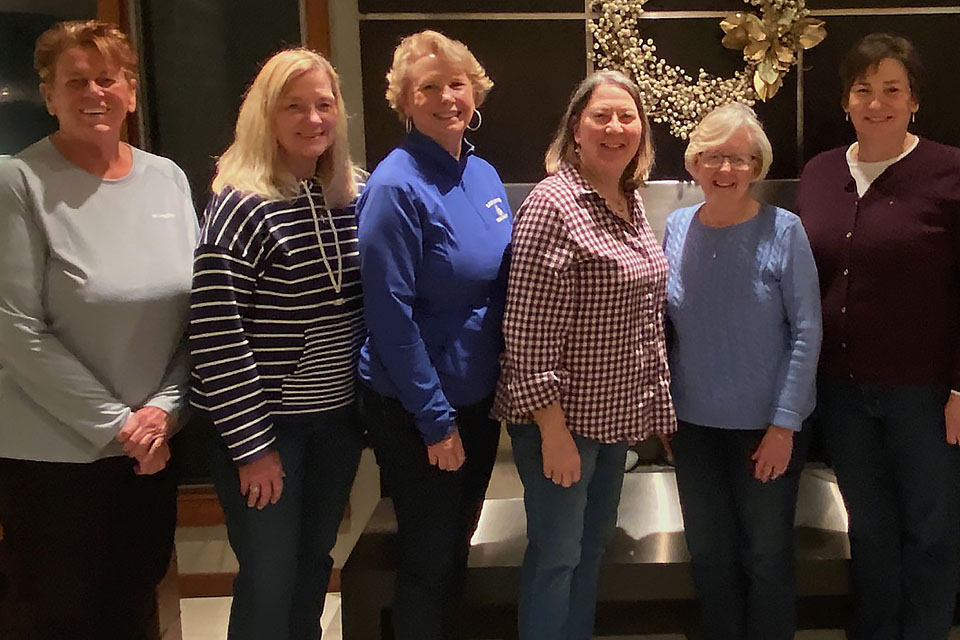
“We were really fortunate to be on the cusp of that change,” said Alison (Kramp) Talbot (A&S ’81, CSB ’81), who played for SLU from 1977-1980 and was on the winning team. “It made such a difference in our lives. We saw how Billie Jean King changed tennis for women athletes, but because we had been playing sports since grade school, we didn’t really understand what a big deal Title IX was.”
The players may not have fully realized the impact, but their coach, Margaret (Reich) Huskey, did. She had just graduated from the University of Dayton, where she played on the university-sponsored volleyball team, which qualified for the Ohio state championships each of her four years. Some of her peers asked her to teach a few skills to their student-run club team at SLU to help them become more competitive. The year was 1971.
When Title IX went into effect in June of 1972, educational programs and activities at colleges and universities receiving federal funds were mandated to ensure female athletes had the same opportunities, scholarships and treatment as their male counterparts. To comply, many schools, including SLU, elevated popular women’s club teams on campus, such as volleyball, to school-funded varsity teams. This practice ensured the school would meet the male-female proportionality criteria and would not lose federal funding.
“I was helping my friends, and along comes Title IX,” Huskey said. “Larry Albus, SLU’s athletic director, called the club volleyball players and asked if they knew anyone who could coach the new women’s sanctioned team. They gave Albus my name, so I met with him, and the rest is history.”
Getting in the Game
The new law put female collegiate student-athletes on an entirely new playing field, making them eligible for athletic scholarships. During the team’s first few seasons, Huskey awarded scholarships to only six players because it was reasoned that was how many would be on the court during games, even though many teams averaged almost twice that number. As of 2025, Division I women’s volleyball teams can offer up to 18 scholarships per roster, according to the NCAA Scholarship Guide.
“Getting the half-tuition scholarship is why I went to SLU,” Talbot said. “I almost played basketball at Marquette University, but Margaret approached me at the last minute with the scholarship offer, and I chose SLU.”
Linda Gauvain (SW ’79, GRAD SW ’81, VSN ’87)
The impact the scholarship had on me was that it allowed me to get my college education. ... It makes me think about how the timing of Title IX made SLU possible for me.”
The same was true for other female athletes, like Christina (Ylagan) Mahl (VSN ’83), who walked on the volleyball team in 1979 and received an athletic scholarship the following year, she said. She lived at home to save money, and because her parents covered the other half of tuition, she graduated with a nursing degree without taking out any student loans.
Finding enough financial assistance to attend college played a significant role in the decision of Linda Gauvain (SW ’79, GRAD SW ’81, VSN ’87), because her parents didn’t have the means to pay the tuition, Gauvain said.
“The impact the scholarship had on me was that it allowed me to get my college education,” Gauvain said. “It makes me think about how the timing of Title IX made SLU possible for me.”
The Law vs. Culture
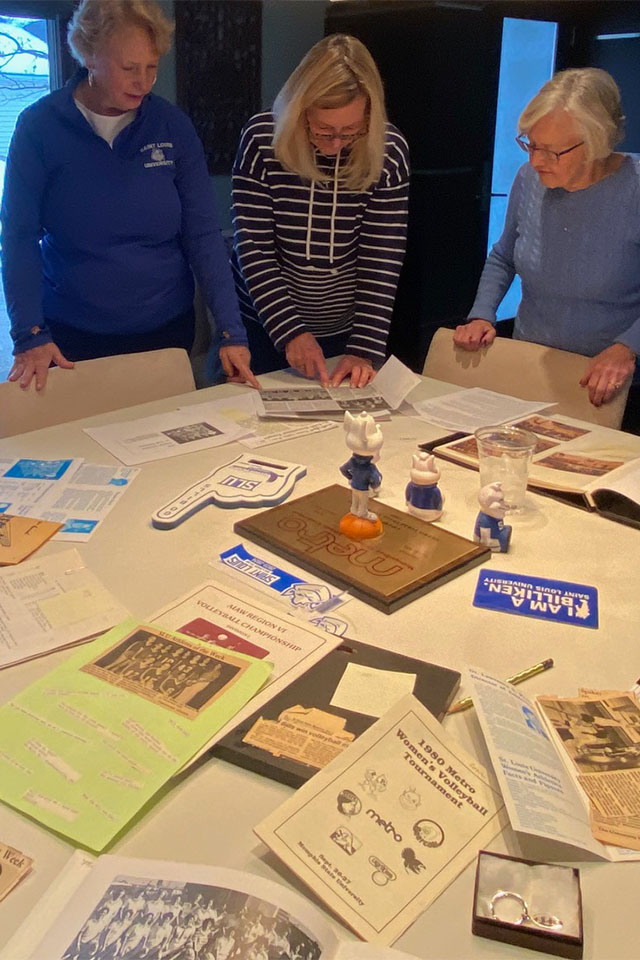
As Title IX expanded sports opportunities for women, the team, including Huskey, quickly learned that the culture shift would take time to implement fully.
Huskey recalled that during the early stages of change, not all was equal compared to the men’s athletic programs. Her office as head coach was a converted closet; the volleyball team’s first uniforms were leftover basketball uniform shirts with the players having to buy their own shorts; and when the men’s basketball team had practice in the West Pine Gym, which was the volleyball team’s home court, the women had to haul their equipment to Xavier High School and set it up to play their matches. The team’s meal budget was minimal, at approximately $5 a day per person, Huskey said, and during the first year of sanctioned play, the “team van” consisted of a caravan of parents and students driving the team to and from games.
Despite the limitations and growing pains, the women were excited to finally be recognized as University-sponsored athletes.
“I think that everybody was grateful for whatever little things we got along the way, which I don’t think people today would even realize,” Huskey said. “But look where women are now.”
Over the past several years, former SLU volleyball alumni have played professionally, including Taylor Paulson (A&S ’16), Danielle Rygelski (A&S ’17), and Maya Taylor (CSB ’21). From the volleyball Billikens’ earliest days to today, the players’ passion for the team sport, equitable scholarships and personal development have remained consistent.
“We were all working toward the same goal,” Mahl said. “You learn so much about yourself when you’re part of a team. Our team gave me a home with a certain group of women who helped me take chances and make lifelong friends.”
SLU’s female student-athletes in the 1970s and 1980s forged their own paths and paved the way for a transformative era in college sports. These women made history by passionately pursuing what they loved.
“What I am most proud of is how far women’s sports have come,” said Huskey. “We were pioneers. I just never thought of it like that when it was happening.”