


With a $4.1 Million Agreement, Saint Louis University's Geospatial Center Will Train Federal Workforce
Maggie Rotermund
Senior Media Relations Specialist
maggie.rotermund@slu.edu
314-977-8018
Reserved for members of the media.
ST. LOUIS - Saint Louis University's Geospatial Center has been awarded a Blanket Purchase Agreement (BPA) from the federal government's GEOINT Learning Through Academic Program (GLAP) to develop training for the geospatial sciences.
Over the next five years, under the BPA not to exceed $4.1 million, SLU will deliver specialized training in GeoAI, Remote Sensing, GPS/PNT, and Geospatial Analytics as a part of the federal government’s GEOINT Learning through Academic Programs (GLAP) initiatives.
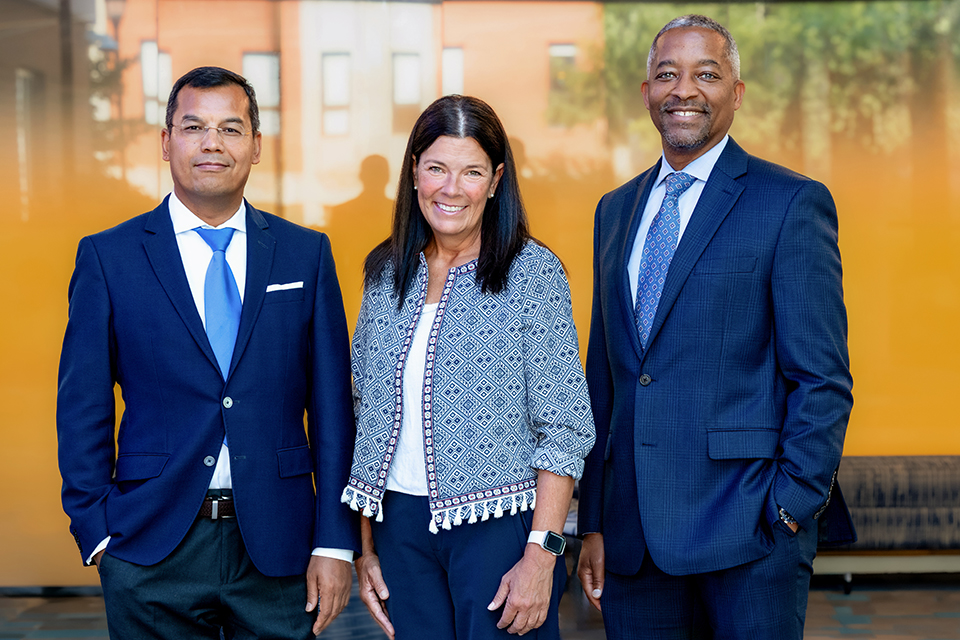
The “Workforce Transformation for Future GEOINT through Academic Training in GeoAI, Remote Sensing, GPS/PNT and Geospatial Analytics,” program is led by Vasit Sagan, Ph.D., professor of geospatial science and director of SLU’s Geospatial Center.
“This is recognition of the momentum we’ve built at SLU since 2020 through the GLAP initiative, as well as the University’s strategic investment in geospatial science,” said Sagan. “It affirms the strength of our work helping shape the future of the GEOINT workforce.”
The BPA allows the geospatial workforce to be trained in new technologies and methodologies. It also reaffirms SLU’s role as a leader in geospatial training and continues to build St. Louis’s reputation as a national and international hub for geospatial science and technologies.
“SLU has invested significant resources into geospatial faculty hiring and resources in the areas of GPS/PNT, Quantum Sensing technologies, GeoAI, geodesy and applied domains, positioning SLU as a national leader in this field,” Sagan said.
Sagan serves as the principal investigator and project director, along with Gregory Triplett, Ph.D., the Oliver L. Parks Dean of SLU’s School of Science and Engineering as co-PI. They are partnering with Katherine Cain, executive director of SLU’s Workforce Center on the project.
“SLU’s Workforce Center meets the demands of the modern workforce by leveraging the academic expertise of SLU’s faculty,” Cain said.
Courses offered through the program will be the same as those offered to SLU students studying geospatial sciences, just in a condensed format designed for those already working in the field.
In the last five years, SLU has offered 33 geospatial training courses to the federal workforce and its global partners.
“SLU is nimble and robust in our offerings as we address the changing dynamics of the geospatial market,” Triplett said. “We can move quickly to prepare our students and the workforce.”
About the Geospatial Center
Launched in 2026, the Saint Louis University Geospatial Center is a university-wide hub for geospatial research, education and workforce development, building on more than a decade of leadership in the geospatial sciences. The Center is housed in the School of Science and Engineering and brings together faculty, students and partners to apply GeoAI, quantum sensing, remote sensing and advanced analytics to challenges in national security, food security, health, the environment and the economy.