


SLU Legends and Lore: The Billiken
The Saint Louis University Billiken is one of a kind.
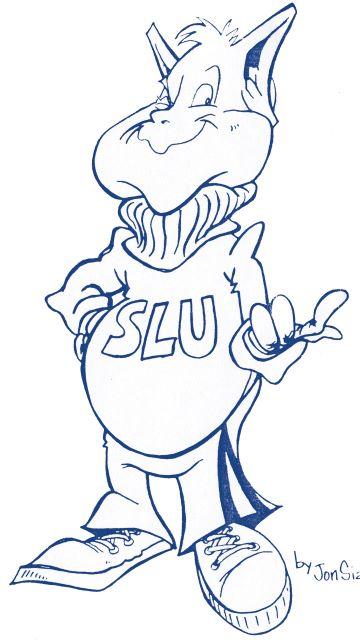
The mythical creature, who represents things as they ought to be, has been the face of Saint Louis University sports since the early 1900s.
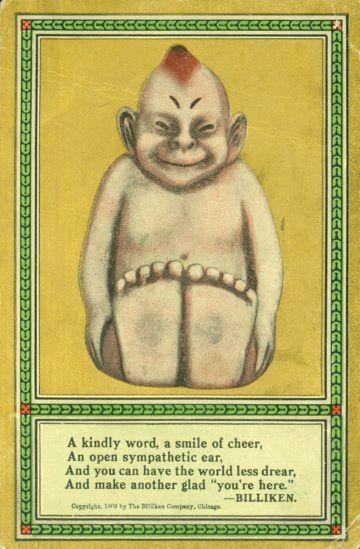
Saint Louis University’s Billiken was born just across the state in Kansas City. On Oct. 6, 1908, illustrator Florence Pretz received a patent for her “ornamental design form,” one titled “Billiken.”
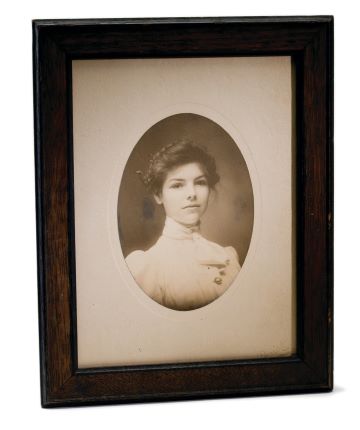
The 21-year-old Pretz was an aspiring artist teaching at Kansas City’s Manual Training School.
Her Billiken creation was inspired by The Rubaiyat of Omar Khayyam, an ancient poem. The Persian poem touched her deeply and she was driven to “make an image which embodied hope and happiness to sort of live up to,” or her “god of things as they ought to be.” Pretz took her creation’s name from another poem by Canadian poet Bliss Carman.
Following his 1908 debut, the Billiken became a national fad. Dolls, postcards, plates, belt buckles, salt and pepper shakers, and other memorabilia featured him.
The Billiken has appeared around the world. In Alaska, an ivory carver named Happy Jack created a figure based on an Inuit god of good luck. Billiken statues can be found in Japan, particularly in Osaka, and China also has a figure who resembles a Billiken.
While the Billiken can be found around the world, his home is at Saint Louis University.
“Most mascots are animals – tigers and bears and lions – but we have the Billiken. He is 100 percent unique,” said SLU archivist Katie Mascari. “He’s ours. We are the only university to have the Billiken, and that’s really special.”
The Billiken Rag
Ragtime music was a national craze when E.J. Stark penned his “Billiken Rag.” Stark was an established composer and music publisher based in St. Louis who worked with many popular musicians, including Scott Joplin.
Stark published his “Billiken Rag” on Feb. 21, 1913. The piece features nods to Franz Liszt's virtuosity, as well as traditional hallmarks and riffs of ragtime music.
SLU’s “Blues and Whites” Become Billikens
SLU had athletic teams for years before Pretz’s Billiken was created, and SLU sponsored a football team as early as 1886.
However, early SLU teams did not really have a mascot – they were simply known as the “Blue and White,” after the school’s colors. Associating a mascot with a sports team dates to around the same time when the newly-created American baseball teams began taking on a mascot as a good luck charm.
By the beginning of the 20th century, many American college sports teams had also taken on mascots. As the century progressed, these mascots often took on mythic pasts and students created their own traditions, rituals and artistic tributes to their favorite campus good luck charms.
While the Billiken craze was short lived nationally, SLU’s football team was building a formidable legacy on the field.
Both the 1904 and 1906 teams compiled perfect 11-win seasons. During the first game of the 1906 season, Saint Louis University became the first team to throw a forward pass during an intercollegiate game.
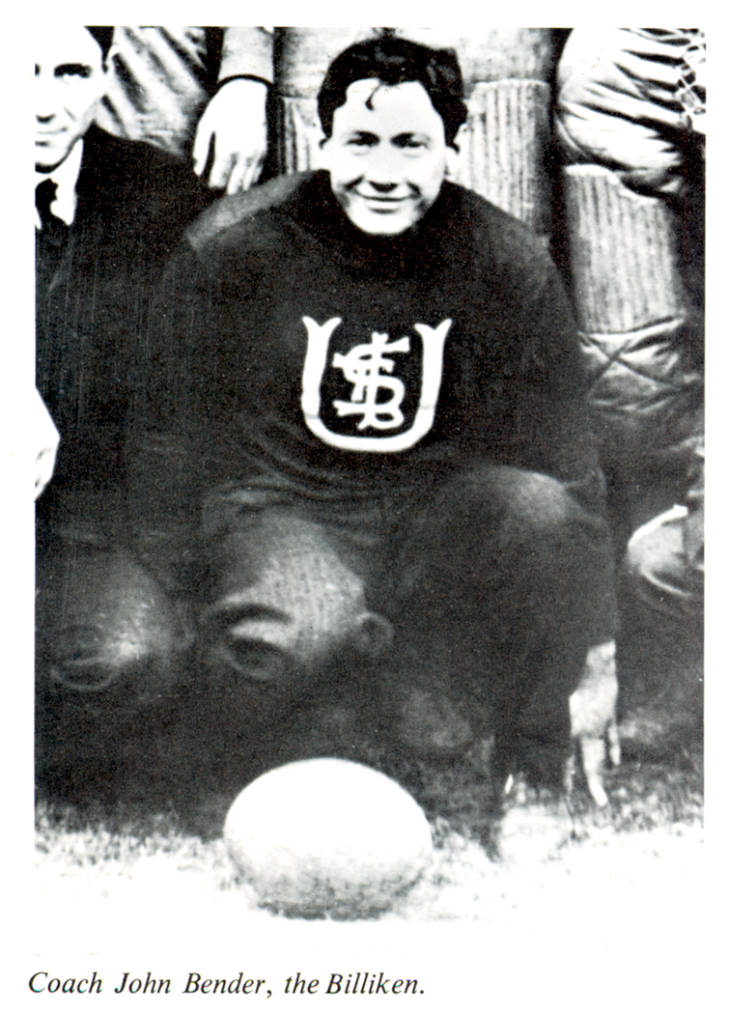
During the 1910 and 1911 seasons, former collegiate star player John Bender, who had come to SLU to study at its School of Law, coached SLU’s football players. At some point during these two seasons, fans began associating the Billiken with SLU’s football team due to the uncanny resemblance between the Billiken and Bender.
Most stories agree that a SLU law student, Charles McNamara, drew a cartoon picture portraying Coach Bender as a Billiken. He placed the cartoon in the window of a drugstore near the corner of Grand Boulevard and Laclede Avenue. As soon as people saw McNamara’s picture, they began to call the football team “Bender’s Billikens.”
SLU had found its mascot and St. Louis Post-Dispatch sportswriter Billy O’Connor made it official when he referred to the “Billikens” in print.
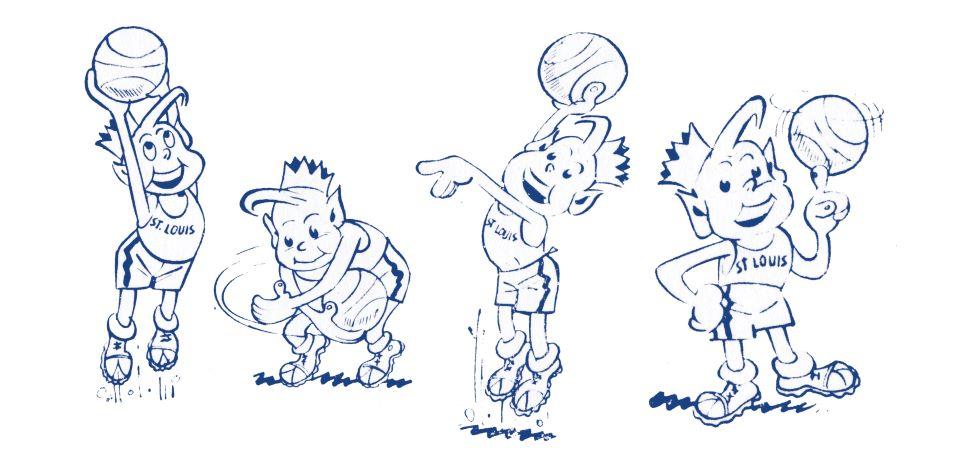

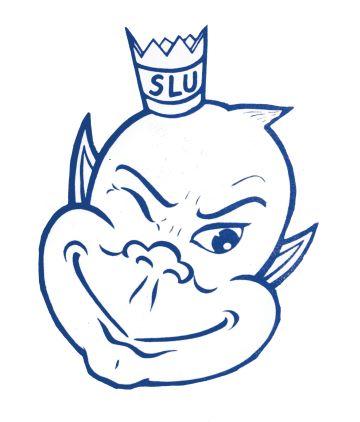


Story based information from Saint Louis University archivists and written by University Communications staff.