


Reflection Series: Research, Equity and Accompaniment in St. Louis Schools
A SLU Researcher and Educator Discusses the Connection Between the University's R1 Status and Her Work Alongside Local Schools
Alexandra Boyd, Ph.D., assistant professor and assistant dean in the Saint Louis University School of Education, reflects on what it means to be a Catholic, Jesuit Carnegie R1 institution as well as her own research alongside local school districts in St. Louis.
Question: In your own words, what does it mean to be a Catholic, Jesuit Carnegie “Research 1” university?
To be a Catholic, Jesuit Carnegie “Research 1” university means pursuing rigorous, high-impact research in service to humanity. It calls us to approach knowledge not as an end in itself, but as a tool to advance justice, dignity, and the common good. At SLU, this identity is lived out through accompaniment — walking alongside communities, listening deeply, and responding to real needs in partnership rather than imposing solutions. It is about forming scholars and practitioners who see their work as a responsibility to our communities.
Could you describe the work you do at SLU in partnership with local charter schools? Why is SLU the right place to do this work?
At SLU, my work with local charter schools is grounded in the mission of the Office of School and Community Partnerships, which connects the School of Education with schools and community organizations to improve educational outcomes. We do this by blending research, practice and community engagement — supporting school leaders, strengthening systems, and ensuring that data and evaluation are used as tools for growth above and beyond compliance. In partnership with schools, we work to expand access to high-quality education, promote innovation in teaching and learning, and serve as a trusted resource to educators and their communities.
SLU is the right place for this work because of its deep commitment to service, equity and accompaniment. As a Jesuit institution, we are called to walk alongside schools and communities, not simply study them, and to use our research capacity in ways that are responsive and impactful. Additionally, SLU’s School of Education is uniquely positioned in that, to my knowledge, it is the only place in the nation where a charter authorizer (OSCP), an education research office (PRiME), and a Center for Innovative Catholic Education (Herrmann) are co-located and intentionally encouraged to partner with one another. This creates a powerful ecosystem for learning, allowing us to better understand and advance what produces high-quality educational opportunities for a diverse set of students across multiple sectors.
At SLU, this identity is lived out through accompaniment — walking alongside communities, listening deeply, and responding to real needs in partnership rather than imposing solutions. It is about forming scholars and practitioners who see their work as a responsibility to our communities.
Alexandra Boyd, Ph.D., on being a Catholic, Jesuit Carnegie "Research 1" university
What are some of the insights you have gained while analyzing the data from these local schools? How is SLU helping to improve student outcomes?
One of the most important insights from analyzing data across our local schools is that exceptional student growth is not accidental — it is the result of intentional, sustained practices at both the classroom and systems level. We see that schools achieving strong outcomes over time are deeply focused on instructional coherence, strong leadership, and continuous reflection grounded in evidence. These insights have led us to convene a growth cohort of school leaders and educators who are collectively examining what drives exceptional growth and how those practices can be sustained across different contexts.
SLU supports improved student outcomes by creating the conditions for this kind of shared learning and accompaniment. Through the growth cohort, we facilitate space for schools to learn from one another, and we then work to amplify those best practices through our Summer Learning Institute, a free three-day professional development experience open to the broader community with priority access for our partner schools. In doing so, we move beyond isolated success stories and toward spreading effective, evidence-based practices that can positively increase student outcomes across the region.
How has your own experience, as a student and as an educator, shaped your interest in this work and research?
My educational journey, shaped by both opportunity and the support of dedicated educators, instilled in me a deep belief in the transformative power of schooling. As a teacher, leader and policy professional, I saw how systems can either expand or limit opportunity for students. These experiences led me to focus on work that bridges research and practice in ways that directly support schools and communities. As a lifelong learner, my experiences as a forever student continue to ground my commitment to accompaniment — ensuring that research is done with people, not on them.
By connecting rigorous research with real-world practice, SLU can help educators feel supported and students experience more equitable, high-quality opportunities. Over time, this work can influence not only individual schools, but also broader systems and policies across the St. Louis region.
Alexandra Boyd, Ph.D., on SLU's impact on the St. Louis region as a preeminent research university
What impact do you hope SLU can have as a preeminent research university on these local schools, their educators, and their students, as well as on the larger St. Louis region?
I hope SLU can model what it means to be a true partner to schools and communities — one that listens, walks alongside, and contributes meaningfully to their growth. By connecting rigorous research with real-world practice, SLU can help educators feel supported and help students experience more equitable, high-quality opportunities. Over time, this work can influence not only individual schools, but also broader systems and policies across the St. Louis region. Ultimately, the goal of this work is to expand pathways for social mobility and contribute to a more just and hopeful future.
Alexandra Boyd, Ph.D.
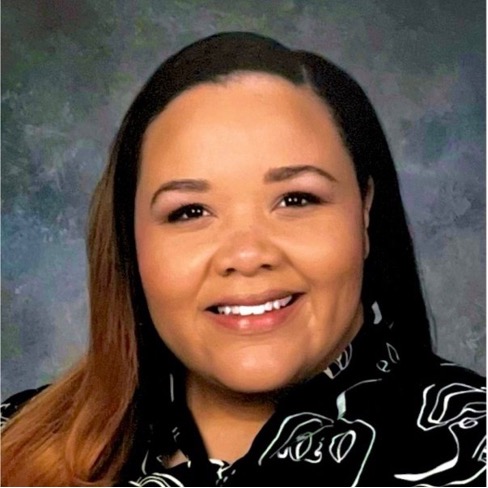
Alexandra Boyd, Ph.D., is a formally trained educator and researcher who is passionate about increasing high-quality educational opportunities and pathways to improve social mobility. Boyd grew up in a working-class family with high expectations for education and schooling and, with the support of her parents and the dedication of high-quality educators, excelled in her own education. She earned a bachelor's degree in political science and international studies from Rhodes College (Memphis, Tennessee), a master’s degree in teaching from Christian Brothers University (Memphis, Tennessee), and a doctoral degree in education policy from the University of Arkansas.
Boyd started her career as a middle school teacher in the Shelby County School System at The Soulsville Charter School. When she sought to make a larger impact on education policy, she later joined the Arkansas Department of Education and quickly rose to leadership positions in both the charter and school performance units. Boyd also served as the first CEO of The ASK Academy, a STEM-focused, project-based-learning charter school in Rio Rancho, New Mexico. Boyd currently serves as a liaison between Saint Louis University’s School of Education and the public charter schools sponsored by SLU, with a guiding goal of assisting school boards and leaders so that they can support their staff and scholars through fulfilling the missions of their schools. Participating in rich service opportunities through her sorority brings Boyd great joy.
As assistant dean, Boyd now leads SLU’s Office of School and Community Partnerships housed in the School of Education.
This reflection is part of an ongoing series sponsored by the Office of the Vice President for Research (OVPR). You can read other installments in this series here.