


SLU Firsts: Beyond Geographical Boundaries
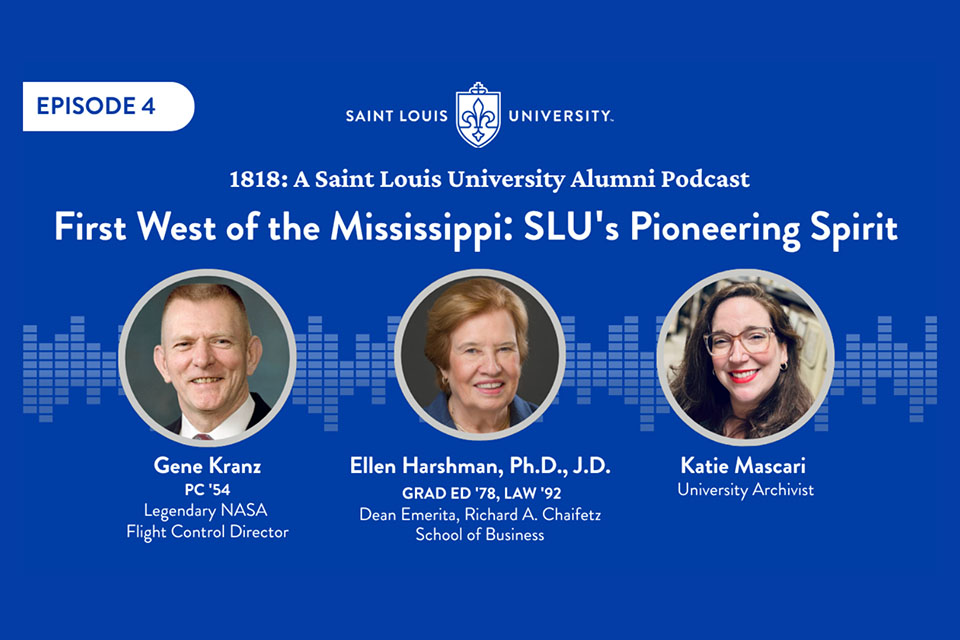
In this episode of “1818: A Saint Louis University Alumni Podcast,” co-hosts Tony Minor (A&S ‘03) and Meg Connolly (A&S ‘90, GRAD A&S ‘92) take an in-depth look at SLU's many firsts — from its status as the oldest university west of the Mississippi to the institutional resilience and values-driven decision-making that have marked its more than 200-year history.
About Episode Four
Whether you are part of the first successful manned mission to the moon or showing systemic courage to challenge injustice, pioneers are formed when the stakes are at their highest.
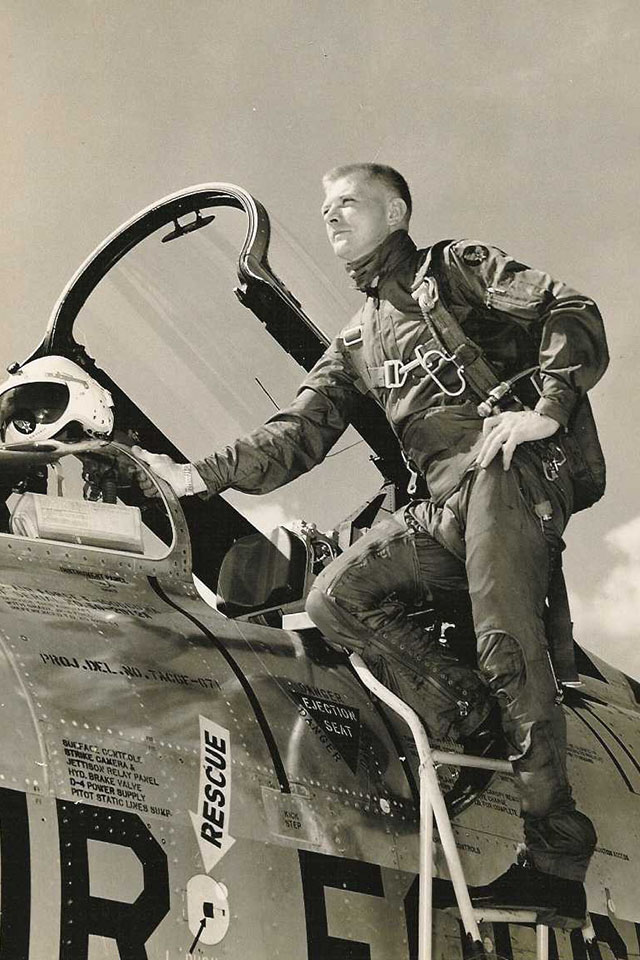
Our show starts with legendary NASA flight director and SLU alumnus Eugene "Gene" Kranz (PC '54), who details how his undergraduate experience as a Billiken shaped the mental fortitude required to navigate the Apollo 11 lunar landing, Apollo 13 and other missions.
In the movie “Apollo 13”, the character based on Kranz says, "Failure is not an option." He chose that memorable quote as the title of his autobiography to highlight the spirit of everyone who worked in Mission Control.
After becoming division chief for flight control, Kranz elected to work as the flight director on the odd-numbered missions in the Apollo program. He did not know at the time that choice would place him on some of the most well-known missions.
“We didn't know which mission would be the lunar landing mission, or which one would be the Apollo 13,” he said. “And it was only that odd-number thing where I was in the lead position to make the decisions, and keep the team working, and accomplish the mission objectives on 11, and get the crew home on Apollo 13.”
Inside the Roundtable Discussion
Ellen Harshman, Ph.D., J.D., dean emerita of the Richard A. Chaifetz School of Business, and University Archivist Katie Mascari join hosts Meg Connolly (A&S '90, GRAD A&S' 92) and Tony Minor (A&S' 03) to discuss how SLU has transformed academic knowledge into societal progress.
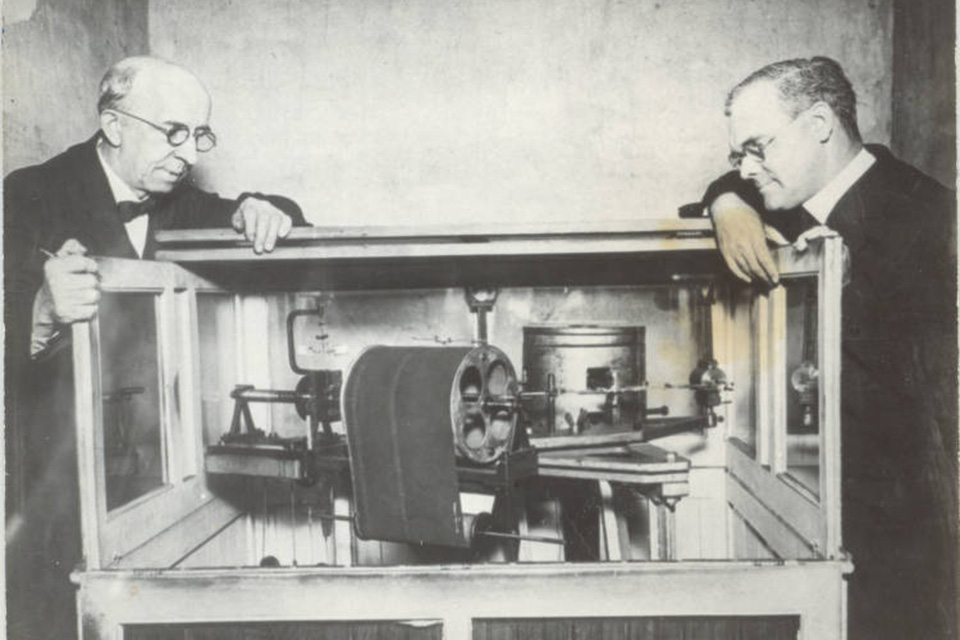
From the groundbreaking Heithaus Homily to the University's refusal to participate in a major 1950s basketball tournament in segregated Louisiana and the Board of Trustees' defiant refusal to move the campus to the suburbs during a period of urban flight — learn about moments where SLU went against the tide to do what was right. The group also discusses some key contributions SLU has made throughout its history, including the impact SLU has had on earthquake seismology.
“In fact, it was actually called the Jesuit science for a while,” Mascari said. “And this is because they felt that earthquake science was a public service. It mitigated the destructive effects of earthquakes, and it would help save people's lives. And we were really fortunate at SLU to have one of the foremost Jesuit scholars in this field.”
Father James Macelwane taught at SLU and served as president of the Jesuit Seismological Association. He helped the University become a central hub for seismology, collecting earthquake data from a network of stations around the country.
Alumni Perks
At the conclusion of the episode, Minor shares how SLU honors its outstanding graduates and how you can nominate an alum for an upcoming award. Learn more about SLU’s alumni awards.