


Higher Ed
Dr. Edward Feser is no stranger to forging paths, both literal and figurative. From his teenage summer job on a trail crew in Yosemite National Park to his leadership of Saint Louis University, Feser’s journey has been one of discovery and discernment.
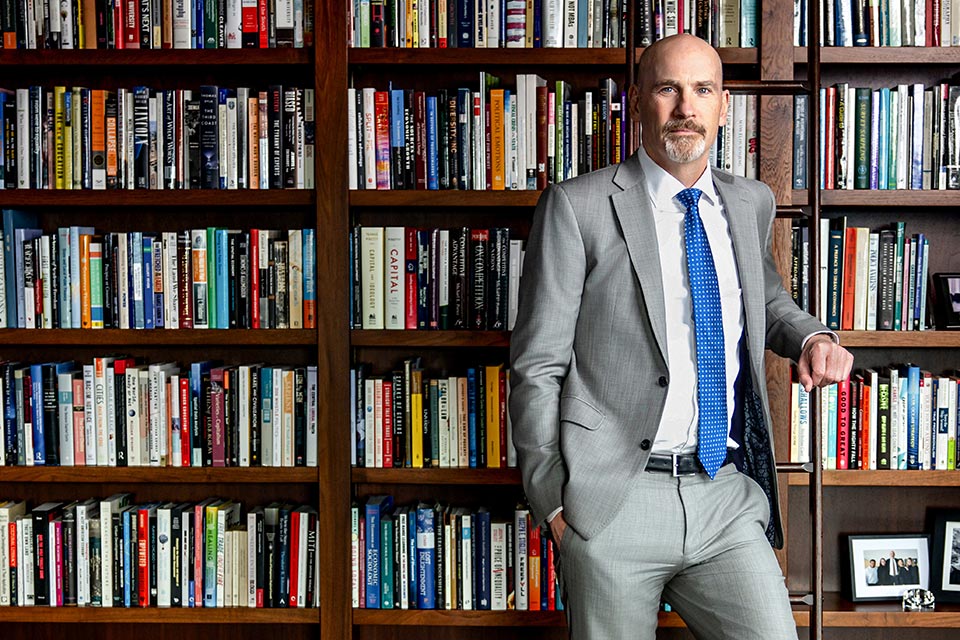
Feser grew up in national parks in Montana, Washington and California as the son of a National Park Service ranger. His family sometimes got its groceries via snowmobile. And for a time, he attended a two-room school in Mineral, California, near Lassen Volcanic National Park.
After high school, he got a feel for urban life when he enrolled at the University of San Francisco, a Jesuit institution, where he found a passion for cities. He also got an introduction to Jesuit higher education, which stuck with him.
Years later, after spending decades as a faculty member and administrator at large public universities in the United States and United Kingdom, he found himself intrigued by the opportunity to become SLU’s 34th president. Feser, who was then the provost and executive vice president of Oregon State University, was drawn to SLU because it seemed like a good fit for his skills, interests and expertise — not to mention his connection to the core values of the Catholic, Jesuit education that inspired him all those years ago.
As he explored the job, he wondered: “Does it feel like the right moment where I could be helpful to the kind of institution I care about? Do they believe I could be helpful? Do those things come together at the same time?”
It turns out that the answers were yes.
Here, he discusses why he said yes to SLU and shares his thoughts on SLU’s remarkable accomplishments and hope-filled future.
For more about the 34th president of Saint Louis University, visit The Feser File, Meet First Lady Kathy Feser and President Edward Feser's Inaugural Address.
What attracted you to Saint Louis University?
SLU’s focus on holistic student success and well-being, breadth of disciplines, strong
liberal arts and humanities, Jesuit mission, excellent
research trajectory, larger size among Jesuit schools, and location in a redeveloping,
post-industrial city like St. Louis were all characteristics that aligned with my
interests.
It’s unusual to move from a big public land-grant university to a mid-sized, private
Jesuit school. But there are many similarities between
an urban Jesuit university and a land-grant institution in their values and philosophical
approach. Land-grant universities, and this is
certainly true at OSU, are sincerely committed to their communities and states, and
to advancing the public good. In many ways, that mirrors the Jesuit approach to higher
education.
What were your first impressions of SLU?
I’d been exploring a variety of opportunities, and what was impressive about the trustees I spoke with and the members of the search committee was how they projected a truly positive, yet honest, impression of the institution. They voiced optimism and enthusiasm for what had been accomplished and what was possible in the future yet acknowledged frankly that there are real challenges to address. I sensed a combination of firmly held values, mission understanding and commitment, authenticity and candor. Those things matter to me as a leader.
What has inspired you about SLU since arriving?
I gain much satisfaction and joy in coming to work every day to support an institution that is seeking truth in this highly complex and divisive world. We model what the pursuit of truth looks like on our campuses and in our community for our students who will go out and change this world. That’s why I'm also bullish about higher education and its role during this period when our politics are so polarized. We are an important part of the solution.
There are so many people across SLU who care deeply about Saint Louis University and its success. We’re fully capable of moving forward despite external pressures and challenges. We’re in a strong position, and we’re successful. We’re doing good things for our students and our city. We can build on our deep commitment to excellence, clear values and integrity.
How did your work as provost and executive vice president at Oregon State prepare you for this job?
I was lucky at OSU. The role I held was expansive — a combination of chief academic and chief operating officer — and probably made more by our high level of presidential turnover while I was there; I worked for four presidents in eight years. I was forced to learn a lot about nearly every aspect of university operations.
I was also fortunate to work closely with the OSU Foundation, the development arm of the university, where I learned much about fundraising and alumni relations. And I spent considerable time working on enterprise-level issues related to athletics, more than most university provosts typically do. All that was very good training for a presidency.
Maybe you knew you were preparing yourself for this kind of role.
I took a long time to decide I wanted to be a president. It was truly a discernment
in the Jesuit tradition, and my wife Kathy and I thought carefully about it together,
both because she knows me better than anyone, and it is a significant commitment for
her as well. The provost
position was a natural for me because I’m strongly academic in orientation. As president,
you can sometimes be distant from faculty and student concerns and issues, and I wasn’t
sure I wanted that. I considered SLU partly because it would allow me to be closer
to the intellectual enterprise because the scale isn’t quite so large as places I’d
been. I realized I want to be in a smaller place — smaller but not too small — where
both scholarship and teaching are robust, and I wouldn’t lose all touch with students
and faculty.
What themes or priorities have emerged for you in these first few months as SLU’s president?
We must be student-centered, students-first in everything we do. The most important question we can ask is: Are our students well-positioned for success? We do care about our students at SLU, but we can ask that question more often, and we can be more systematic in evaluating how we’re doing on that front.
In making student success our principal focus, we must be careful not to be confused by our new Research 1 status. People are naturally enthusiastic about the R1 designation. So am I. However, our core strength remains the delivery of high-quality learning experiences delivered with excellent faculty and selected, distinctive research programs. We need to remember this.
In the area of research and creative work, we have to make choices if we’re going to be successful, especially in the world we’re in right now, given shifts in the federal government’s approach to research funding.
Organizationally, we need to work hard to be more flexible, efficient, agile and cost-effective. Costs in universities are simply rising too fast, and it will be difficult for any institution to keep up; fundamental change is needed to bend the cost curve. SLU has done amazing things over the last decades to conserve resources, and we’re going to build on those achievements. But we’re going to have to do it in ways that higher education hasn’t traditionally done.
What’s the best part of being SLU’s president?
Representing and championing the work. We do great things here. The most enjoyable aspect of this role is serving as the University’s loudest advocate. Engaging with students, faculty and alumni is always deeply rewarding and fun.
What about the most challenging part of being president?
Maintaining morale at this moment in our sector. It’s a challenging time, and it’s
easy to get into a spiral where you only see retrenchment
ahead, given a budget under strain, competition for enrollment, challenging demographic
trends, and a federal government that appears to be rejecting the long-held compact
between the government and universities.
But higher education institutions have been dealing with challenges since their very
inception, and they have succeeded because they’ve
adjusted and changed. So, while we do face some obstacles, I’m optimistic. I am convinced
we’ll be successful here at SLU if we have sufficient creativity and courage.
How would you describe your leadership philosophy?
Team-based — assemble talented people, coalesce them as a team, and challenge that
team to deal with issues in the moment while
simultaneously, constantly and relentlessly improving the organization. Continuous
improvement conversations need to happen generatively and naturally through the day-to-day
work of the leadership team, not in response to the crisis du jour or because the
president or board of trustees demands it.
Once you get that kind of team-based leadership going, it acts like a flywheel, and the institution moves forward in positive ways. People begin to enjoy the process of problem-solving, the results and the camaraderie.
As a leader, I also try to be as direct and clear as possible in my communications, respectfully, of course. I don’t see a point in being cagey. The goal is to be clear. Ever since serving as a department head, I’ve believed that everybody needs to understand the situation we’re in, the reason we’re there and then, at their level, the ways they can help. When we hold back information, we shouldn’t be surprised there’s confusion or that people don’t know how to be helpful in addressing a challenge.
For sound shared governance reasons, faculty have the principal responsibility for shaping the curriculum. They’re the experts in their disciplines. But if they don’t shape it in a way that helps address the fiscal challenges we face so that we remain financially viable as an organization and affordable for students, we’re lost. Our employees — especially faculty members — need to be given the information they need to understand the financial hydraulics of the institution, and then they need to take the time to truly understand that information. There used to be a time when administrators would seek to protect faculty from having to worry about those kinds of details or imagine leading would be easier with less transparency. However, that leaves faculty without the knowledge of why acting sooner rather than later is essential to the university’s success.
You are SLU’s second lay president after nearly two centuries of Jesuit leadership. How do you emphasize SLU's Catholic, Jesuit nature?
Our Catholic, Jesuit mission offers a direct and intentional consideration of reason,
faith and the intersection of the two. Regardless of a student’s faith background
or level of experience with a religious tradition, Jesuit universities offer a combination
of values, perspective and understanding that helps one examine what it means to live
a life of purpose and in community with others. At SLU, we spend a lot of time on
the “what” and “how” of individual disciplines and fields, but we also create myriad
curricular, extracurricular and co-curricular
opportunities for students to explore questions of “why” in a serious way. That is
increasingly appealing to students today. Moreover, our Jesuit focus on prioritizing
the needs and concerns of the disadvantaged — as well as acting as men and women with
and for others — offers students a strong values-based foundation for whatever career
path they choose.
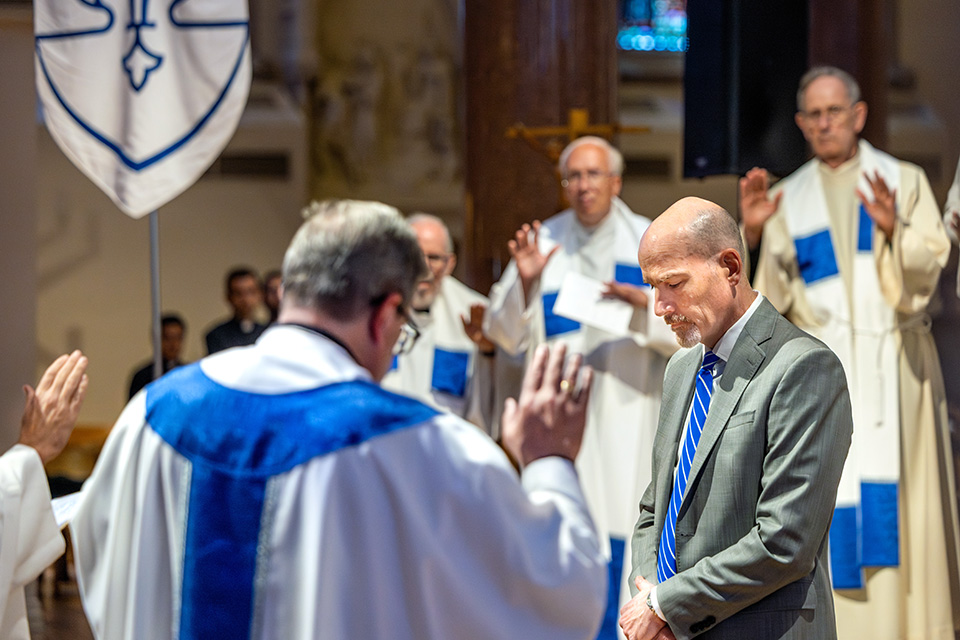
There is also a very pragmatic argument for the holistic education we offer at SLU.
Billions of people worldwide are people of faith. Their worldviews, grounded in their
religious traditions and understandings, influence how they live their lives personally
and professionally, the
choices they make, their actions in the public square and so on. Regardless of one’s
own religious beliefs, it’s wise to understand how faith shapes others’ views and
actions.
Could you discuss the role of athletics in today’s higher education landscape, particularly at SLU?
Athletics are an extraordinarily powerful portal into the University. They help people connect with the institution, and they create a sense of community, pride, enthusiasm and momentum. Successful teams build national visibility. I’ve witnessed this in tangible ways at schools with tremendous reputations in sports — UNC Chapel Hill, Illinois and Oregon State.
We have terrific assets at SLU. We’re this region’s sole NCAA Division 1 program, and when we’re successful, we draw national attention to SLU and our city.
Our student-athletes are also outstanding role models. They are models of focus and discipline. Otherwise, they couldn’t manage the level of work they must put in to be successful or navigate the public pressure they’re under. I’m so impressed with the quality of our Billiken athletes as men and women and the care our coaches put into developing them holistically.
You visited SLU-Madrid in October, and you have also taught and conducted research abroad. Why are SLU-Madrid and international study opportunities key to the SLU student experience?
We live in a highly globally connected world, economically, technologically, environmentally and socially. Our longstanding presence in Europe — in Madrid — creates opportunities for students from all disciplines to gain an understanding of those connections and to build intercultural competence. SLU-Madrid is a wonderful part of the SLU portfolio in that sense.
We’re also part of an international Jesuit network. We do apostolic work around the world via a variety of partnerships. These create additional unique opportunities to educate our students and prepare them for a life of service and leadership.
SLU-Madrid is deeply impressive, from its facilities to its location to the faculty,
leadership team, staff and students. Its position in one of Europe’s great cities
complements our presence in St. Louis. Going forward, it will give us an opportunity
to emphasize our intellectual
contributions to understanding the future of cities in general, a particular interest
of mine and one in which SLU has a rich history.
Higher education is undergoing a period of profound change. Where do you see the greatest opportunities for you to lead, adapt and innovate?
It is essential in this time when prospective students are questioning the return on investment in higher education that universities maintain a deep commitment to providing excellent education, the highest quality student extracurricular and co-curricular experience, effective advising and mentoring, and career placement upon graduation. At SLU, we’re fortunate that we can pair our traditionally strong undergraduate experience and liberal arts foundation with career-oriented, professionally focused degrees. As we develop our own version of an R1 (research-intensive) mission, we should do so in tight integration with our educational mission, something the largest R1 institutions struggle to do well.
There is much creative work happening nationally to adjust to different student learning needs, including different kinds of credentials and flexible modalities. We’re doing some of that, but it’s nibbling at the edges compared to many of our competitors. I’m not arguing we need to shift dramatically to online education or the delivery of alternative credentials, but there is more we can do to serve a greater diversity of learners, including transfer students and returning students (those with some college and no degree). That will help us meet our access mission while helping us succeed when the traditional college-going population is shrinking.
As a scholar of city and regional economic growth and development, what are your thoughts on St. Louis?
Many American cities are at a crossroads, with pandemic-driven changes in where and how people work and with so much population concentration on the coasts. In my experience, struggling cities that experience a renaissance have done so by marshalling every available resource by collaborating and coordinating across jurisdictions and sectors. Thoughtful and bold leadership is key. We have many good leaders in place right now and in every conversation I’ve been in so far, the spirit is willing. I’m hopeful we can find ways to address longstanding issues like our jurisdictional fragmentation as well as conflicts between urban and rural interests broadly in Missouri, which will help unlock St. Louis as Missouri’s biggest growth engine. Saint Louis University is ready to do all it can to be part of the solution, recognizing that strong partnerships and economic mobility for all are keys to success.

What do you see as the University’s role in that work or in the St. Louis region in general?
As one of the area’s biggest and most stable employers, we need to continue to be an economic engine for St. Louis. We must continue our efforts to support the development of Midtown and to collaborate with others in the area to continue to build assets in the neighborhoods around us. In the next phase of campus development, we will think strategically about our edges, the spaces where the SLU campus intersects with surrounding neighborhoods. There are some creative things we can do to create an exciting campus-city sense of place that benefits us — given students’ interests in a rich urban quality of life — and neighboring businesses and organizations.
I think we can be a bigger thought leader and convener for issues that face the city, a place where people come for conversation, to tap expertise and to exchange ideas. Ultimately, I’d like SLU to be a champion of this city and this region in a way that is inclusive and bridges differences across the political divide. I do know that’s easier said than done.
What has impressed you and your wife, Kathy, about St. Louis?
So many things. Forest Park, the unique neighborhoods, the welcoming people, the great diversity of the population. St. Louis offers a great quality of life with an unusually rich mix of culture, music and sports, and it’s affordable. Less well known but also impressive is the growing innovation and entrepreneurship ecosystem. St. Louis has the potential to attract young people seeking a high quality, affordable quality of life, if we continue our redevelopment momentum and do a better job of getting the word out.
You have two adult children. Can you tell us a little about them?
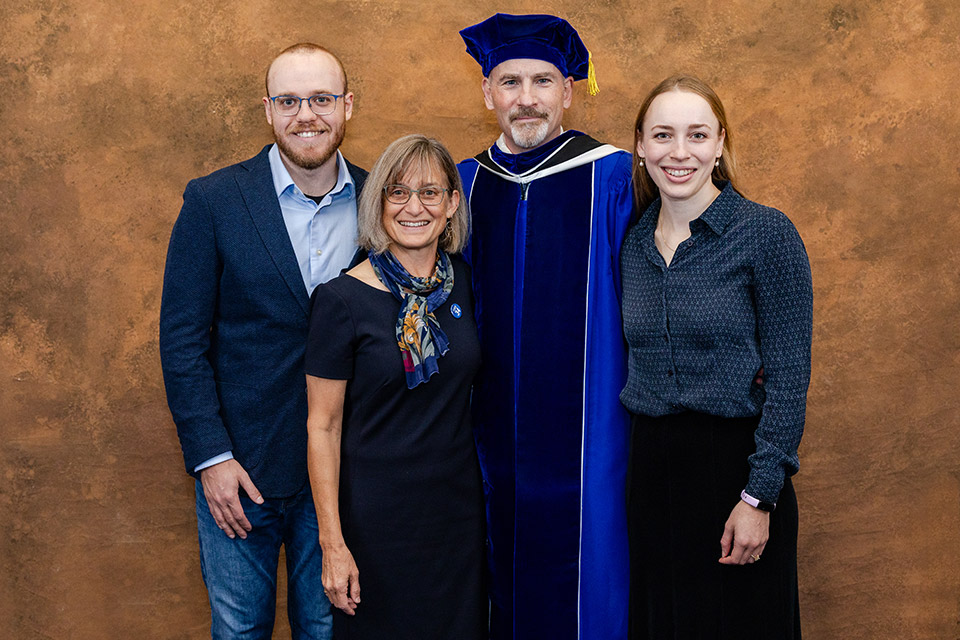
Kathy and I could not be prouder of them. Our son, Jack, is a computer scientist working in artificial intelligence, including applications to issues in urban development and management. I wish I could say that’s because his dad’s field is city planning, but it’s really because of the big data involved. He lives in Brooklyn, works in Manhattan, and loves the outdoors, cooking and photography.
Our daughter, Mary, is a recent graduate of the Master of Public Health program at the University of North Carolina at Chapel Hill, which was coming full circle because she was born at UNC’s hospital when I was a member of the faculty there. And now we share the same alma mater for graduate school. She’s now in Raleigh working on hurricane relief efforts in western North Carolina. She also loves the outdoors and is terrific at arts and crafts. Both my children are more well-rounded than I am!
I know you enjoy the outdoors. How has that shaped you?
In a big way. I feel like I grew up outside, and it’s where I feel the most at peace. Kathy and I both have a deep love of the outdoors, in any landscape and any season. I’ve been truly lucky to have had lots of experiences outdoors in different and spectacular parts of the world.
So, St. Louis is an urban area. Why choose an institution in a big city?
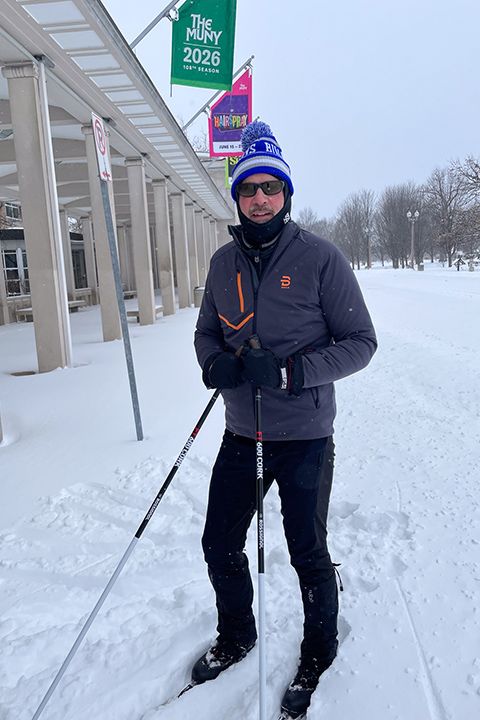
It was deliberate. When we moved to Oregon from Illinois in 2017, it was a homecoming for me, since I grew up in the Pacific Northwest. I thought I’d never leave again. I can recall distinctly an overwhelming sense of joy and peace, shortly after returning, on a walk in the high mountains of the Cascades range, in a location just a couple hours’ drive from our home.
And yet, my interest in urban development had not waned, and Kathy and I enjoy the diversity of people and culture in cities. I wanted to continue a leadership path in higher education, precisely because we’re in a time that is so fraught with challenges. There is much to be done to ensure universities remain strong in the United States and continue to be engines for economic mobility and groundbreaking research. I’m truly humbled and grateful to have the opportunity to lead here at SLU and to contribute what I can to supporting the success of St. Louis.
Kathy and I will get outside from time to time. Missouri is a beautiful state, and we look forward to exploring it. The Midwest has its own version of natural beauty, and we haven’t abandoned the West. This past January, for example, we managed to find a few days to spend in Yellowstone National Park cross-country skiing and snowshoeing. And we were delighted to put on skis and venture into Forest Park this winter!
How will you measure success this first year?
By solidifying a team-based approach to leadership at SLU, getting a strategic plan mostly — if not fully — completed, and getting to know our trustees, many of our alums, and our faculty, staff and students.
And in five years?
That SLU has a very strong directional strategy and that we’ve made tangible progress
on that strategy. That our enrollment is robust, our
student experience is second to none, our faculty are thriving as teachers and scholars,
and we are viewed as a collaborative, creative partner with our neighbors and in St.
Louis broadly. That there is a very strong sense of belonging on this campus for students
from every background.
How can alumni assist you in moving SLU forward?
Please engage. Come back and visit campus. Consider making a gift. Talk about SLU.
Cheer our Billiken student-athletes. Make a visit to
SLU-Madrid. Be part of the momentum we want to build. Alumni are such a critical force
multiplier for what we want to do. When you build
excitement and enthusiasm among your alumni, it supercharges the work of the students
and the faculty, who know there’s a group of champions out there behind them.
This Q&A was published in the spring 2026 issue of Universitas.
About Universitas
Universitas, the award-winning alumni magazine of Saint Louis University, is distributed to alumni, parents and benefactors of the University. The magazine includes campus news, feature stories, alumni profiles and class notes, and has a circulation of 103,000.