


Community Engagement Programming
Saint Louis University's Center for Social Action offers numerous signature programs throughout the year for SLU students, faculty and staff to become more meaningfully involved in the community.
1818 Community Engagement Grant Program
Powered by:
What impact could your group have on the community with $1,800? The 1818 Community Engagement Grant Program celebrates the over 200-year history of SLU giving back to the St. Louis community. Eighteen grants of $1,800 each are given to selected applicants to make a positive impact in the community in partnership with a local nonprofit organization.
2026-2027 Grant Cycle
The grant application for the 2026-2027 cycle is now open. Click below to begin the application. You will be able to access the entire application at once to see all the questions.
1818 Community Engagement Grant Application
See below for more information and frequently asked questions. Questions may also be directed to Bobby Wassel, director in the Center for Social Action, 314-977-2041.
Grant Information and Requirements
- Groups must complete an application and submit a project budget and timeline, as well as a letter of support from at least one community partner.
- All groups must have at least one community partner as a coapplicant and include SLU students in the initiative.
- Grants must be used either to start a new community engagement program or to significantly improve an existing one.
- All projects must be completed no later than May 14, 2027. All funds must be used by that date.
- All recipients will present a poster on their project at the 1818 Community Engagement Grant Showcase on April 28, 2027.
Past Projects
Read the reports below to see the impact that previous years' grants have had on the community:
Frequently Asked Questions
The grant program welcomes applications from students, as well as faculty and staff. For groups of faculty or staff, it is required that students be involved in some way with the project.
While the grant lead must be a SLU student, faculty or staff member, it is a requirement that a nonprofit organization also be a partner on the grant.
Yes, as long as it can demonstrably show a significant potential improvement in your group’s community engagement program.
No, all funds must be spent by the end of the academic year. Unused funds will be returned to the main 1818 Community Engagement Grant program and distributed the following year.
While we encourage groups to think long-term about their potential projects, groups can certainly apply for funding to create a one-time or short-term program.
Yes! Groups who receive funds this year will be encouraged to apply again for future cycles to build on their first year and will be given preference if a high degree of impact can be demonstrated in year one.
All funds must be spent on materials, services, etc. No funds can go directly to the community organization.
Groups are encouraged to think about the community organization or issue they want to impact, then approach them to collaboratively develop an idea for a grant proposal.
Potential programs could include:
- Improving physical facilities at a local school or community center
- Implementing an after-school or weekend program for youth
- Creation of educational materials that can be used by local community organizations, school, etc.
- Launching a literacy (financial, health, nutritional, etc.) program for families
- Partnering with a local organization to host a health fair
- Creating a sustainable hunger-reduction program
- Organizing an advocacy campaign related to a particular social justice issue or congressional bill
The Center for Social Action staff is also available to consult on a variety of ideas and potential community partners.
Service Fairs
An easy way to learn about how you can make a difference in the community, both as a student and as an alum, is to attend our Community Engagement and Year of Service Fairs. You will be able to meet staff from dozens of groups to learn about their work and how to get involved.
Community Engagement Fair
Held each year as part of Fall Welcome, this event brings 60+ nonprofit organizations from across the region to campus to advertise service opportunities to our new and returning students, as well as faculty and staff.
The 2026 Community Engagement Fair will be held from 3 - 5 p.m., Tuesday, Aug. 18, in the Chaifetz School of Business Atrium.
Year of Service Fair
In November, representatives from 25 organizations offering postgraduate service opportunities will be on campus to advertise their programs. SLU juniors and seniors are especially invited to explore the possibility of doing one or two years of service after graduation, whether here in St. Louis, around the country or across the world. Each year, nearly 75 members of the graduating class go on to participate in at least one year of service.
The 2026 Year of Service Fair will be held from 3 - 5 p.m., Tuesday, Nov. 10, in the Chaifetz School of Business Atrium.
Participating Year of Service Organizations
The Billiken Teacher Corps at Saint Louis University forms the next generation of Catholic school educators through service, learning, and spiritual growth in community. This program is a unique opportunity for faith-driven college graduates to have a transformative impact in underserved Catholic schools in Springfield, Illinois, and St. Louis.
BTC Fellows live the Jesuit Mission of being men and women for and with others. For two years, the members live in an intentional faith community while teaching full time and earning their Master of Arts in Teaching degree with full tuition remission. Members also earn a Missouri teaching certificate via the alternative route if they are not already certified.
Jesuit Volunteer Corps engages brave leaders in life-changing service, living and accompanying those in need to build a more just and hopeful world. Volunteer for one to two years, either domestically or internationally. Live in community with other JVC volunteers. Room, board, health insurance and a monthly stipend are provided.
Similar to the Jesuit Volunteer Corps, JVC-Northwest takes place specifically in the northwest region of the country, including Alaska, Washington, Oregon, Montana and Idaho, with both rural and urban experiences offered.
AmeriCorps works with local and national partners to tap the power of the American people to tackle our country's most pressing challenges. Volunteer for one year domestically. Live individually and receive a modest living allowance and an educational award.
In more than 60 countries, Peace Corps volunteers are putting their purpose, passion, and skills to work in partnership with welcoming host communities. Volunteer for two years internationally. Room, board, health insurance and a monthly stipend are provided.
Teach For America works toward the day when every child will receive an excellent and equitable education. Volunteer to teach in a high-need public school for two years. Salary and health insurance are provided, as well as an education award upon completion of service.
Sponsored by the Jesuits of the Central and Southern Province, Alum Service Corps volunteers commit to a year of service teaching in a Jesuit middle or high school in Denver, Kansas City or St. Louis. The program offers retreats, housing, health insurance, a stipend, a community car and close ties to the school's Jesuit community.
For over 70 years Nuestros Pequeños Hermanos (NPH) has provided a loving home to orphaned, abandoned, and at-risk children in Mexico, Guatemala, Honduras, Nicaragua, El Salvador, Bolivia, Peru, the Dominican Republic and Haiti. NPH USA screens, places, and supports U.S. volunteers (21 or older) who serve for a year or more in one of our homes. Room, board, health insurance, and a modest monthly stipend are provided.
For information on these or other programs, contact Bobby Wassel at 314-977-2041.
Advocacy and Justice Programming
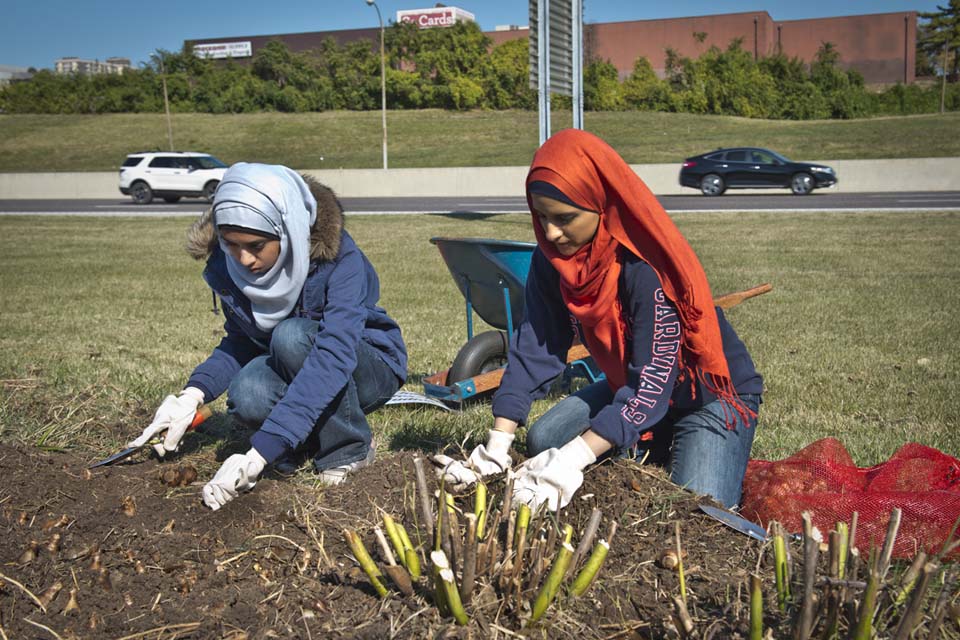
The William L. Clay Sr. Institute for Civic Engagement and Economic Justice offers students a multitude of opportunities to engage in advocacy and social justice work, developing themselves into servant leaders to further the common good. From Policy Pods to Civic Bootcamp and beyond, discover the many ways you can become an agent for social change.